Ivanhoe Mines' giant Kamoa copper discovery in the DRC - a metallurgical perspective
Abstract
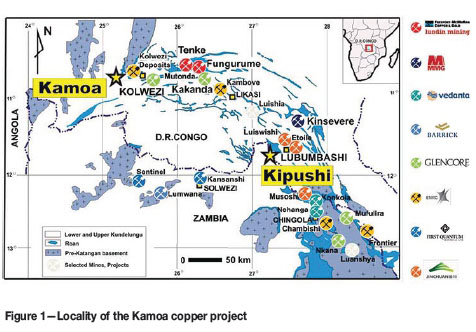
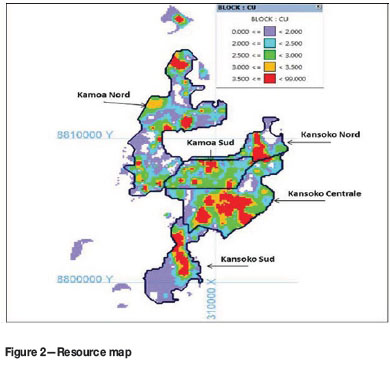
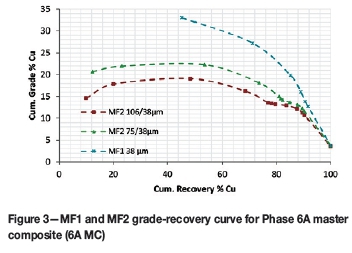
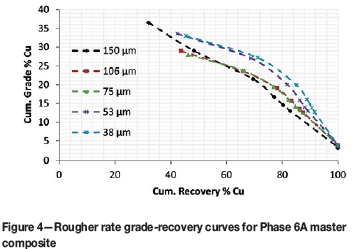
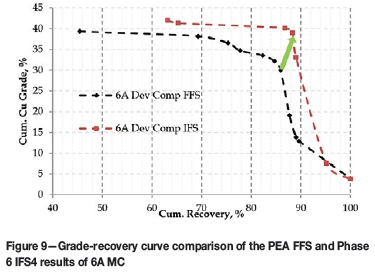
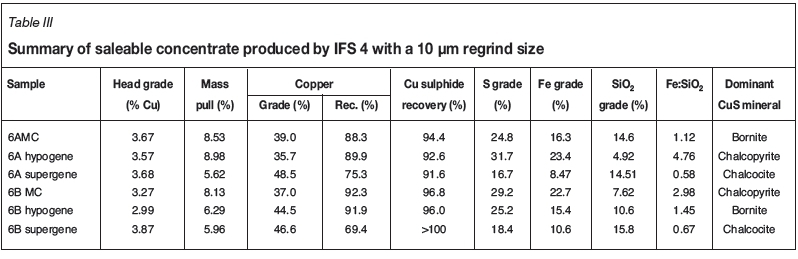
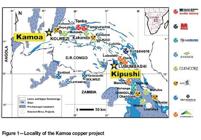
Ivanhoe Mines' Kamoa copper project is a recently discovered high-grade copper sulphide deposit in the Katanga Province of the Democratic Republic of Congo. The mineralization identified to date within the resource is typical of sedimentary-hosted stratiform copper deposits and comprises three distinct units: supergene, mixed, and hypogene mineralization. Since 2010, various metallurgical test work campaigns have been conducted on drill core from different areas within the deposit in line with resource expansion. The most recent bench-scale flotation test work has shown positive repeatable results. The work was conducted on a composite sample of drill core from the southern part of the Kamoa resource. The sample is representative of the first four to five years of planned production, when Ivanhoe Mines intends to produce clean, high-grade copper flotation concentrate. A detailed test work roadmap developed from first principles for the campaign led to an optimum flow sheet for treating the Kamoa mineralization. Copper recoveries of 88.3%, at a concentrate grade of 39.0% copper, were achieved using a composite sample - an improvement on the previously published 85.9% life-of-mine average copper recovery indicated in the November 2013 Kamoa Preliminary Economic Assessment.
Kamoa copper project; copper; sulphide; mineralogy; mill-float; hypogene; supergene; circuit development; integrated flow sheet; copper recovery; fine grained; bornite; chalcopyrite; chalcocite
 Thumbnail
 Thumbnail
 Thumbnail
 Thumbnail
 Thumbnail
 Thumbnail
 Thumbnail
 Thumbnail
 Thumbnail