Premature failure of re-sulphurized steel studs
Abstract
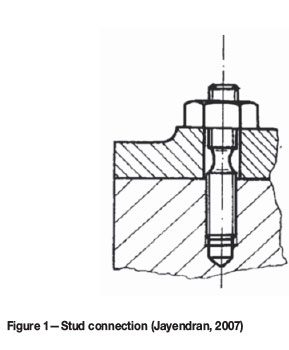
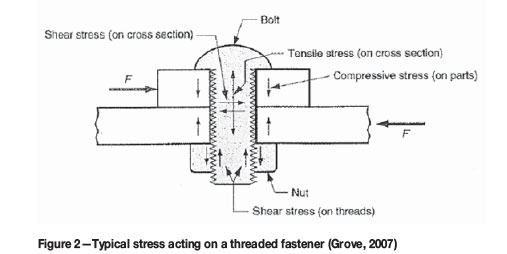
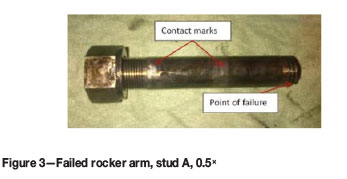
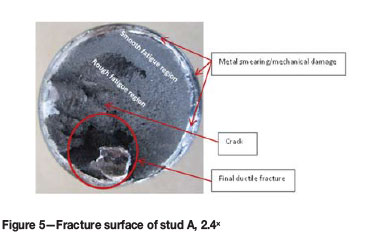
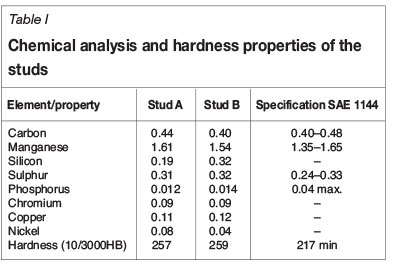
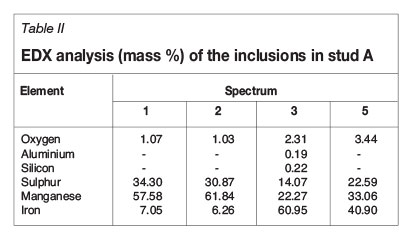
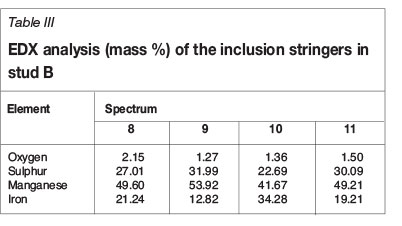
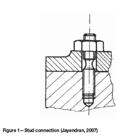
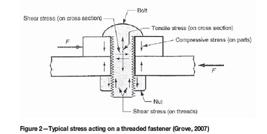
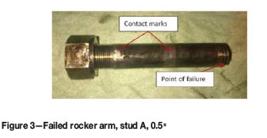
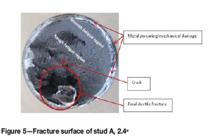
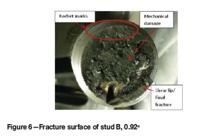
Studs are rods threaded on both ends and are used as mechanical fasteners for two or more components. Stud finds usage in industries such as automotive, construction and aviation. The advantage of studs is that they allow for disassembly of components during maintenance. Studs are continuously subjected to both tensile and shear stresses, depending on the application, therefore they should be manufactured from suitable materials that are capable of withstanding all these external forces. Studs are sometimes manufactured from re-sulphurized steel due to its improved machinability; however, there is a certain limit on the amount of sulphur, above which failure may occur. Premature failure of studs has been a common problem, but failed studs are commonly replaced with new ones without conducting failure investigations. The present work investigates the premature failure of two re-sulphurized steel studs used on a rocker arm assembly and recommends alternative materials. The investigation was carried out by conducting visual examination, microstructural analysis, hardness measurements, chemical analysis and a detailed scanning electron microscopy (SEM) investigation on the fracture surface.
re-sulphurized steel; threaded fasteners; failure analysis; fatigue failure; manganese sulphide
 Thumbnail
 Thumbnail
 Thumbnail
 Thumbnail
 Thumbnail
 Thumbnail
 Thumbnail
 Thumbnail
 Thumbnail
 Thumbnail
 Thumbnail
 Thumbnail