Iron recovery and phosphorus removal from oolitic high-phosphorus haematite using the FASTMELT® process: a comparative study of two reductants
Abstract
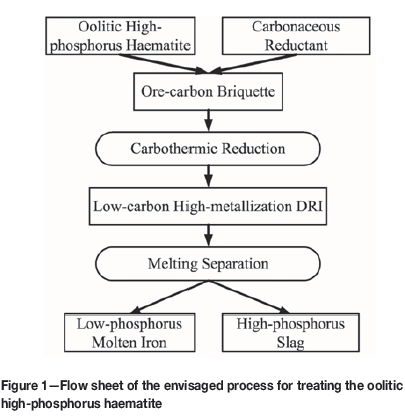
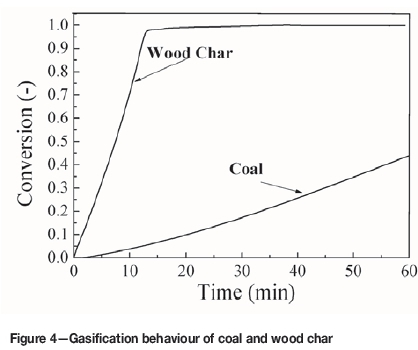
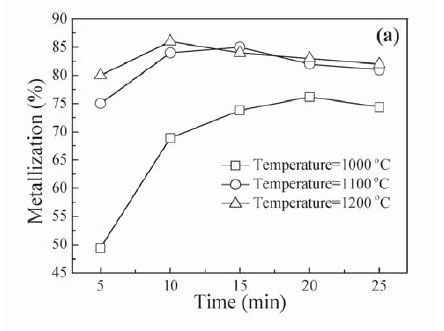
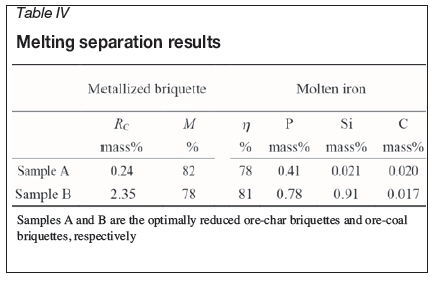
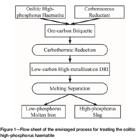
The FASTMELT® process was developed as an alternative to blast furnace ironmaking; in this process, high-quality molten iron is produced using direct reduction followed by high-temperature slag/metal separation. In this study, iron recovery and phosphorus removal from oolitic high-phosphorus haematite using the FASTMELT® process was investigated. The performance of two reducing agents, coal and wood char, was compared. Direct reduction experiments indicated that with optimized reductant addition, the ore-char and ore-coal briquettes attained metallization values of 82% and 78%, respectively, and residual carbon contents of 0.24 and 2.35%, respectively. The slag/metal separation experiments revealed that molten iron containing 0.41% phosphorus and 0.021% silicon (by mass) was produced from optimally reduced ore-char briquettes, and molten iron containing 0.78% phosphorus and 0.91% silicon from optimally reduced ore-coal briquettes. The study indicates that carbonaceous materials with high CO2 reactivity are suitable for use in the FASTMELT® process for phosphorus removal and iron recovery from oolitic high-phosphorus haematite.
Keywords High-phosphorus haematite; FASTMELT; reductant; coal; wood char; phosphorus removal
 Thumbnail
 Thumbnail
 Thumbnail
 Thumbnail
 Thumbnail
 Thumbnail
 Thumbnail
 Thumbnail
 Thumbnail
 Thumbnail
 Thumbnail
 Thumbnail