Optimization of flotation pH for the reverse flotation of an African low-grade BIF haematite ore
Abstract
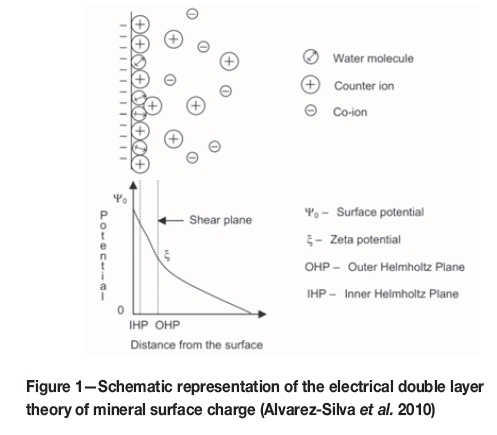
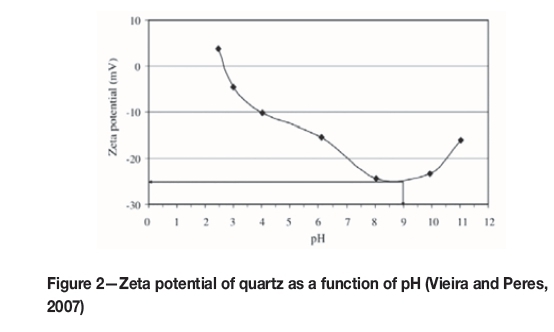
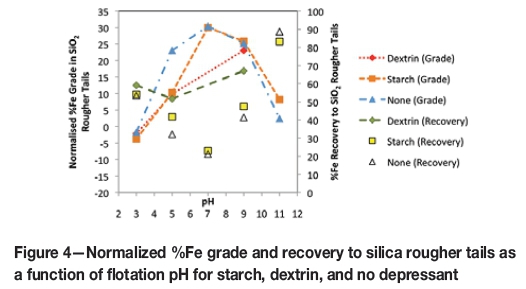
This article presents laboratory test work conducted on an African haematite ore to determine the influence of the flotation pulp pH on the final iron grade and recovery. Results show that a combination of an isodecyl ether propylene amine/amino acetate and 1,3-propanediamine, N-(3-(C10-C16-alkyloxy)propyl)-derivatives collector is suitable for separating haematite from quartz. Higher iron grades were obtained at pH levels between neutral and pH 9. This underlines the importance of the surface charge effect of the ore on its flotation characteristics. The results serve as good baseline conditions for further optimization.
iron ore; froth flotation; mineral processing; flotation reagents
 Thumbnail
 Thumbnail
 Thumbnail
 Thumbnail
 Thumbnail
 Thumbnail
 Thumbnail