Internal Stability of Coal Discard in Coal Co-Disposal Facilities
Abstract
Internal stability is a key consideration in the design and long-term performance of granular filters, as it precludes particle migration and internal erosion. This study evaluates the internal stability of coal discard material in coal co-disposal facilities. Reusing coal discards could reduce mine waste volumes and mitigate associated environmental impacts. However, coal discard material differs from most soils in terms of particle strength and density, with possible implications for hydraulic stability. Laboratory seepage tests were conducted on coal discard material under varying void ratios, subjected to a range of hydraulic gradients, and the results were used to confirm the applicability of the widely used empirical Kenney and Lau filter criterion to coal discard. Findings revealed that particle loss increased with higher void ratios. Nonetheless, particle migration remained minimal, with a maximum particle loss of only 0.2%, suggesting that coal discard exhibits sound internal stability under the tested conditions.
Coal discard; co-disposal; internal stability; particle migration; Kenney and Lau; grading curve
Introduction
The disposal of mine waste poses serious environmental and engineering challenges. Traditional methods involve separate disposal of coarse and fine waste streams (waste rock and tailings), leading to increased land use, long-term maintenance, and cost. Co-disposal, a method of disposing of both waste types in a single facility, offers a more efficient and sustainable alternative (Martin et al., 2002; Gowan et al., 2010).
Coal plays a significant role in global energy production, accounting for approximately 38% of worldwide electricity generation (Balat, 2006). Coal is even more vital in South Africa, providing about 72.1% of the country's primary energy needs (Eskom, 2021). The coal mining industry in South Africa generates a significant amount of waste annually, producing over 65 million tonnes of coal discard and tailings from coal beneficiation processes each year (Department of Energy, 2001). Coal discard is a waste by-product of coal mining composed of fine- and coarse-grained particles, rock fragments and silt-sized particles. Coal discard poses significant environmental hazards as it can contribute to acid mine drainage and undergo spontaneous combustion (Fred et al., 2012; Zhang et al., 2024), particularly in South Africa's arid climate, releasing greenhouse gases and contributing to environmental pollution. Given its abundance, coal discard can be used in coal co-disposal facilities to provide containment to accommodate coal tailings slurry, reducing its environmental impact. Within the containment, coal slurry mixed with coal discard are deposited.
This paper evaluates the internal stability of coal discard placed at a range of void ratios to determine its suitability as a material for the construction of containment walls in coal co-disposal facilities. Coal discard differs from most soils in terms of its low particle strength and density. This study evaluated the internal stability of coal discard using laboratory seepage testing conducted over a range of void ratios and hydraulic gradients. In addition, the applicability of the widely used Kenney and Lau (1985) criterion was examined for this material.
Internal stability of granular filters
Internal stability is the ability of a granular material to prevent the loss of its fine particles when acted upon by external forces such as seepage or vibration. Internal instability occurs when fine particles are lost from a matrix of coarse soil under seepage flow or vibration, potentially altering the geotechnical properties of the soil (Zhou et al., 2017). Internal instability can occur as suffosion or suffusion. Suffosion is the migration and loss of fine particles from the soil matrix, resulting in a reduction in the total volume of the soil. On the other hand, suffusion is the redistribution and selective removal of finer fractions from within the coarser fraction without any change in the total volume of the soil (Moffat et al., 2011). While suffusion maintains the total volume of the soil, it affects geotechnical properties such as permeability and strength, thereby diminishing the effectiveness of the soil as a filter material. As a result, internal stability is an important factor to consider when designing granular filters for embankment dams. The internal stability of granular soils is influenced by the particle size distribution (PSD) and the prevailing hydromechanical conditions (Kenney, Lau, 1985; Li, Fannin, 2008; Ke, Takahashi, 2012; Zhou et al., 2017).
The internal stability of granular materials can be evaluated using experimental and analytical methods. The experimental method of evaluating internal stability involves conducting hydraulic tests using suitable permeameter equipment. These tests typically employ a cylindrical tube filled with the soil sample, through which water flows under controlled hydraulic gradients (Kenney, Lau, 1985; Skempton, Brogan, 1994; Moffat, 2003). The test can be conducted with unidirectional downward seepage flow, low surcharge pressures and mild vibration applied by manual tapping (Kenney, Lau, 1985; Lafleur et al., 1989; Honjo et al., 1996). It can also be performed using unidirectional upward flow (Skempton, Brogan, 1994; Liu, 2005; Mao, 2005), or by applying flow in both directions with a surcharge (Moffat, 2003; Li, 2008) or without surcharge and vibration (Andrianatrehina et al., 2016). The assessment of internal stability is based on several criteria, including particle size distribution (PSD) analysis, visual observations during testing, and examination of the overflow water for fine particles (Chang, Zhang, 2013).
Analytical studies on internal stability are based on two criteria, namely empirical and theoretical criteria. The empirical criteria establish a geometric threshold for identifying the onset of internal instability in cohesionless soils. It primarily relies on grain size distribution analysis validated through laboratory testing. Empirical criteria involve criteria established by Kezdi (1979), Sherard (1979), and Kenney and Lau (1985; 1986). These criteria have been well established to evaluate the potential for instability of granular soils by evaluating the PSD curve. The theoretical criteria focus on the pore network using the constriction size distribution (CSD) to evaluate internal stability rather than just the PSD of the soil. The CSD represents the distribution of pore sizes or gaps between particles through which smaller particles or fluids can pass, making it crucial for understanding filtration, retention, and internal erosion processes (Indraratna et al., 2015; Vincens et al., 2015).
While analytical methods provide predictive insight based on soil gradation and pore structure, experimental hydraulic testing remains essential to directly observe particle migration and confirm internal stability under controlled seepage conditions.
During hydraulic testing, internal instability may be identified using three principal indicators:
1. Migration and loss of fine particles: A soil sample is termed unstable if continuous loss of fine particles occurs during testing (Kenney, Lau, 1985; Honjo et al., 1996; Moffat, 2003; Fannin, Moffat, 2006; Wan, Fell, 2008). The percentage or mass of the fine particles lost can be accounted for by either collecting the eroded fines (Lafleur et al., 1989; Skempton, Brogan, 1994; Honjo et al., 1996) or performing a post-test particle size distribution analysis (Kenney, Lau, 1985; Wan, Fell, 2008; Andrianatrehina et al., 2016). There is no benchmark value for classifying an internally unstable soil with respect to the percentage of fine particles lost. The minimum percentage of fines lost, as recorded by Kenney and Lau (1985), was about 7%, the value by Wan and Fell (2008) about 4%, the value by Skempton and Brogan (1994) 5.6%, while 4% was recorded by Chang and Zhang (2013). Andrianatrehina et al. (2016) opted to use a value of 5% for their experimental result, while a boundary of 4% was suggested by Chang and Zhang (2013) and Israr and Aziz (2019) as a benchmark percentage loss for classifying a soil as an unstable soil.
2. Variations in permeability: A soil may be considered internally unstable if it exhibits a sustained increase in permeability during hydraulic testing (Liu, 2005). In practice, abrupt rises or trends exceeding expected experimental variability are interpreted as evidence of ongoing particle migration and structural rearrangement.
3. Piping failure: In severe cases, internally unstable soils may exhibit piping, characterised by the formation of continuous erosion channels under relatively low hydraulic gradients compared to theoretical predictions (Skempton, Brogan, 1994). Piping represents an advanced stage of internal erosion rather than a primary diagnostic indicator and is typically preceded by particle migration and permeability changes
This study used the experimental method to assess the internal stability of the coal discard and then confirmed the applicability of the Kenney and Lau (1985; 1986) empirical method for evaluating the particle-size distribution curve of the coal discard, given its effectiveness in analysing widely graded granular materials.
Experimental methodology
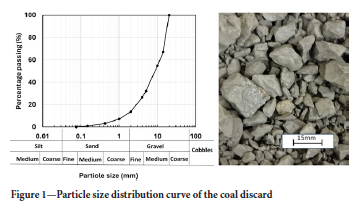
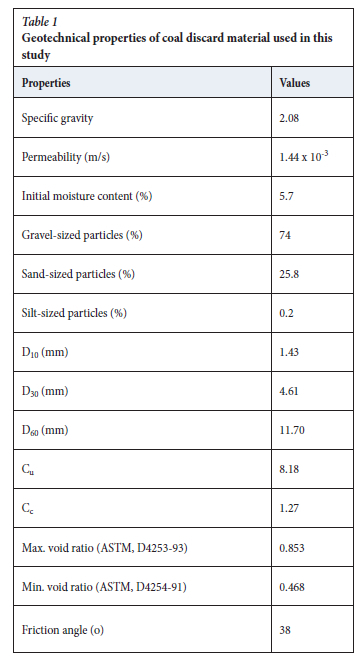
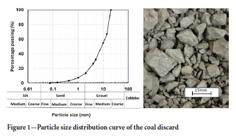
Disturbed samples of coarse coal discard were obtained from a TSF in Mpumalanga Province in South Africa. The collected samples were composed of a wide range of particle sizes, ranging from 2 μηι to 50 mm. To accommodate the permeameter's dimensional constraints and research requirements, particles larger than 19 mm and finer than 75 μηι were removed. This resulted in a sample composed of materials within the size range of 75 μm to 19 mm. This scalping was necessary to prevent clogging, equipment damage, and to maintain consistent hydraulic conditions during testing. The physical properties of the coal discard material are presented in Table 1 and the PSD is presented in Figure 1. The coal discard had a well-graded PSD curve and can be described as a well-graded sandy gravel.
To evaluate the internal stability of the coal discard material under a range of hydraulic gradients and void ratios, a series of laboratory tests were conducted using a rigid wall upward flow permeameter. The permeameter was made from a polycarbonate tube with an internal diameter of 194 mm and an external diameter of 200 mm. It was fabricated in three sections, i.e., the top, middle, and bottom sections. The top and bottom sections, each 300 mm long, had a 40 mm diameter opening at the base to facilitate water inflow and outflow. The middle section measured 240 mm in length. The three parts were joined together using 10 mm diameter tie rods with a rubber gasket between each section to prevent leakage. These dimensions were chosen in accordance with ASTM D 2434, which requires a minimum ratio of 8 to 12 between the maximum particle size and the diameter of the permeameter. The diameter chosen yields a ratio of 10.2, which satisfies the required standard.
Also, the dimensions were deemed sufficient in line with previous hydraulic studies (Moffat, 2003; Indraratna et al., 2015; Israr, Aziz, 2019) to prevent the potential development of preferential flow paths and boundary effects against the cell wall. Sandy gravel (with particle size ranging from 1 mm to 13.2 mm) was placed in the permeameter's top and bottom sections. The gravel at the top served as a filter, adding approximately 5.7 kPa of surcharge, stabilising the setup, while the gravel at the bottom acted as a filter, facilitating the uniform introduction of water into the discard.
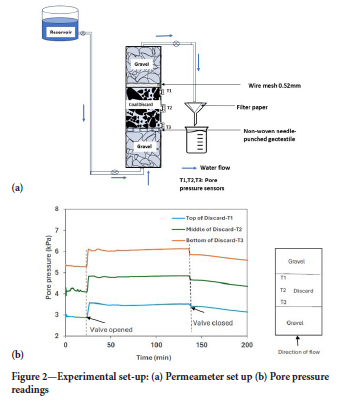
The discard was prepared at three void ratios of 0.5, 0.6, and 0.8, respectively, to represent packing conditions near the minimum, intermediate, and maximum void ratios of the coal discard in the field. The samples were uniformly compacted into the middle section of the permeameter column in five layers of 48 mm, resulting in a total sample height of 240 mm. Pore pressure sensors (T1, T2, and T3, see Figure 2b) were placed at the top, middle, and bottom of the sample to measure pore pressures. Measurements from these sensors indicated minimal variation along the column, confirming uniform flow and validating the applied hydraulic gradients. A non-woven needle-punched geotextile was placed between the bottom gravel filter and the coal discard to prevent the ingress of fine particles into the gravel filter. A wire mesh with a 0.52 mm opening size was placed between the discard and the top gravel to allow for the passage of fines during seepage flow in instances of internal instability.
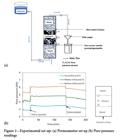
Water was introduced from a reservoir in which a constant head was maintained, providing upward flow through the permeameter, as shown in Figure 2a. The outflow water was collected in a measuring cylinder, and filter paper was used to collect any washed-out fines. The filter paper was replaced at 5-minute intervals until no further particle loss was observed to study temporal trends. Following Kenney and Lau (1985), the permeameter was lightly tapped at the sides during testing using a rubber mallet to introduce vibration to aid the mobilisation of fines. This was done in an effort to ensure conservative results, i.e., without vibration, internal erosion was less likely.
Results and Discussion
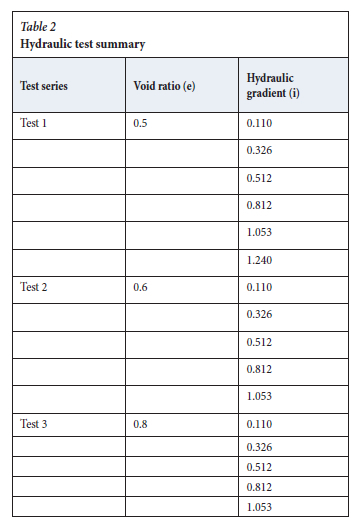
A total of 16 seepage tests were conducted, each lasting 100 minutes from initiating steady state flow (i.e., opening of the valve, Figure 2b). These tests studied the effects of varying hydraulic gradients across different void ratios. To maintain consistency in the void ratio tested across hydraulic gradients, a new sample was prepared for each test. Table 2 summarises the tests performed at each void ratio.
Particle migration occurred within the first 20 minutes of each test, except for the test under a hydraulic gradient of 1.24, where particle loss was still observed after 50 minutes.
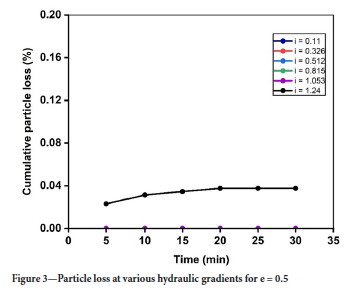
The cumulative particle loss observed for testing at e = 0.5 is illustrated in Figure 3. Particle loss was only observed at a hydraulic gradient of 1.24, and the particle loss was negligible, amounting to a total loss of only 0.038%. After flow initiation, there was an initial increase in particle loss, followed by stabilisation after the 20-minute mark. This indicates that the sample maintained a stable structure ,which prevented further particle migration.
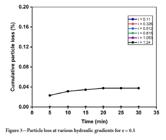
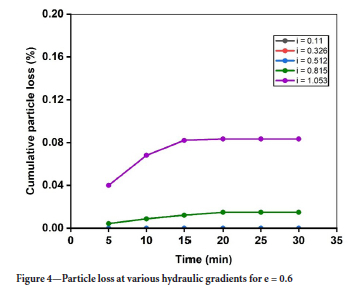
Figure 4 shows the results of testing conducted on specimens with a void ratio of e = 0.6. No particle migration was observed at lower hydraulic gradients (i = 0.11-0.512). At higher hydraulic gradients of 0.815 and 1.053, some particle loss was detected, indicating the onset of internal instability. At i = 0.815, particle loss occurred gradually before reaching a stable state, whereas at i = 1.053, particle migration was more rapid but stabilised within the first 15 minutes. Importantly, even under these higher hydraulic gradients, the total particle losses remained negligible.
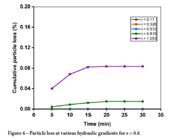
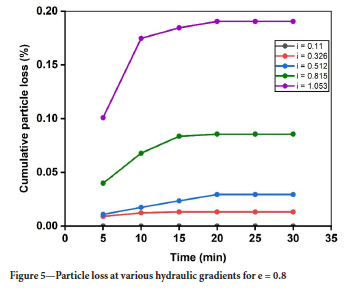
Figure 5 shows the results of testing conducted on specimens with a void ratio of e = 0.8. It shows a pattern of particle loss similar to that observed in Figures 3 and 4. At lower hydraulic gradients (i = 0.326 and 0.512), particle migration was minimal and gradual, stabilising quickly. With increasing gradients, particle movement became more pronounced and occurred at a faster rate before reaching a stable state. For specimens with a void ratio of e = 0.8, some particle loss was detected even at lower gradients, reflecting the looser packing, reduced interparticle friction, and larger pore spaces. However, the total particle losses remained negligible.
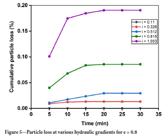
The overall trend suggests that the samples tended to stabilise after an initial phase of particle migration. This could be attributed to the removal of loosely bound particles within the sample during the early stages of testing. Once these particles had been lost, the coal discard structure appeared to develop a more stable matrix, preventing further migration of particles. This stabilisation was reflected in the flattening of the curves in each graph (Figures 3, 4, and 5), indicating that no further particle loss occurred beyond the initial migration phase.
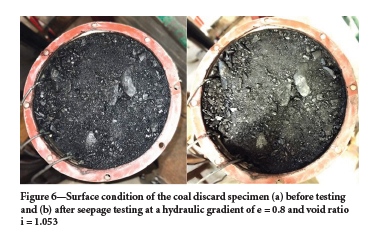
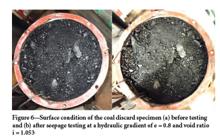
Visual comparison of the specimen surface before and after testing (see Figure 6) shows localised exposure of coarse particles and redistribution of fines, suggesting surface-level particle rearrangement during the initial stages of seepage. As testing progressed, the rate of particle migration decreased until stabilisation was achieved. This trend suggests that the early removal of loosely bound fines contributed to the formation of a relatively more stable coarse particle skeleton. Similar trends were reported by Lafleur et al. (1989), who observed that high seepage forces initially wash out finer particles until a stable soil structure is formed.
For the tested conditions, particle migration largely ceased after approximately 20 minutes, indicating that erosion was predominantly confined to the early phase of hydraulic loading. The onset and magnitude of particle loss were governed primarily by the combined influence of hydraulic gradient and void ratio rather than time alone. Higher void ratios exhibited particle migration at lower hydraulic gradients, highlighting the importance of compaction in reducing susceptibility to internal instability (Israr, Aziz, 2019; Indraratna et al., 2015).
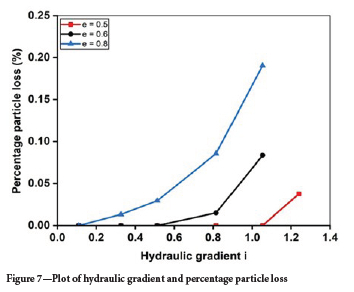
Figure 7 demonstrates how an increased hydraulic gradient influences the onset and propagation of particle loss. No particle loss was observed for void ratio e = 0.5 until testing was conducted at a gradient of 1.24. As the void ratio increased, particle migration was observed to initiate at significantly lower hydraulic gradients. For a void ratio of e = 0.6, the migration of particles was observed at hydraulic gradients of 0.815 and 1.053. Also, the migration of particles for a void ratio of 0.8 occurred much earlier at hydraulic gradients of 0.326. The percentage loss also increased as the hydraulic gradient increased for each test. This observation of increased particle loss with hydraulic gradient aligns with the findings of Skempton and Brogan (1994), who stated that internally unstable materials can exhibit instability at very low hydraulic gradients.
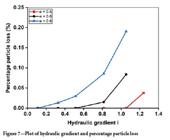
Both increased void ratios and higher hydraulic gradients play a crucial role in the internal stability of coal discards. As the void ratio increased, the material became more susceptible to particle migration even at lower hydraulic gradients, reducing its overall stability.
Comparison against empirical predictions
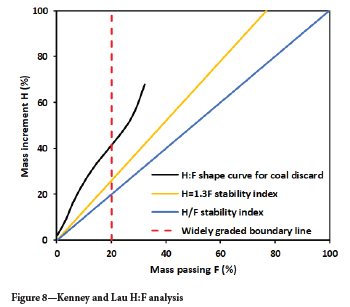
The classical method by Kenney and Lau (1985; 1986) was used to evaluate the coal discard grading curve. Kenney and Lau developed a method for evaluating internal instability based on the H:F ratio, where F is the mass fraction smaller than a given particle size D, and H is the incremental mass fraction measured between particle sizes D and 4D. According to the criterion, F will be less than 20% for what is defined as a widely graded primary fabric and less than 30% for a narrowly graded primary fabric.
Two conditions determine instability:
For loosely packed soils: H/F<1.3
For well-compacted soils: H/F<1.0
The Kenney and Lau method was developed for widely graded sand and gravel. This method has been found to better predict the instability of granular soils for widely graded soils compared to Kezdi and Sherard's methods (Moffat, 2003; Fannin, Moffat, 2006; Li, Fannin, 2008; Zhou et al., 2017).
A shape curve derived from the particle size distribution was plotted in H:F space (Figure 8) to evaluate its position relative to the Kenney and Lau instability threshold. The curve lies consistently above unity for F < 20%, indicating stability under both loose and well-compacted conditions, as defined by Kenney and Lau (1985; 1986). A minimum H:F value of 1.94 was obtained, exceeding the instability criterion by a substantial margin. The experimental results are consistent with the prediction of the Kenney and Lau criterion for stable behaviour.
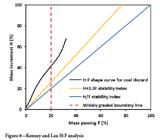
However, further testing on materials exhibiting instability would be required to comprehensively validate the criterion for coal discard. The long-term stability of coal discard, including potential particle degradation under prolonged saturation, was not investigated in this study. Previous studies (Eckersly, 1999; Campbell et al., 2016) indicate that coal discard stockpiles containing less than 10% fines (percentage finer than 0.5 mm) are typically free draining. While this suggests favourable drainage characteristics, the relevance to engineered co-disposal containment structures requires further long-term evaluation.
Conclusion and recommendations
The data presented illustrate the combinations of void ratio and hydraulic gradient under which the tested coal discard material remained internally stable. The maximum observed particle loss was 0.2% at a void ratio of 0.8, which is substantially below the 4% benchmark suggested by Chang and Zhang (2013), and Israr and Aziz (2019) for classification of internal instability. The Kenney and Lau analysis of the grading curve also predicted stability for this material, and this prediction was consistent with the experimental observations. However, it should be noted that only a single grading from one coal discard source was evaluated. Therefore, while the empirical assessment aligned with laboratory behaviour for the material tested, broader validation across a wider range of gradations and material types would be required to conclusively establish the general applicability of the Kenney and Lau criterion to coal discard materials.
A set of curves demonstrating percentage particle loss over a range of hydraulic gradients at various void ratios, such as those presented in Figure 7, provides useful experimental data for assessing the internal stability of coal discard materials in potential co-disposal applications. The results indicate that the tested material exhibited stable behaviour within the investigated range of hydraulic gradients and packing conditions. However, these findings are limited to the specific grading and material source evaluated in this study and should not be generalised without further investigation.
For practical implementation, material-specific seepage testing is recommended to confirm internal stability under representative field conditions. Field applications should ensure adequate compaction to achieve stable void ratios as well as confirmation that hydraulic gradients remain within the tested range. Higher gradients may lead to excessive particle migration and compromised performance.
CRediT author statement
F.O. Abimaje and S.W. Jacobsz: Conceptualisation and methodology.
F.O. Abimaje: Investigation, data curation, writing -original draft preparation and visualisation.
Prof. S.W. Jacobsz: Supervision, writing - reviewing and editing.
University of Pretoria Geotechnical Department: Resources and technical support.
Acknowledgements
I gratefully acknowledge and thank my supervisor, Prof. S.W. Jacobsz, for his guidance, and the University of Pretoria Geotechnical Department for their technical assistance.
References
- Andrianatrehina, L., Souli, H., Rech, J., Taibi, S., Fry, J.J., Ding, L., Fleureau, J. M. 2016. Analysis of the internal stability of coarse granular materials according to various criteria. European Journal of Environmental and Civil Engineering, vol. 20, pp. 936-953.
- ASTM International. 1993. Standard test methods for maximum index density and unit weight of soils using a vibratory table. ASTM D4253-93. West Conshohocken, PA: ASTM International, pp. 1-15.
- ASTM International. 1991. Standard test method for minimum index density and unit weight of soils and calculation of relative density. ASTM D4254-91. West Conshohocken, PA: ASTM International.
- Balat, M. 2006. Electricity from worldwide energy sources. Energy Sources, Part B: Economics, Planning, and Policy, vol. 1, no.4, pp. 395-412.
- Campbell, Q., Le Roux, M., Espag, C. 2016. Coal product moisture control using stockpiles. in Litvinenko, V. (ed.) XVIII International Coal Preparation Congress: 28 June-01 July 2016. Saint-Petersburg, Russia. Springer, pp. 747-752.
- Chang, D. S., Zhang, L. M. 2013. Extended internal stability criteria for soils under seepage. Soils and Foundations, vol. 53, no.4, pp. 569-583.
-
Department of Minerals and Energy. 2001. National inventory discard and duff coal: 2001 summary report. Pretoria: Department of Minerals and Energy. Available at: https://www.dmre.gov.za/energy-resources/energy-sources/coal/discards.
» https://www.dmre.gov.za/energy-resources/energy-sources/coal/discards - Eckersly, J. 1999. Moisture Changes & Stability Problems in Coal Stockpiles, Australian Coal Association Research Program, Project C4057.
-
Eskom. 2021. About electricity, facts and figures. CO 0007 Revision 16 (August 2021) Available: www.eskom.co.za
» www.eskom.co.za - Fannin, R., Moffat, R. 2006. Observations on internal stability of cohesionless soils. Geotechnique, vol. 56, no.8, pp. 497-500.306.
- Fred, B. Martin G, C., Hilary D.S. 2012. Chapter 34 Non-engineered fills. In ICE manual of geotechnical engineering. London: Thomas Telford Ltd.
- Gowan, M. Lee, M., Williams, D. 2010. Co-disposal techniques that may mitigate risks associated with storage and management of potentially acid generating wastes. In Mine Waste. 2010. Proceedings of the First International Seminar on the Reduction of Risk in the Management of Tailings and Mine Waste. Perth, Australia: Australian Centre for Geomechanics, pp. 389-404.
- Honjo, Y. Haque, M., Tsai, K. 1996. Self-filtration behaviour of broadly and gap-graded cohesionless soils. Geofilters' 96, vol. 96, pp. 227-236.
-
Indraratna, B. Israr, J., Rujikiatkamjorn, C. 2015. Geometrical method for evaluating the internal instability of granular filters based on constriction size distribution. Journal of Geotechnical and Geoenvironmental Engineering, vol. 141, no.4, p. 04015045. doi: 10.1061/(ASCE) GT.1943-5606.0001306
» https://doi.org/10.1061/(ASCE) GT.1943-5606.0001306 -
Israr, J., Aziz, M. 2019. Integrating the role of relative density on assessing internal stability of granular filters using existing geometrical methods. Arabian Journal of Geosciences, vol. 12, no. 17, p. 646. https://doi.org/10.1007/s12517-019-4850-x
» https://doi.org/10.1007/s12517-019-4850-x - Ke, L., Takahashi, A. 2012. Strength reduction of cohesionless soil due to internal erosion induced by one-dimensional upward seepage flow. Soils and Foundations, vol. 52, no. 2, pp. 698-711.
- Kenney, T., Lau, D. 1985. Internal stability of granular filters. Canadian Geotechnical Journal, vol. 22, no.2, pp. 215-225.
- Kenney, T., Lau, D. 1986. Internal stability of granular filters: Reply. Canadian Geotechnical Journal, vol. 23, no. 3, pp. 420-423.
- Kezdi, A. 1979. Soil Physics - Selected Topics, Amsterdam, Elsevier Scientific Publishing Co.
- Lafleur, J. Mlynarek, J., Rollin, A. L. 1989. Filtration of broadly graded cohesionless soils. Journal of Geotechnical Engineering, vol. 115, no. 2, pp. 1747-1768.
- Li, M. 2008. Seepage-induced failure of widely-graded cohesionless soils. University of British Columbia.
- Li, M., Fannin, R. J. 2008. Comparison of two criteria for internal stability of granular soil. Canadian Geotechnical Journal, vol, 45, no. 9, pp. 1303-1309.
- Liu, J. 2005. Seepage control of earth-rock dams theoretical basis, Engineering experiences and lessons. Beijing, China: China Water & Power Press.
- Mao, C. 2005. Study on piping and filters: Part I of piping. Rock and Soil Mechanics, vol. 26, no. 2, pp. 209-215.
-
Martin, T. Davies, M. Rice, S. Higgs, T., Lighthall, P. 2002. Tailings facilities. London: International Institute for Environment and Development (IIED). Available at: https://pubs.iied.org
» https://pubs.iied.org -
Moffat, R. 2003. Experiments on the internal stability of widely graded cohesionless soils. PhD thesis. University of British Columbia. Available at: https://open.library.ubc.ca/soa/cIRcle/collections/ubctheses/831/items/1.0063322
» https://open.library.ubc.ca/soa/cIRcle/collections/ubctheses/831/items/1.0063322 - Moffat, R. Fannin, R. J., Garner, S. J. 2011. Spatial and temporal progression of internal erosion in cohesionless soil. Canadian Geotechnical Journal, vol. 48, no. 3, pp. 399-412.
- Sherard, J. 1979. Sinkholes in dams of coarse, broadly graded soils. In Proceedings of the 13th ICOLD Congress. New Delhi, India, pp. 25-35.
- Skempton, A., Brogan, J. 1994. Experiments on piping in sandy gravels. Geotechnique, vol. 44, no.3, pp. 449-460.
-
Vincens, E. Witt, K. J., Homberg, U. 2015. Approaches to determine the constriction size distribution for understanding filtration phenomena in granular materials. Acta Geotechnica, vol. 10, no.3, pp. 291-303. https://doi.org/10.1007/s11440-014-0308-1
» https://doi.org/10.1007/s11440-014-0308-1 - Wan, C. F., Fell, R. 2008. Assessing the potential of internal instability and suffusion in embankment dams and their foundations. Journal of Geotechnical and Geoenvironmental Engineering, vol. 134, no. 3, pp. 401-407.
- Zhang, W. Zhang, C. Lei, X. Quintero Olaya, S. Zhu, Y. Zhao, Z. Jensen, S., Williams, D.J. 2024. Instrumented column testing on long-term consolidation and desiccation behaviour of coal tailings under natural weather conditions. Acta Geotechnica, vol. 19, pp. 1891-1909.
- Zhou, Z.-Q. Ranjith, P. G., Li, S.-C. 2017. Criteria for assessment of internal stability of granular soil. Proceedings of the Institution of Civil Engineers-Geotechnical Engineering, vol. 170, no. 2, pp. 73-83.

Revised: 10 Mar. 2026
Accepted: 27 Mar. 2026
Published: Jun. 2026