Enhancing study practices: Are first-year students ‘resistant to change'?
Abstract
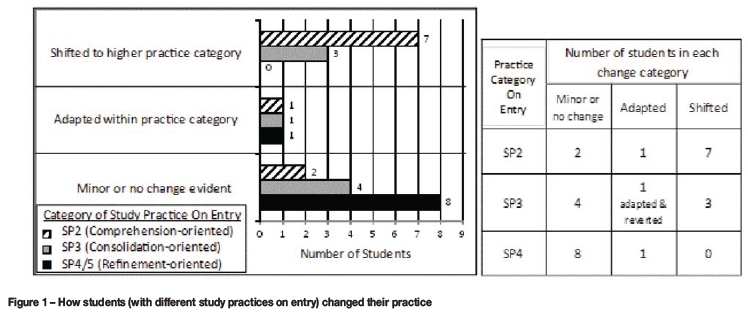
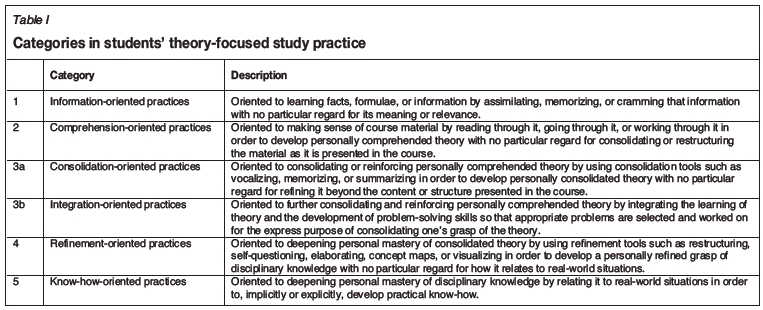
One of the strategies for trying to reduce attrition among first-year students and for improving their academic performance generally is to include some kind of study skills module in the first-year programme. One of the reasons often given for the relative lack of success of such programmes is the claim that students are 'resistant to change'. This paper presents a study that investigated this claim by interviewing chemical and metallurgical engineering students in a South African university at the beginning and end of their first year. The basis for evaluating the extent to which students' practices appeared to change was a set of six categories of practice identified in a related phenomenographic study on the learning practices of the same students. It was evident from the interview data that even where some change in practice had occurred, the extent of change was somewhat disappointing. For those who reported changing their practice, the primary change driver appeared to be underperformance in the mid-year exam. Underperformance prior to that seemed to exert less force and students did not appear to give very serious attention to class or textual input/activities on study practices. 'Resistance to change' appeared to be implicit in nature and to be more a consequence of overconfidence and the 'momentum' resulting from habit rather than an explicit attitudinal resistance.
engineering education; first-year education; resistance to change; study practices; study skills; student retention
 Thumbnail