Leveraging the integrated operational excellence model to enhance operational efficiency in South African gold mines
Abstract
Mining operations face challenges like declining ore grades, rising costs, labour shortages, and aging infrastructure, necessitating increased efficiency. However, achieving operational efficiency in underground mining is complicated by inherent limitations, non-value-adding tasks, and inconsistent methodologies. This study examines the application of the integrated operational excellence model to improve operational efficiency in South African gold mining operations. The research conducted a combined quantitative and qualitative analysis, presenting a framework that illustrates the application of the theory of constraints and Lean Six Sigma in enhancing operational efficiency and excellence within the mining sector over six months in 2018. The study identifies key limitations, inefficiencies, and inconsistencies that impede operational excellence within the integrated operational excellence model. Successful implementation requires a deep understanding of the interdependencies between personnel, processes, and technology. These insights are valuable for mining executives, engineers, and policymakers seeking to modernise operations and improve sustainable productivity. Furthermore, the research paves the way for broader adoption of integrated excellence frameworks across South Africa's mining sector.
Operational efficiency; theory of constraints; Lean Six Sigma; operational excellence; South African gold mine
Introduction
The South African gold mining industry faces significant challenges due to volatile market conditions and rising operational costs, necessitating a focus on efficiency improvements to maintain profitability and operational sustainability (Robinson, 2024; De Donno, 2024; Lane et al., 2015). This approach involves strategic investments in workforce development, streamlining processes, and technological advancements during the ore extraction and mineral processing phases. Such measures can bolster profitability even amid market volatility. Furthermore, studies conducted by Lala et al. (2016) and Ebrahimi (2018) suggest that efficiency improvements can mitigate the impact of price fluctuations and contribute to maintaining a competitive edge. However, the path to greater efficiency is often filled with obstacles such as inherent limitations, non-value-adding activities, and inconsistent practices. According to Rajini et al. (2018), these factors can hinder productivity, which is essential for optimising output. Therefore, mining operations should implement a comprehensive strategy, such as the integrated operational excellence model, to navigate these challenges. This approach entails evaluating existing practices, eliminating wasteful processes, and cultivating a culture of continuous improvement through methodologies like the TOC and LSS (Rajini et al., 2018; Ekleş, Ay Türkmen, 2022).
While extensive applied research has examined the implementation and integration of the theory of constraints (TOC) with Lean Six Sigma (LSS) to enhance efficiency and productivity in various sectors, including manufacturing and business services (Mishra, 2023; Gupta et al., 2022; Ekleş, Ay Türkmen, 2022; De Jesus Pacheco, 2015), the mining industry has yet to fully embrace these methodologies (Rajini et al., 2018). This lack of adoption has resulted in a noticeable performance gap. According to Berbner et al. (2022), the mining sector has experienced minimal productivity growth, increasing by only 1% over the past 25 years, while manufacturing and business services have seen increases of 15% and 25%, respectively. Supporting this perspective, Costantini et al. (2022) indicated a 3.5% annual decrease in the Mining Productivity Index over the past decade, which has resulted in a 28% reduction in efficiency for commodity extraction. Conversely, Lazarenko et al. (2021) highlighted that the reduction in mining output, coupled with the increasing demand for essential minerals like copper and lithium, accentuates the necessity for digital transformation, human development, and process optimisation. Specifically, the Driefontein operation in underground gold mining reported a decrease in its mine call factor, a key performance indicator in the industry, from 75% to 70%. This decline has resulted in significant financial difficulties (Schwartz, 2022).
Operational efficiency
Operational efficiency in underground gold mining refers to the effectiveness with which resources, including labour and equipment, are utilised to extract gold from the earth (Fourie, 2016). Enhancing this efficiency can lead to significant benefits, such as reduced operational costs, increased output, and improved safety conditions for workers (Dutta, 2024). According to Hermanus (2017), these levels of operational efficiency in underground gold mining are affected by technological advancements, operational practices, and the geological properties of the mine. Recently, Flores-Castañeda et al. (2024) noted that the industry has seen significant efficiency improvements thanks to the adoption of innovative technologies, including automated drilling systems, real-time data analytics, and advanced ore sorting techniques. These technologies not only enhance the precision of mining operations but also reduce the time and resources required to extract gold from the earth (Lumadi, Nyasha, 2024).
Mining companies are improving operational efficiency through tailored strategies and innovations, exemplified by the following three mines.
Harmony Gold Mining has optimised its operations by prioritising cost control, safety, and technology-driven improvements. The company has collaborated with ETA Operations to enhance underground conditions, resulting in savings of R100 million. They utilise Industry 4.0 tools, such as the internet of things (IoT) and big data analytics, for digital simulations. Harmony has fostered a safety-oriented culture, expanded tailings retreatment, and achieved underground recovered grades exceeding 6 g/t, all while maintaining costs within target ranges (Breytenbach, 2017). Rio Tinto has implemented automation, AI, and infrastructure upgrades to enhance fuel efficiency, minimise delays, and reduce energy and water consumption in its operations. The company has introduced the AutoHaul™ rail system, copper NuWave™ sorting, safe production system (SPS), AI-driven ore sorting, and strategic restructuring into three divisions to align with energy transition goals and improve capital productivity (Rio Tinto, 2020; Hermanus, 2017)
Anglo American has adopted FutureSmart Mining™ and integrated artificial intelligence to enhance planning and sustainability results. The company has created a unified digital interface called the VOXEL platform, along with AI-driven ore sorting and recovery technologies. Additionally, it has streamlined its portfolio to focus on high-margin sectors such as copper, iron ore, and crop nutrients. The company has also trained over 7,000 employees to become "citizen data scientists." (Anglo American, 2024).
The efficiency of underground gold mining largely depends on the mining method employed. According to Rodovalho et al. (2024) and Copland and Nehring (2016), techniques such as cut-and-fill, room-and-pillar, and sublevel stoping each have distinct advantages and disadvantages that can impact overall productivity and safety. For instance, cut-and-fill mining allows for selective extraction of ore, which helps minimise waste; however, this method can be more labour-intensive and time-consuming compared to others. In contrast, room-and-pillar mining generally achieves higher production rates but may result in increased ore dilution and lower recovery rates (Rodovalho et al., 2024).
Theory of constraints: improve operational efficiency
The theory of constraints (TOC), developed by Dr. Eliyahu Goldratt in the 1980s, is essential for organisations seeking to improve operational efficiency and achieve sustainable growth, especially in gold mining. Research by Chikwanda and Mntambo (2023) and Dutta (2023), emphasises TOC's focus on identifying and managing bottlenecks-factors that limit output, such as equipment constraints and labour shortages. Ramasu et al. (2017) noted that implementing TOC enhances a company's responsiveness to market changes, providing advantages such as reduced costs, improved quality, and increased flexibility. However, challenges in TOC adoption do exist. For example, there is a need for cultural transformation, which may encounter resistance from employees accustomed to traditional methods (Markgraf, 2021). Additionally, the complexity of mining operations, which is influenced by unique geological and market conditions, further complicates the implementation of TOC (Claassen, 2016).
Lean Six Sigma: improve operational efficiency
Lean Six Sigma is a strategic framework that combines Lean and Six Sigma methodologies to enhance operational efficiency, particularly in the underground mining sector (Salah, Rahim, 2019). According to Antony et al. (2017), Lean focuses on eliminating waste in terms of time, materials, and labour, while Six Sigma aims to reduce defects and variability in processes. When these methodologies are integrated, they provide tools that streamline operations, leading to increased profits, reduced costs, and improved collaboration (Antony, 2011). As noted by Kesek et al. (2023), and Salah and Rahim (2019), implementing Lean Six Sigma principles promotes excellence within the mining industry by optimising resource utilisation, decreasing costs, and enhancing safety. Oladipupo et al. (2023) highlight that key tools for optimising operations include DMAIC, value stream mapping, Kaizen events, and root-cause analysis. However, the application of Lean Six Sigma in mining may face several challenges, such as resistance to change, insufficient training and leadership support, difficulties in data collection, and a loss of momentum (Sharma, 2023).
Integration of theory of constraints and Lean Six Sigma
The integration of the TOC with LSS greatly enhances operational efficiency, allowing organisations to more effectively reach their objectives (Mishra, 2023; Ekleş, Ay Türkmen, 2022; Rajini et al., 2018). As highlighted by Sukwadi et al. (2021), this methodology emphasises the identification and removal of bottlenecks, the optimisation of workflows, and the minimisation of waste, which ultimately boosts productivity and reduces costs. In the mining sector, this combination promotes a culture of continuous improvement, encouraging employees to address inefficiencies and assume responsibility for their roles. Furthermore, Rajini et al. (2018) noted that this integration increases agility in a swiftly evolving market, enabling companies to seize new opportunities while fostering sustainable practices. In conclusion, the amalgamation of TOC and LSS empowers organisations to succeed in a dynamic landscape, ensuring their competitiveness while adhering to principles of sustainability.
Table 1 presents successful case studies illustrating the combination of the theory of constraints with Lean Six Sigma.
Framework of the integrated operational excellence model
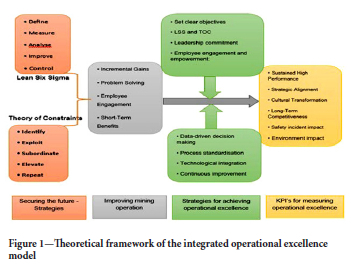
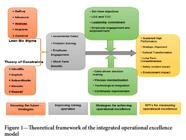
Through the analysis of secondary sources, the integrated operational excellence model for enhancing operational efficiency in gold mining can now be constructed.
Materials and methods
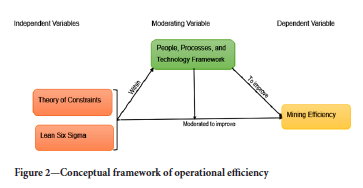
This research employed a mixed-methods approach to investigate how the integration of theory of constraints (TOC) and Lean Six Sigma (LSS) enhances operational efficiency in the mining industry. It examined the impact of personnel development, process optimisation, and technology implementation on performance. The study began with a systematic review of integrated TOC and LSS case studies from academic literature to inform the methodology and framework.
Video discussions with executive committee members and fieldwork with improvement team experts, led by Mr. C. Roos and the researcher, respectively, provided crucial insights into improving underground operations through shared experiences and best practices. In 2018, data were collected across three operations over six months using safety audit forms, geotechnical sensors, and employee evaluation templates. Data from safety audits, lost blast reports, employee assessments, and geotechnical reviews were standardised and digitised into the Mineral Resource Management system, facilitating streamlined analysis and reporting, and informing the development of the fishbone diagram and value stream mapping. Building on Rajini et al.'s (2018) model, KPIs (tonnage, quality, costs, and safety) were integrated to align individual objectives with throughput targets, creating a cohesive performance strategy. Monthly progress was tracked using a prioritised ranking system in Microsoft Excel.
Thematic analysis was then used to synthesise qualitative and quantitative data, identifying key patterns and themes.
Integration of Lean Six Sigma and theory of constraints
Integrating the theory of constraints (TOC) with Lean Six Sigma (LSS) created a holistic strategy for achieving operational excellence in underground mining. This unified approach facilitated the identification and removal of inefficiencies while also improving process quality, ultimately resulting in enhanced productivity and safety within mining operations.
Identify constraints
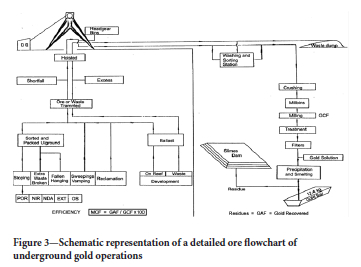
In order to enhance operational efficiency, the initial step involved recognising the limitations within the underground stoping process. A flowchart (Figure 3) that delineates the entire mining operation, from ore extraction to processing, would accomplish this.
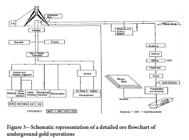
Figure 3 shows how mined ore and waste move from extraction to processing or disposal, as detailed in the Mineral Resource Management report. The mine surveyor plays a key role in measuring the amounts of ore and waste rock extracted, overseeing their disposal, and identifying any discrepancies in tonnage. This involves comparing the tonnes available for hoisting with the actual tonnes hoisted, which helps find any excess or shortfall. A flowchart provides a clear overview of how each phase connects, making it easier to spot bottlenecks or areas where resources may be underused. Besides highlighting inefficiencies, flowcharts also focus on important performance indicators like the mine call factor and overall recovery factor. The MCF, which is the ratio of gold accounted for (GAF) to gold called for (GCF), offers vital insights into the efficiency and productivity of mining operations. Additionally, the GAF indicates the amount of gold recovered, based on the London Good Delivery bar, which weighs about 12.4 kg or 400 troy ounces, including the residue sent to slime dams. Consequently, a flowchart helps provide a thorough understanding of how each phase interconnects, making it easier to identify bottlenecks or areas where resources may be underutilised.
Analyse constraints
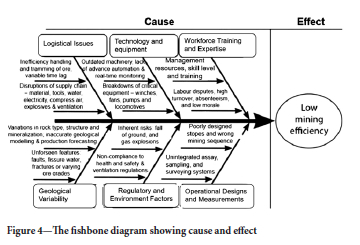
The improvement team used a systematic problem-solving approach to analyse factors contributing to low MCF and identify obstacles in the Mineral Resource Management system that affect operational efficiency. They used the TOC to break down complex issues and organise contributing factors using a fishbone diagram.
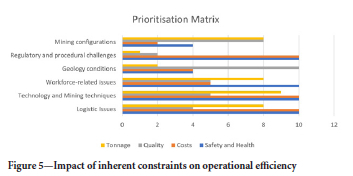
Figure 4 presents the fishbone diagram used for root-cause analysis and problem-solving. This visual tool helps identify and organise potential causes of a problem, clarifying the connections between causes and effects. The team focused on critical areas to enhance operational performance by analysing the root causes of existing challenges. They used a prioritisation matrix to score various factors influencing efficiency on a scale from 1 to 10, highlighting urgent issues that require immediate action as well as those that can be addressed over time. The findings are illustrated in Figure 5, which fosters alignment among team members and encourages collaboration for necessary changes.
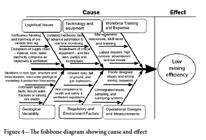
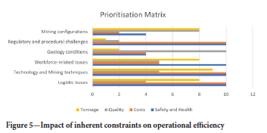
Figure 5 shows a prioritisation matrix, a key tool in the TOC framework. It helps operations focus on significant constraints by evaluating their impact on KPIs like tonnage, quality, costs, and safety, thereby optimising mining operations. The matrix prioritises actions based on importance and urgency, identifying logistical, technological, and regulatory challenges. Addressing these constraints, such as logistical and material handling problems (Table 2), can significantly improve operational efficiency and profitability.
The TOC emphasises the need to maximise operational time, enhance equipment availability, and improve the flow of ore through a planning process that identifies and eliminates bottlenecks. This integrated approach facilitates more efficient resource use and smoother operations, ultimately leading to increased productivity and performance in the mining industry.
Application of Lean Six Sigma
LSS plays a crucial role in underground gold mining, where safety, accuracy, and cost efficiency are top priorities. This methodology provides a systematic approach to continuous improvement, ensuring that operations are optimised while maintaining high standards.
Value stream mapping in underground stope mining
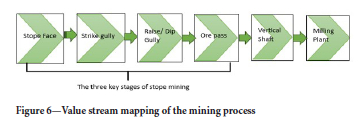
LSS is a highly effective methodology that has found extensive application in various sectors. This is particularly demonstrated through techniques such as value stream mapping (VSM), the 5S methodology, and the DMAIC framework. VSM enables mining operations to clearly visualise the flow of materials and information throughout the production process, as depicted in Figure 6.
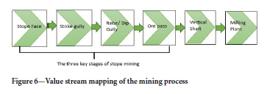
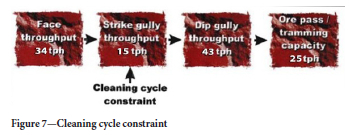
Figure 6 emphasises the critical role of value stream mapping (VSM) in the mining phase. VSM enables mining operations to clearly visualise the flow of materials and information throughout the production process. As a fundamental aspect of LSS methodology, VSM is essential for improving gold extraction and processing. It accomplishes this by identifying inefficiencies, redundancies, and delays, such as the cleaning cycle constraint illustrated in Figure 7.
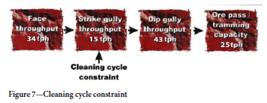
In Figure 7, the throughput of the strike gully is a critical constraint that sequentially impacts the raise (dip) throughput, which, in turn, significantly affects tramming capacity. Therefore, effective mine planning should prioritise the extraction of additional ore from the strike gully during each shift to minimise the risk of ore lockup. This visual representation not only highlights inefficiencies but also serves as a foundation for developing targeted strategies to streamline operations, ultimately leading to increased productivity and reduced operational costs.
Application of the 5S methodology in underground stope mining
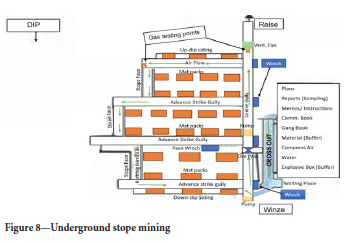
A crucial aspect of LSS in mining is the 5S methodology, which stands for sort, set in order, shine, standardise, and sustain. This technique highlights the importance of maintaining an organised and efficient work environment. In underground mining, where space is often limited and conditions can be hazardous, the implementation of 5S can lead to significant improvements in both safety and efficiency. When tools and materials are easily accessible and workspaces are kept clean and orderly, mining teams can reduce the time spent searching for equipment and minimise the risk of accidents. This concept is illustrated in Figure 8.
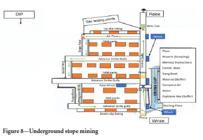
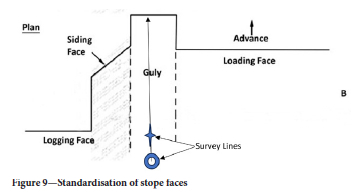
Figure 8 indicates the importance of a detailed worksite plan that is displayed in the waiting area to keep workers informed and ensure safe navigation around the site. It is essential to maintain clean gullies and equipment for both safety and operational efficiency in mining. Gullies serve several important purposes: they help remove blasted rock, provide access for miners and materials, enhance air circulation, and prevent the buildup of harmful gases, thereby safeguarding worker health. Additionally, effective water management is crucial, as stagnant water can lead to slips and obstruct the extraction process. Well-maintained gullies boost safety and productivity by facilitating timely blasting and ensuring a steady supply of minerals, ultimately minimising downtime. The next phase, standardisation, will establish clear guidelines for all employees, leading to improved performance and safety. This concept is illustrated in Figure 9.
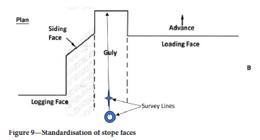
In Figures 9 and 10, the advance strike gully (ASG) is designed for transporting blasted ore, with standardised dimensions for stope faces and gullies. The blasting of the ASG must extend beyond the face in accordance with specific survey line guidelines. Additionally, the 5S approach aims to sustain improvements by ensuring that crew members are well-trained in standard operating procedures and that they receive ongoing training aligned with organisational goals. Regular assessments are conducted to maintain these standards.

DMAIC framework
The DMAIC framework from Six Sigma-define, measure, analyse, improve, and control-offers a structured approach to problem-solving that is particularly useful in the mining sector. Each phase of DMAIC enables teams to systematically address issues that arise during operations. In the define phase, specific problems are identified. The measure phase focuses on quantifying the extent of these issues, while the analyse phase investigates the root causes, leading to targeted improvements in the improve phase. Finally, the control phase ensures that these improvements are maintained over time, thereby reducing variability and enhancing overall quality in mining processes.
A thorough examination of mine resource management (MRM) reports, collaborative brainstorming sessions, and insights from researchers such as Balci and Kumral (2024), Schwartz (2022), Mhlongo (2021), Xingwana (2016), and Bascetin et al. (2011) have identified key factors contributing to the notably low mine closure factor (MCF) and overall inefficiency of mining operations. A concise summary of these findings is presented in Table 3, which outlines the primary causes.
Several factors lead to a low MCF, including constraints, waste, and inconsistent operational practices, as illustrated in Table 4.
Table 4 outlines the problem statement of the study, focusing on constraints related to operational efficiency, waste generation, and quality control in the mining sector. It identifies the key factors that influence mining efficiency and ore quality while also highlighting opportunities for further research and strategies to enhance mining performance.
Integrate people, processes, and technology (PPT) framework
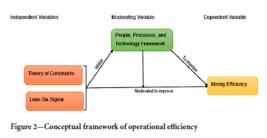
This research employed an empirical model created by Rajini et al. (2018) that effectively aligns individual goals with organisational throughput targets using a system of weighted rankings and iterative goal tracking. This strategy integrates the TOC with LSS, emphasising the interaction among people, processes, and technology. The aim is to enhance operational efficiency and promote operational excellence within the gold mining industry.
> People and process (scale): As emphasised by the TOC and LSS, workers are the most important resource of an organisation. They can be supported to use their intelligence to ensure that processes remain effective and that waste is minimised or ideally eliminated. This approach encourages all workers to participate in activities, leading to improved operational performance. The solutions provided by TOC and LSS are highly effective and tailored to meet the specific needs of each situation, addressing issues of ownership and accountability in boosting performance and productivity. Additionally, these approaches highlight the importance of involving people in the optimisation of systems and processes.
> People and technology (innovate): In today's industrial environment, the success of an organisation largely depends on its people and technology. By integrating the TOC with LSS, organisations can leverage advanced technology for data analysis and automation, allowing them to quickly identify bottlenecks with ease. This process encourages the workforce to embrace new tools that enhance productivity. Additionally, investing in training helps employees make informed decisions and improves their problem-solving skills.
> Process and technology (automate): The integration of technologies with operational processes is crucial for successfully applying the principles of TOC and LSS in mining operations. Automating repetitive tasks allows one to redirect human efforts toward strategic objectives, which increases efficiency and minimises human errors. New technological innovations, such as the internet of things (IoT) and artificial intelligence (AI), enhance computing power and provide real-time information. This information can be utilised for decision-making and process optimisation.
Integrating technology, optimising processes, and aligning the workforce can significantly enhance output, reduce costs, and promote sustainability. By utilising advanced tools and methodologies, organisations can streamline their operations, leading to better resource use and increased productivity. This comprehensive approach fosters a more agile work environment and supports long-term environmental goals, ultimately creating a more competitive and responsible business model.
Foster continuous improvement
Integrating the TOC with LSS has significantly transformed organisational culture by embedding continuous improvement into daily operations. This collaboration leverages the strengths of both methodologies, enabling employees to proactively identify inefficiencies and enhance processes. As a result, a culture of innovation emerges, encouraging team members to challenge existing practices and explore new solutions for improving productivity. This synergy cultivates a problem-solving workforce that is committed to the company's success, equipping the organisation with the agility needed to navigate fluctuating commodity markets. In a rapidly changing landscape, the ability to adapt is essential, and these methodologies provide a systematic framework for identifying bottlenecks and optimising resource allocation, which empowers effective responses to market dynamics.
This adaptability helps mitigate risks from market fluctuations and enables the company to seize new opportunities, thereby strengthening its competitive edge. The outcomes are evident: sustainable cost reductions and increased productivity. By addressing inefficiencies and prioritising value creation, the organisation has developed a more efficient operational framework that minimises waste and maximises output. These enhancements have not only positively impacted financial performance but also bolstered the company's reputation as an industry leader. Consequently, the strategic integration of TOC and LSS has positioned the organisation for immediate success while laying a foundation for long-term growth. This dedication to ongoing enhancement keeps the company agile and resilient, prepared to address future challenges.
Discussion
This research aims to explore and implement the integrated operational excellence (IOE) model as a strategic framework designed to enhance operational efficiency in South African gold mines. By conducting a thorough analysis of current operational practices and identifying areas of inefficiency, the study seeks to apply continuous improvement methodologies, such as the TOC and LSS. This approach creates a holistic strategy that aligns people, processes, and technology. The primary focus is on optimising resource utilisation, reducing operational costs, increasing throughput, and fostering a culture of excellence across mining operations. Ultimately, the research aspires to provide practical insights and a replicable model that can drive sustainable productivity improvements within the South African gold mining sector.
Integrating the TOC and LSS is essential for improving operational efficiency by streamlining processes and enhancing productivity. TOC focuses on identifying bottlenecks that disrupt workflow, while LSS aims to eliminate waste and reduce variability. Together, they form a comprehensive framework that optimises performance, ensuring effective use of resources and high-quality output. This collaboration enables organisations to pinpoint inefficiencies and implement targeted solutions, creating a more agile production environment. However, successfully implementing this integrated framework comes with challenges. A significant obstacle is resistance to change, which may arise from employees' reluctance to alter established routines or fear of the unknown. Additionally, adequate training is crucial; without proper education on the principles and practices of TOC and LSS, employees may find it difficult to adapt to new processes and technologies. This knowledge gap can lead to misunderstandings and diminish the overall effectiveness of the integration. Therefore, organisations must proactively address these challenges to ensure a smooth transition.
Several factors can facilitate the successful adoption of an integrated approach that combines the TOC and LSS. Strong leadership support is essential; leaders establish the organisation's tone and can inspire a shared vision of operational excellence. When leaders actively promote the integration of TOC and LSS, they create an environment where employees feel empowered to embrace change. As a result, mines employing this model have seen significant reductions in waste and variability, leading to improved operational stability and cost efficiency (Hia et al. 2024; Kesek et al. 2023). A commitment to continuous improvement is also crucial. Organisations that prioritise ongoing development and learning are more adept at adapting to changing market demands and internal challenges. Additionally, fostering a cultural shift toward operational excellence is vital for sustaining the benefits of this integration. Such a cultural transformation promotes a mindset focused on efficiency and quality throughout the organisation. Therefore, by instilling values of collaboration, accountability, and innovation, organisations can build a workforce that is not only skilled in TOC and LSS methodologies but also motivated to pursue excellence in all aspects of their work.
Ultimately, this holistic approach to integrating people, processes, and technology can lead to significant advancements in operational efficiency, positioning organisations for long-term success in a competitive landscape.
Managerial implications
The integrated operational excellence model is a valuable tool for improving operational efficiency in South African gold mines. It encourages managers to take a holistic view of operations, recognising the interconnectedness of various processes within the mining environment. This approach helps identify bottlenecks and inefficiencies, leading to streamlined operations, effective resource allocation, and optimal contributions from each segment of the production chain. The model promotes a culture of continuous improvement, urging managers to regularly assess operational practices and implement innovative strategies to enhance productivity. By utilising data analytics and performance metrics that combine the TOC with LSS, managers can pinpoint areas that need improvement and make informed, data-driven decisions. This methodology not only reduces costs but also allows organisations to respond swiftly to market changes, ultimately increasing profitability in a competitive environment. Additionally, the integration of this model facilitates informed decision-making, which contributes to cost reductions and the ability to adapt quickly to evolving market demands. Moreover, it emphasises the importance of fostering a culture of excellence among employees, which enhances their sense of value and motivation. This, in turn, leads to greater job satisfaction, higher retention rates, and increased willingness to share ideas and engage in problem-solving initiatives.
Conclusion
The quest for operational excellence in underground gold mining involves more than simply adopting various methodologies; it requires the development of an integrated framework that combines the strengths of the TOC and LSS, focusing on the essential elements of people, processes, and technology. TOC emphasises the identification and management of critical constraints that limit performance, while LSS provides a structured approach to reducing waste and improving process variability. The PPT model complements this comprehensive operational excellence strategy by highlighting the interactions between people, processes, and technology. This integrated operational excellence model offers a holistic approach for mining companies to effectively navigate industry complexities, proactively address challenges, and achieve sustainable growth. Organisations can improve operational efficiency and contribute to the mining sector's long-term viability by fostering a culture of collaboration and continuous improvement. However, challenges like employee resistance and process alignment need to be addressed through continuous improvement, staff training, and strong communication channels.
Acknowledgements
I would like to express my gratitude to my former colleagues and the improvement team at the Sibanye Stillwater Beatrix operation in South Africa for their valuable technical discussions. I also appreciate the operations management for their support in providing the necessary resources to facilitate this work. Additionally, I extend my thanks to the anonymous reviewers of the journal, whose insightful feedback was instrumental in refining the final document.
References
- Anglo American. 2024. Case Study: Anglo American transforms mining with AI - AIX | AI Expert Network October 25, 2024.
-
Antony, J., Snee, R., Hoerl, R. 2017. Lean Six Sigma: yesterday, today, and tomorrow. International Journal of Quality & Reliability Management, vol. 34, no.4, pp.1073-1093. https://doi.org/10.1108/ITQRM-03-2016-0035
» https://doi.org/10.1108/ITQRM-03-2016-0035 -
Antony, J. 2011. Six Sigma vs Lean: Some perspectives from leading academics and practitioners. International Journal of Productivity and Performance Management, vol. 60, pp.185-190. DOI: 10.1108/17410401111101494
» https://doi.org/10.1108/17410401111101494 - Balci, M., Kumral, M. 2024. Impacts of grade distribution and economies of scale on cut-off-grade and capacity planning. Mining, Metallurgy & Exploration, vol. 41, pp.1171-1193.
- Bascetin, A., Tuylu, S., Nieto, A. 2011. Influence of the ore block model estimation on the determination of the mining cutoff grade policy for sustainable mine production. Environmental Earth Science, vol. 64, pp 1409-1418.
-
Berbner, J., Lath, V., Maksimainen, J. 2022. Navigating a decade of challenges: Five winning initiatives for mining CEOs. McKinsey & Company, https://www.mckinsey.com/industries/metals-and-mining/our-insights/navigating-a-decade-of-challenges-five-winning-initiatives-for-mining-ceos
» https://www.mckinsey.com/industries/metals-and-mining/our-insights/navigating-a-decade-of-challenges-five-winning-initiatives-for-mining-ceos -
Breytenbach, M. 2017. Collaboration with engineering firm yields nigh-R100m cost saving for Harmony. Creamer Media's Mining Weekly, https://www.engineeringnews.co.za/article/gold-miner-achieves-operational-efficiency-improvements-2017-11-17
» https://www.engineeringnews.co.za/article/gold-miner-achieves-operational-efficiency-improvements-2017-11-17 - Chikwanda, H.K., Mntambo, S.I. 2023. The Implementation of the theory of constraints (TOC) in a South African mining environment: A Case Study of a continuously-run Concentrator Plant. Conference: 4th African International Conference on Industrial Engineering and Operations Management. DOI: 10.46254/AF04.20230171
-
Claassen, J.O. 2016. Application of manufacturing management and improvement methodologies in the southern African mining industry. Journal of the Southern African Institute of Mining and Metallurgy, vol. 116, no. 2, pp 139-148. DOI: 10.17159/2411-9717/2016/v116n2a5
» https://doi.org/10.17159/2411-9717/2016/v116n2a5 -
Copland, T., Nehring, T. 2016. Integrated optimization of stope boundary selection and scheduling for sublevel stoping operations. Journal of the Southern African Institute of Mining and Metallurgy, vol. 116, pp. 1135-1142. DOI: 10.17159/2411-9717/2016/v116n12a7.
» https://doi.org/10.17159/2411-9717/2016/v116n12a7 -
Costantini, X., Fookes, W., Neise, P., Pujol, F., Sivecas, G., Rubinstein, B. 2022. How mining companies reach the operational excellence gold standard. McKinsey & Company. https://www.mckinsey.com/capabilities/operations/our-insights/how-mining-companies-reach-the-operational-excellence-gold-standard
» https://www.mckinsey.com/capabilities/operations/our-insights/how-mining-companies-reach-the-operational-excellence-gold-standard -
De Donno, M.G. 2024. The reasons that push mining operations to act cautiously. Istituto Analisi Relazioni Internazionali. https://iari.site/2024/05/27/the-reasons-that-push-mining-operations-to-act-cautiously/
» https://iari.site/2024/05/27/the-reasons-that-push-mining-operations-to-act-cautiously/ -
Dutta, S.S. 2024. Lean manufacturing and process optimization: Enhancing efficiency in modern production. International Journal of Scientific Research in Computer Science, Engineering and Information Technology. vol. 10, no.5, pp. 265-273. DOI: 10.32628/CSEIT241051024
» https://doi.org/10.32628/CSEIT241051024 - Dutta, S.S. 2023. The Theory of Constraints: A framework for enhancing efficiency and promoting growth. American International Journal of Business Management (AIJBM), vol. 6, no. 12, pp. 36-44.
-
Ebrahimi, A. 2018. How mining operations improve production efficiencies and mine economics. Investing News Network. https://investingnews.com/innspired/how-mining-companies-improve-production-efficiencies-and-mine-economics/
» https://investingnews.com/innspired/how-mining-companies-improve-production-efficiencies-and-mine-economics/ -
Ekleş, E., Ay Türkmen, M. 2022. Integrating the theory of constraints and Six Sigma: Process improvement implementation. Istanbul Business Research, vol. 51, no. 1, pp. 123-147. DOI: 10.26650/ibr.2022.51.938481
» https://doi.org/10.26650/ibr.2022.51.938481 -
Flores-Castañeda, R.O., Olaya-Cotera, S., López-Porras, M., Tarmeño-Juscamaita, E., Iparraguirre-Villanueva, O. 2024. Technological advances and trends in the mining industry: A systematic review. Mineral Economics, vol. 38, no. 2, pp. 221-236. DOI: 10.1007/s13563-024-00455-w
» https://doi.org/10.1007/s13563-024-00455-w -
Fourie, H. 2016. Improvement in the overall efficiency of mining equipment: A case study. Journal of the Southern African Institute of Mining and Metallurgy. 2016. vol. 116, no. 3, pp. 275-281. DOI: 10.17159/2411-9717/2016/v116n3a9
» https://doi.org/10.17159/2411-9717/2016/v116n3a9 -
Gupta, M., Digalwar, A., Gupta, A., Goyal, A. 2022. Integrating Theory of Constraints, Lean and Six Sigma: a framework for development and its application. Production Planning & Control, vol. 35, no. 3, pp. 238-261. DOI: 10.1080/09537287.2022.2071351
» https://doi.org/10.1080/09537287.2022.2071351 -
Hermanus, M. 2017. Mining redesigned-Innovation and technology needs for the future-A South African perspective. Journal of the Southern African Institute of Mining and Metallurgy, vol. 117, no. 8, pp. 811-818. DOI: 10.17159/2411-9717/2017/v117n8a12
» 10.17159/2411-9717/2017/v117n8a12 -
Hia, S. W., Singgih, M. L., Gurning, R. O. S. 2024. The application of Lean Six Sigma to improve mining transportation overall vehicle effectiveness (MTOVE): a case study in mining company. International Journal of Lean Six Sigma, vol. 16, no. 1, pp. 54-88. DOI: 10.1108/ITLSS-07-2023-0121
» https://doi.org/10.1108/ITLSS-07-2023-0121 -
Kesek, M., Bogacz, P., Migza, M. 2023. Study on the usefulness of lean management tools and techniques in coal mines in Poland. Energies, vol. 16, no. 21, pp. 1-27. DOI: 10.3390/en16217240
» https://doi.org/10.3390/en16217240 -
Lala, A., Moyo, M., Rehbach,S., and Sellschop, R. 2016. Productivity in mining operations: Reversing the downward trend. Australasian Institute of Mining and Metallurgy, pp. 46-49. https://search.informit.org/doi/10.3316/informit.348211411098838
» https://search.informit.org/doi/10.3316/informit.348211411098838 - Lane, A., Guzek, J., Van Antwerpen, W. 2015. Tough choices facing the South African mining. industry. Journal of the Southern African Institute of Mining and Metallurgy, vol. 115, no. 6, pp. 471-479.
-
Lazarenko, Y., Garafonova, O., Marhasova, V., Tkalenko, N. 2021. Digital transformation in the mining sector: Exploring Global Technology Trends and Managerial Issues. E3S Web of Conferences. 315. 04006. DOI: 10.1051/e3sconf/202131504006
» https://doi.org/10.1051/e3sconf/202131504006 -
Markgraf, B. 2021. Limitations of the theory of constraints. Bizfluent.com. Published on 1 Jan 2021, https://bizfluent.com/limitations-of-the-theory-of-constraints.html?form=MG0AV3
» https://bizfluent.com/limitations-of-the-theory-of-constraints.html?form=MG0AV3 -
Lumadi, V.W., Nyasha, S. 2024. Technology and growth in the South African mining industry: An assessment of critical success factors and challenges. Journal of the Southern African Institute of Mining and Metallurgy, vol. 124, no. 4, pp. 163-172. DOI: 10.17159/2411-9717/2287/2024
» https://doi.org/10.17159/2411-9717/2287/2024 -
Mishra, M.N. 2023. Integrated Theory of Constraints, Lean and Six Sigma process excellence methodologies: A Study in the Indian manufacturing sector. Authorea DOI: 10.22541/ au.167749764.42473172/v1
» https://doi.org/10.22541/ au.167749764.42473172/v1 - Mhlongo, A. 2021. Methodology to quantify apparent losses versus real losses in narrow tabular precious metal ore flows. Masters Dissertation, Faculty of Engineering and the Built Environment, University of the Witwatersrand, Johannesburg.
-
Oladipupo, O., Adeyinka, A., Durodola, O. 2023. Exploring Lean Six Sigma: A comprehensive review of methodology and its role in business improvement. International Journal of Multidisciplinary Research and Growth Evaluation, vol. 4, no. 6, pp. 939-947. DOI: 10.54660/.IJMRGE.2023.4.6.939-947
» 10.54660/.IJMRGE.2023.4.6.939-947 -
Pacheco, D.A . 2015. TOC, Lean, and Six Sigma: The missing link to increase productivity? African Journal of Business Management, vol. 9, no. 12, pp. 513-520. DOI: 10.5897/AJBM2014.7672
» https://doi.org/10.5897/AJBM2014.7672 -
Rajini, J., Nagaraju, D., Narayanan, S. 2018. Integration of Lean, Six Sigma, and TOC for productivity improvement of mining industry, International. Journal Productivity and Quality Management, vol. 24, no.3, pp. 424-440. DOI: 10.1504/IJPOM.2018.092986
» https://doi.org/10.1504/IJPOM.2018.092986 - Ramasu,T., Sobiyi, K., Akinlabi, E. 2017. Application of TOC in South Africa: A case study in a platinum mine. Proceedings of the 2017 International Conference on Industrial Engineering and Operations Management (IEOM) Bristol, UK, July pp. 24-25, 2017.
-
Rio Tinto. 2020. Report: How Rio Tinto improves operational efficiency. Mining Digital. May 17, 2020. https://miningdigital.com/supply-chain-and-operations/report-how-rio-tinto-improves-operational-efficiency
» https://miningdigital.com/supply-chain-and-operations/report-how-rio-tinto-improves-operational-efficiency - Robinson, I. 2024. Ticking boxes won't revive the mining industry. Journal of the Southern African Institute of Mining and Metallurgy, vol. 124, no. 2, pp. iv-iv.
-
Rodovalho, E., El Hajj, T.M., Teodoro, G.C., De Tomi, G., Tenorio, J.A.S. 2024. Reducing mining tailings and operational dilution: a new application of the room-and-pillar mining method. Journal of the Southern African Institute of Mining and Metallurgy, vol. 124, no. 8, pp. 483-490. DOI: 10.17159/2411-9717/1696/2024
» https://doi.org/10.17159/2411-9717/1696/2024 -
Salah, S., Rahim, A. 2019. The integration of Six Sigma and Lean: Combining Lean Six Sigma with process improvement. An Integrated Company-Wide Management System, pp 49-93. DOI: 10.1007/978-3-319-99034-7 4
» https://doi.org/10.1007/978-3-319-99034-7 4 -
Sharma, C.M. 2023. Implementing Lean Six Sigma and strategies to overcome. Lean Six Sigma Institute. https://www.linkedin.com/pulse/challenges-being-faced-while-implementing-strategies-overcome-sharma#:~:text=Challenge:%0Resistance%20to%20change%20and%20a%20cultural,Six%20Sigma%20will%20lead%20to%20job%20losses
» https://www.linkedin.com/pulse/challenges-being-faced-while-implementing-strategies-overcome-sharma#:~:text=Challenge:%0Resistance%20to%20change%20and%20a%20cultural,Six%20Sigma%20will%20lead%20to%20job%20losses - Schwartz, S. 2022. Investigation of the factors that influence the mine call factor with particular reference to illegal mining at Driefontein Ya Rona shaft. Master's Dissertation. Johannesburg: University of the Witwatersrand.
- Sukwadi, R., Felicia, Y., Muafi. 2021. TOC, lean, and six sigma: An integrated model to increase the productivity of the textile industry. Journal of Mechanical Engineering Research and Developments, vol. 44, no. 1, pp. 327-336.
-
Xingwana, L. 2016. Monitoring ore loss and dilution for mine-to-mill integration in deep gold mines: A survey-based investigation. Journal of the Southern African Institute of Mining and Metallurgy, vol. 116, no. 2, pp. 149-160. DOI: 10.17159/2411-9717/2016/v116n2a6
» https://doi.org/10.17159/2411-9717/2016/v116n2a6
Revised: 13 Mar. 2025
Accepted: 13 Apr. 2026
Published: Jun. 2026