A strategy for improving water recovery in kimberlitic diamond mines
Abstract
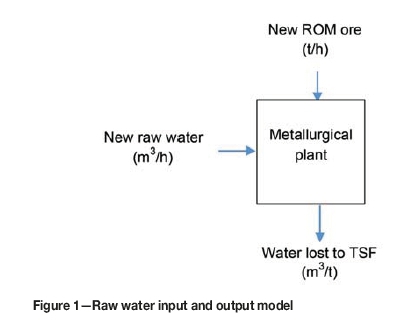
Drought conditions and the possible lack of sufficient raw water supply are a constant reminder to the Southern African diamond miner of the need to minimize raw (new) water input while maintaining or expanding mine throughput. Since water input volume is directly related to water output (loss) volume, mainly to the tailings, it is obviously beneficial to dewater the tailings as much as possible. However, this may not always be as easily achieved as first thought. Owing to the unique mineralogy of each kimberlite deposit and the unique chemical profile of each raw water source, dewatering of the slurry is not a standard process that can be applied equally across the entire diamond industry. This paper presents a first-step strategy that kimberlite diamond mine operators should consider and apply to meet and exceed their water-saving targets.
clays; colloids; thickening; water recovery; water conditioning
 Thumbnail
 Thumbnail
 Thumbnail
 Thumbnail
 Thumbnail
 Thumbnail
 Thumbnail
 Thumbnail
 Thumbnail
 Thumbnail
 Thumbnail
 Thumbnail
 Thumbnail