Dozer side-cutting' versus excavator side-casting on the highwall in dozer bulk push operations
Abstract
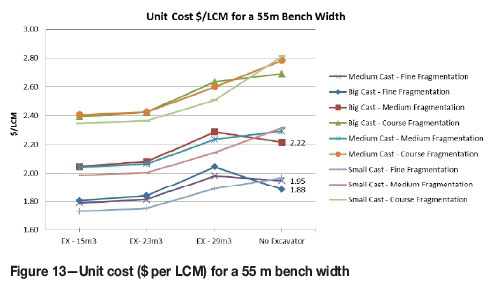
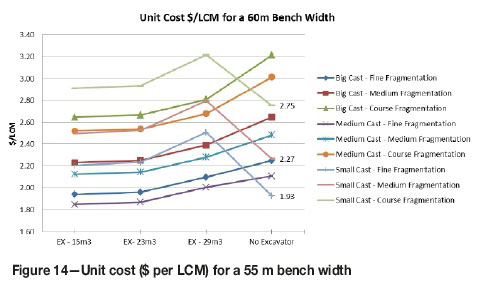
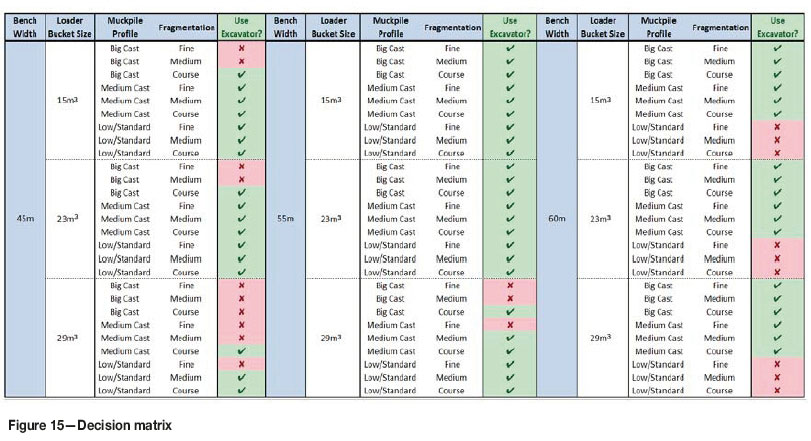
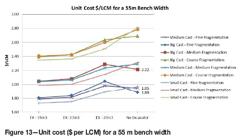
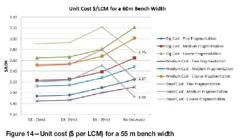
In open pit dozer bulk push operations, the material left resting against the highwall after blasting poses an issue. This is because dozers cannot physically get in behind the waste to begin the bulk pushing process. Instead, an excavator can be used to side-cast this waste for the dozers to access. An alternative technique is to have the dozers 'side-cut' the material, which involves the dozers running parallel to the wall, digging out the material, and eventually rotating their blades to begin bulk pushing. Industry practices suggest the latter technique is less productive and economical than using an excavator. However, such excavator side-casting 'economic viability' assumes that smaller/ancillary type excavators are used (i.e. less than 23 m3 bucket capacity). So, what happens if some mine sites are restricted to using relatively larger excavators (> 23 m3 bucket) that are preferred for higher priority digging tasks? When can they avoid using their excavator? This paper explores multiple scenarios that have been designed and developed to simulate data results, which identify conditions in which the dozer side-cutting technique becomes more economically viable than excavator side-casting in terms of decreased unit cost per loose cubic metre.
dozer push; excavator; side casting; side cutting
 Thumbnail
 Thumbnail
 Thumbnail
 Thumbnail
 Thumbnail
 Thumbnail
 Thumbnail
 Thumbnail
 Thumbnail
 Thumbnail
 Thumbnail