Effect of mould geometry, coating, and plate thickness on the thermal profile of continuous casting moulds
Abstract
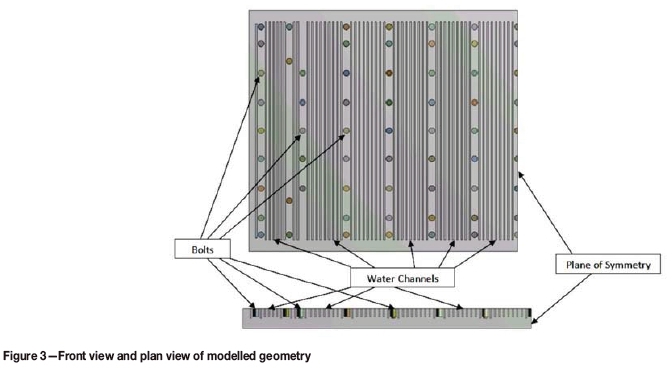
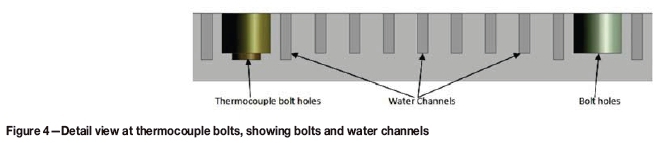
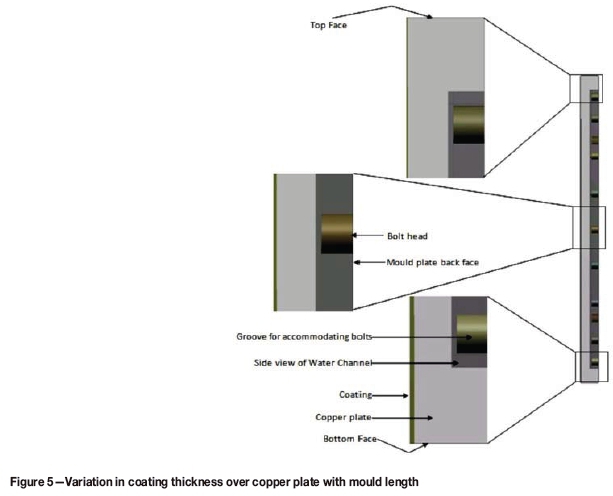
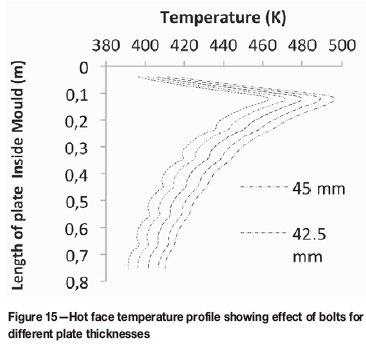
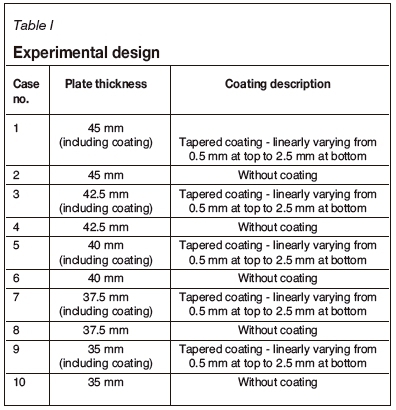
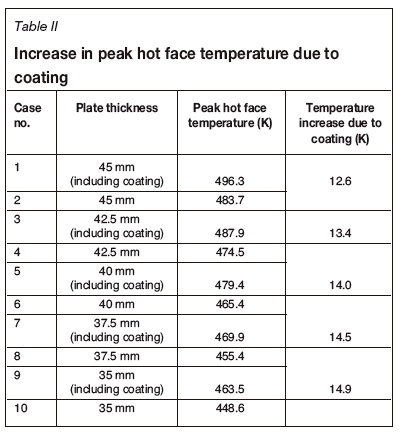
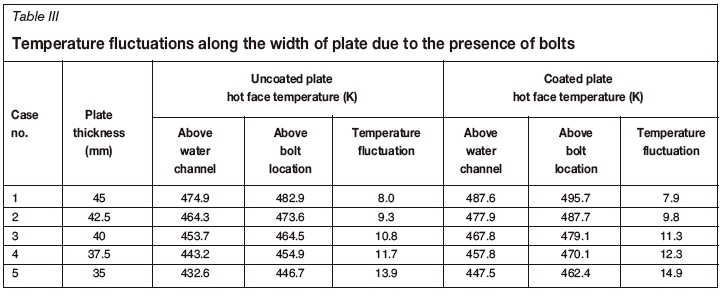
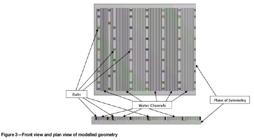
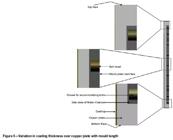
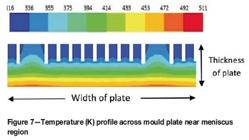
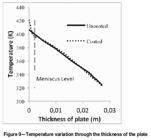
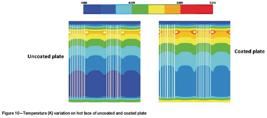
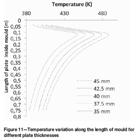
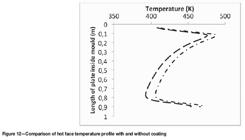
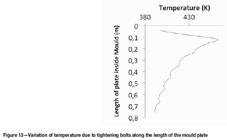
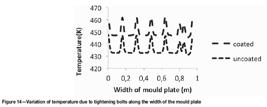
A three-dimensional model for heat transfer analysis of continuous casting mould plate has been developed to predict the hot face temperature. Actual geometry has been considered by incorporating the bolt holes used for fixing bolts to tighten the plate with the backup water box, and the effect of these bolt holes on the hot face temperature of the mould plate is analysed. The high thermal conductivity of copper makes it suitable for use as mould plate material where high heat transfer rates are required. However, copper has poor resistance to abrasion and this disadvantage becomes apparent in the lower part of the mould, where severe wear of the copper surface takes place. To eliminate this problem, high-hardness materials like nickel are coated over the copper surface. This does not affect the heat transfer significantly. The purpose of this study is to investigate the effect of the bolt holes, as well as the nickel coating, on the hot face temperature.
continuous casting; heat transfer; mould coating
 Thumbnail
 Thumbnail
 Thumbnail
 Thumbnail
 Thumbnail
 Thumbnail
 Thumbnail
 Thumbnail
 Thumbnail
 Thumbnail
 Thumbnail
 Thumbnail
 Thumbnail