The influence of N on hot ductility of V-, Nb-, and Nb-Ti- containing steels using improved thermal simulation of continuous casting
Abstract
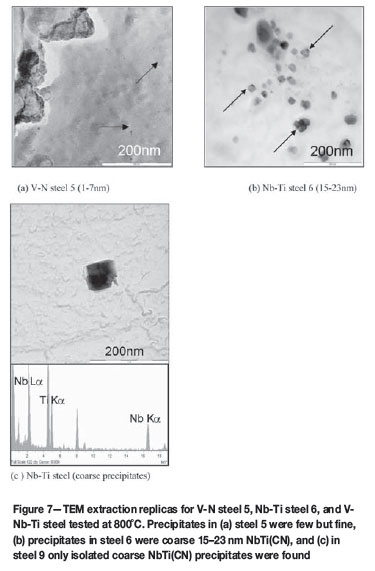
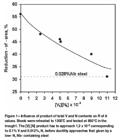
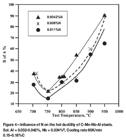
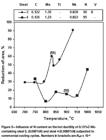
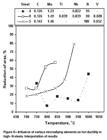
SYNOPSIS The hot ductility of in situ melted tensile specimens of micro-alloyed steels having C contents in the range 0.12-0.17% (mass %) have been examined over the 700-1000ºC temperature range. An improved testing method for simulating the continuous casting process was used, which takes into account both primary and secondary cooling conditions. Increasing the N content to electric arc furnace levels (0.01% N) was found to cause a serious deterioration in ductility. V-N steel gave better ductility than Nbcontaining steels due to less precipitation. From a cracking perspective, low- N steels are generally recommended but, when not feasible, a combination of Nb and V gives even better ductility. However, to be sure of avoiding transverse cracking in higher N steels a small addition of Ti is required. This resulted in a decrease in the fraction of fine particles and in accord with this better ductility. Transverse cracking of industrial slabs was then avoided
hot ductility; continuous casting; steel; N; V; Nb; Ti additions
 Thumbnail
 Thumbnail
 Thumbnail
 Thumbnail
 Thumbnail
 Thumbnail
 Thumbnail
 Thumbnail
 Thumbnail