Effects of acid and reductants on iron salt leaching of copper-cobalt oxide ore: A case study from Zebesha Mine, Zambia
Abstract
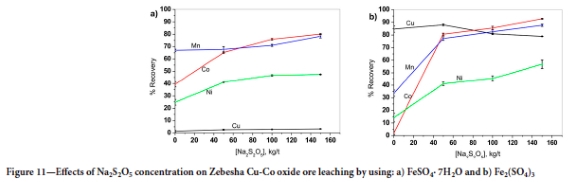
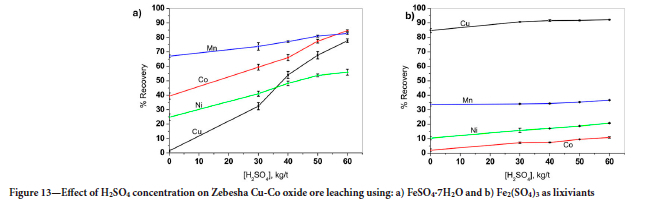
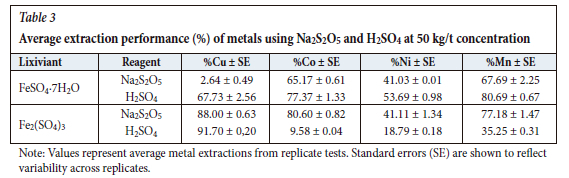
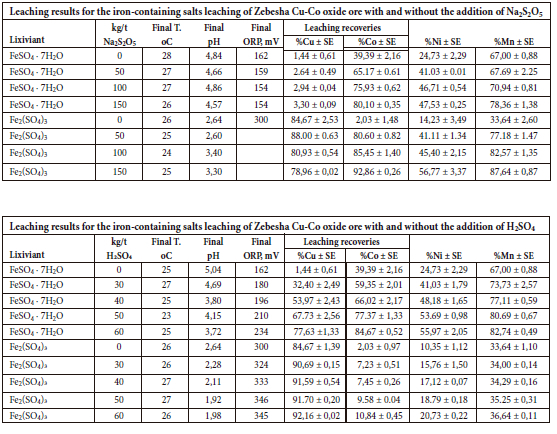
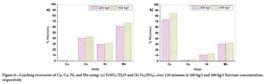
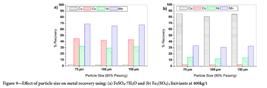
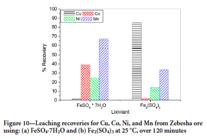
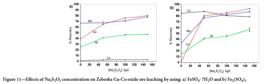
Although the conventional acid-reductive leaching method effectively extracts copper (Cu) and cobalt (Co) from Cu-Co oxide ores, efforts to enhance hydrometallurgical performance are ongoing. This study evaluates the influence of sulphuric acid (H2SO4) and sodium metabisulphite (Na2S2O5) on metal extraction from Zebesha Cu-Co oxide ore using ferrous sulphate heptahydrate (FeSO4-7H2O) and ferric sulphate (Fe2(SO4)3) as lixiviants. Ore samples (<150 μm) were leached at ambient temperature for two hours, and metal concentrations were determined via X-ray fluorescence analysis. In the FeSO4-7H2O system, Co, Mn, and Ni recoveries increased w=ith Na2S2O5 concentration, reaching a maximum of approximately 80% Co at 150 kg/t, while Cu recovery remained below 5%. Conversely, with Fe2(SO4)3, Cu recovery peaked at 88% at 50 kg/t Na2S2O5, then declined to 79% at 150 kg/t. The addition of H2SO4 improved metal recoveries in both systems. Notably, 60 kg/t H2SO4 yielded 92% Cu extraction in Fe2(SO4)3, while Co, Ni, and Mn remained below 40%. However, in FeSO4-7H2O, Co recovery improved from 40% to 84%. These findings suggest Na2S2O5 is more effective for cobalt extraction with FeSO4-7H2O, whereas H2SO4 enhances copper extraction in Fe2(SO4)3.
copper-cobalt oxide ore; heterogenite; sodium metabisulphite; copper-cobalt extraction; sulphuric acid
 Thumbnail
 Thumbnail
 Thumbnail
 Thumbnail
 Thumbnail
 Thumbnail
 Thumbnail
 Thumbnail
 Thumbnail
 Thumbnail
 Thumbnail
 Thumbnail
 Thumbnail