Matte - tap-hole clay - refractory brick interaction in a PGM smelter
Abstract
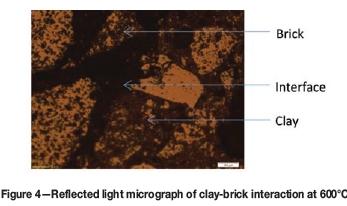
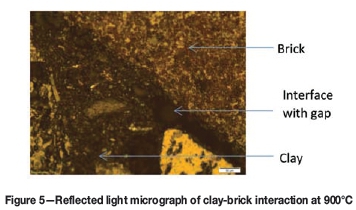
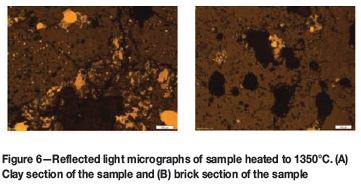
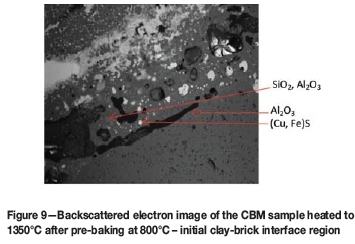
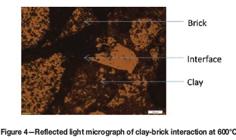
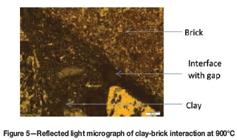
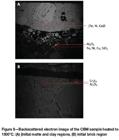
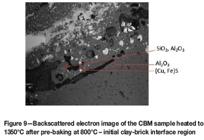
Penetration of matte into tap-hole bricks causes detrimental refractory wear, which can lead to furnace breakouts. The ability of the tap-hole clay to form a protective layer on the brick, thereby limiting matte penetration was investigated by examining the interaction between platinum group metal (PGM) matte, tap-hole clay, and alumina-chrome refractory bricks on a laboratory scale. Samples containing clay and brick as well as samples containing clay, brick, and matte were heated to different temperatures to establish the clay-brick interaction and the extent of matte penetration. The greatest degree of physical contact between the brick and clay was achieved at curing temperatures of 600°C. Poor clay-brick contact was observed in the sample that was heated to 900°C. Matte displaced the clay in the clay-brick-matte sample that was heated to 1350°C, with significant matte penetration into the brick. Less matte penetration was observed when the clay-brick-matte sample was heated to 1500°C. Less matte penetration was also observed in the clay-brick-matte sample in which the clay and brick were pre-baked at 800°C, and the sample then reacted with matte at 1350°C.
tap-hole clay; alumina-chrome refractory bricks; PGM matte; reaction interface; penetration
 Thumbnail
 Thumbnail
 Thumbnail
 Thumbnail
 Thumbnail
 Thumbnail
 Thumbnail
 Thumbnail
 Thumbnail
 Thumbnail
 Thumbnail