Determination of rhodium from fire assay using lead collection with the addition of co-collector, followed by acid dissolution to enhance recovery and analytical accuracy
Abstract
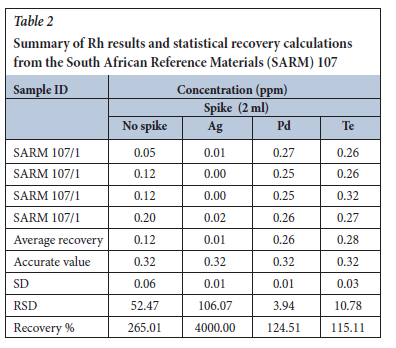
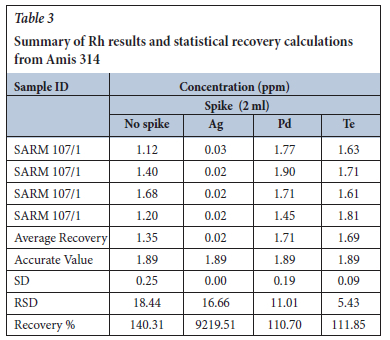
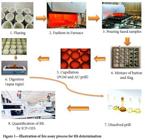
This study explores the use of co-collectors to enhance the recovery and determination of rhodium during fire assay with lead collection, followed by acid dissolution using conventional hot plate methods. Rhodium, a critical platinum group metal, poses analytical challenges due to its low natural abundance and complex chemistry. Among the co-collectors tested, palladium and tellurium demonstrated significantly improved rhodium recoveries, ranging between 100% and 120%, whereas silver resulted in poor recovery and higher error margins. These findings highlight that co-collectors can enhance the efficiency and sensitivity of platinum group metal analysis, although their effectiveness is dependent on the chemical interaction with the target element. Acid dissolution was essential to ensure complete digestion of prills prior to analysis, enabling accurate quantification of rhodium. Overall, the findings suggest that palladium and tellurium are effective co-collectors for rhodium determination in fire assay, while silver and lead flux alone are unsuitable. This work provides important insight into optimising fire assay procedures for reliable rhodium analysis, with potential benefits for platinum group metals recovery and economic evaluation.
Platinum group metals (PGM); rhodium; co-collector; fire assay; dissolution; recovery
 Thumbnail
 Thumbnail