Fracturing of rock ahead of the face of an excavation and its relevance to mechanized excavation
Abstract
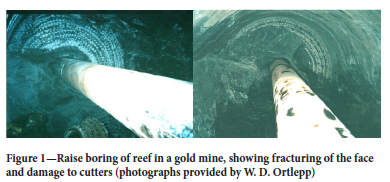
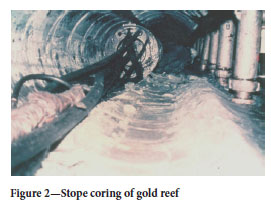
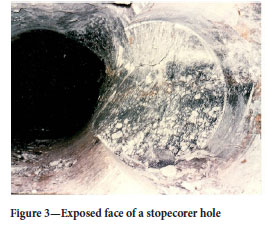
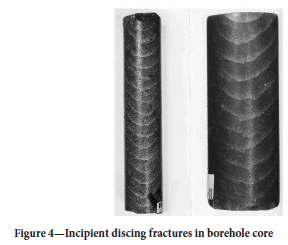
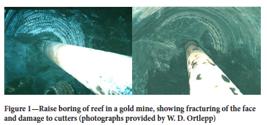
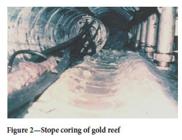
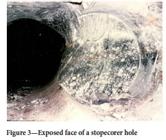
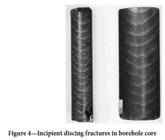
Boring of tunnels and shafts in hard rock under high stress conditions is becoming more common as mines and tunnels are developed at greater depths. Under the high stress conditions, fracturing of the often-brittle rock occurs in the walls, backs, and ahead of advancing faces of excavations. Fracturing can have a significant impact on boring activities: sidewall spalling, which affects machine gripper capacity, and fractures can also develop in the rock ahead of the face, leading to blocky rock conditions, which may have a significant effect on machine excavation. Fracturing may develop dynamically, leading to rock bursts manifesting in the form of strain bursts, which can be hazardous and destructive. In brittle rock, fracturing is commonly extensional in nature. The focus of this paper is on fracturing in the face of the excavation. Examples of such fracturing behaviour are described briefly in the paper. Numerical analyses were carried out to predict the initiation of extension fractures and their orientations ahead of excavation surfaces, and the resulting formation of rock slabs/plates, and the stability of these plates. The results should be beneficial for the evaluation of the conditions prior to, and during boring operations.
rock fracture; extension strain; tunnel boring; raise boring; strain burst
 Thumbnail
 Thumbnail
 Thumbnail
 Thumbnail
 Thumbnail
 Thumbnail
 Thumbnail
 Thumbnail
 Thumbnail
 Thumbnail
 Thumbnail
 Thumbnail
 Thumbnail