Planning for post-mining economies: Misconceptions and opportunities
Abstract
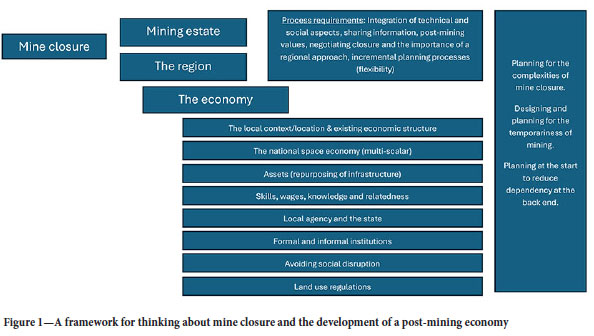
The development of a post-mining economy is generally framed as accessible and desirable and something that mining companies, consultants, and the government can, and should, plan for. It is indeed possible. Yet, most mining regions, other than the big metropolitan municipalities, find economic diversification after mining challenging, despite their grand plans, consultant reports, and company intentions. Their efforts blind them to other ideas that are often prerequisites to diversification. This paper highlights some economic and social misconceptions about economic diversification and explains where planning goes wrong. Mistakes typically stem from ignorance and misunderstandings. Planners and policy makers fail to grasp the essential requirements for economic diversification. They underestimate the structural constraints created by mining. They do not see how mine rehabilitation is linked to economic diversification. They generally do not understand the South African space economy or the nature of new economies. The paper also proposes a more careful consideration of those economic aspects that mining cities have control over, such as land use management and infrastructure. The paper further explains how understanding long-term dependencies can help prevent governance failures. The social disruption that accompanies mine decline and closure must be recognised and dealt with. The mines must plan for decline as a way to resuscitate the economy. It concludes with a framework for assessing and developing a post-mining economy.
mine closure; post-mining economies; mining regions; opportunities; misconceptions
 Thumbnail