Investigation of factors influencing blending efficiency on circular stockpiles through modelling and simulation
Abstract
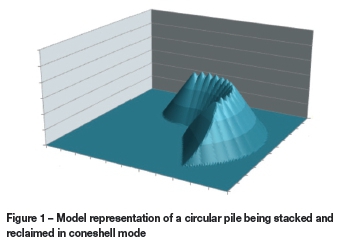
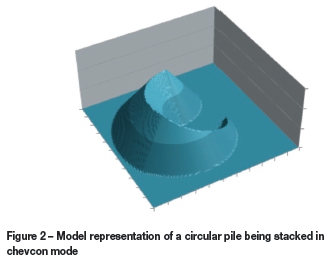
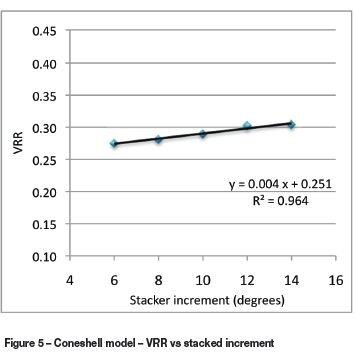
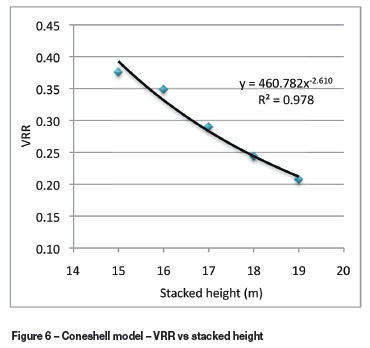
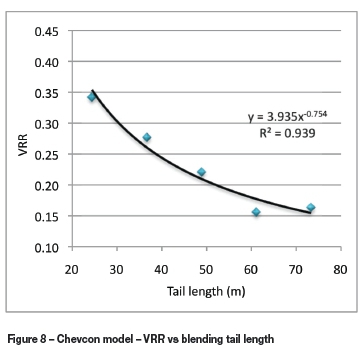
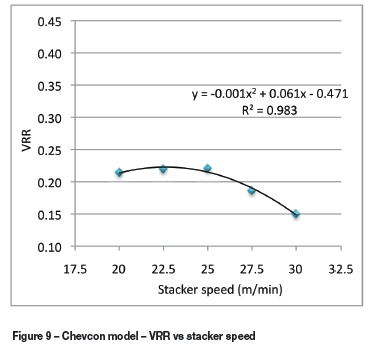
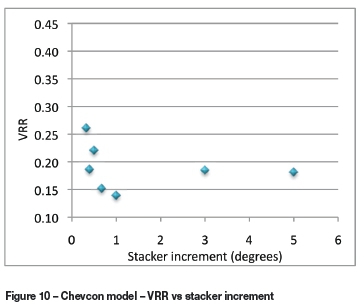
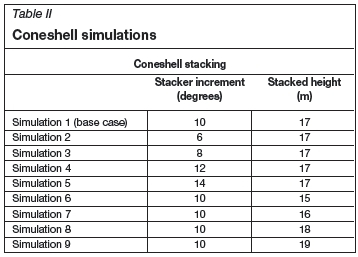
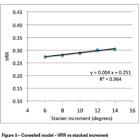
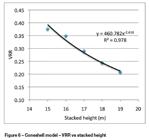
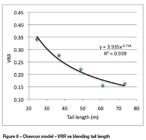
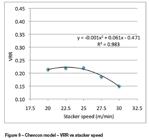
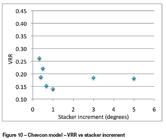
The aim of a blending stockpile is to minimize the natural variation in properties of a material. Two simulation models were written, for coneshell and chevcon stacking, and used to investigate the influence of different stockpile parameters on blending efficiency. The coneshell model is used to show that blending efficiency is highly sensitive to stacked height, with lower output variances observed for higher capacities. Output variance in both models also decreased when the stacker movement increment was decreased. For chevcon stacking, increasing stacker speed significantly increases the blending efficiencies. Increasing the length of the blending tail also reduces output variation, but this parameter would need to be weighed against the accompanying decrease in buffer capacity.
stockpiles; blending efficiency; modelling; simulation; stacking mode
 Thumbnail
 Thumbnail
 Thumbnail
 Thumbnail
 Thumbnail
 Thumbnail
 Thumbnail
 Thumbnail
 Thumbnail
 Thumbnail