Separation of kimberlite from waste rocks using sensor-based sorting at Cullinan Diamond Mine
Abstract
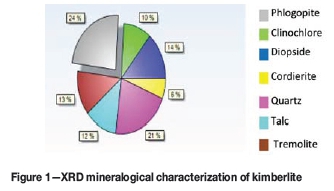
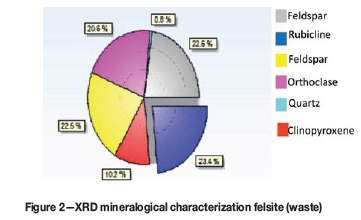
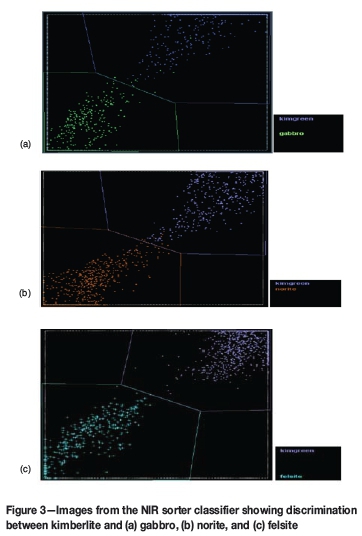
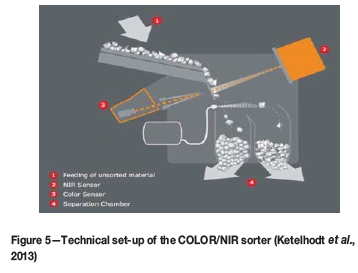
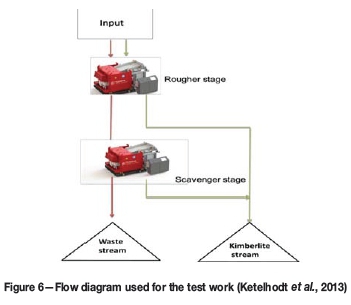
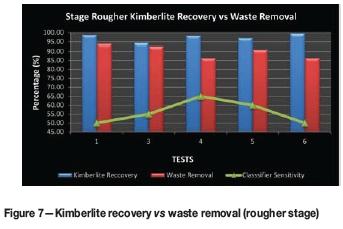
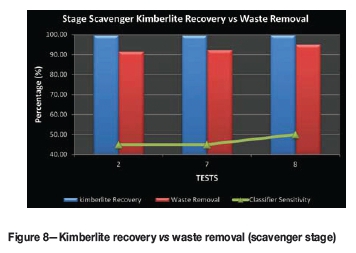
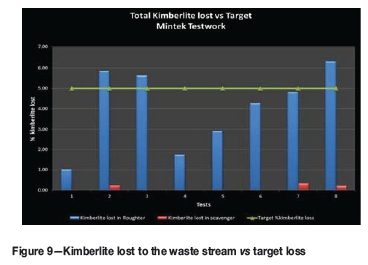
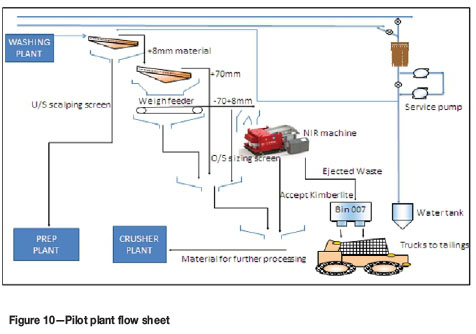
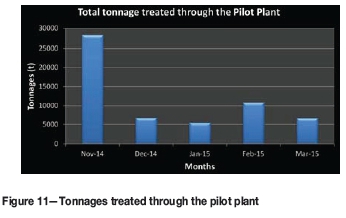
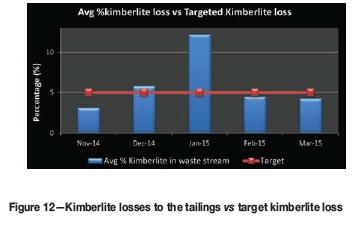
Near-infrared (NIR) spectroscopy sorting technology is incorporated in an automated optical mineral sorter that can discriminate between materials using the differences in characteristics when exposed to near-infrared radiation. During September 2014 to April 2015, a pilot plant that utilized NIR technology to discriminate between kimberlite and waste materials was commissioned to determine the viability of including this technology in the diamond winning process flow sheet at Cullinan Diamond Mine. The plant was used to minimize the waste content in the size fraction -70+35 mm that reports to the crushing section and then to the dense media separation process. This paper describes the initial test work, conducted at Mintek, that led to the decision to conduct a pilot-scale study. The mineralogical characterization of the feed and product streams to establish the sorting criteria and the operational data obtained during the pilot plant campaign are described. The results indicated a good possibility of discriminating between the kimberlite and waste material using NIR technology. However, the consistency of discrimination was not good enough to avoid the risk of potential diamond loss. Furthermore, a lower than expected availability of the machine reduced the throughput capabilities.
sensor-based sorting; NIR spetroscopy; kimberlite; preconcentration
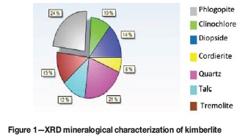 Thumbnail
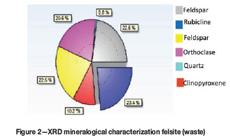 Thumbnail
 Thumbnail
 Thumbnail
 Thumbnail
 Thumbnail
 Thumbnail
 Thumbnail
 Thumbnail
 Thumbnail
 Thumbnail
 Thumbnail