Behaviour and fate of uranium in a high-level nuclear waste processing system
Abstract
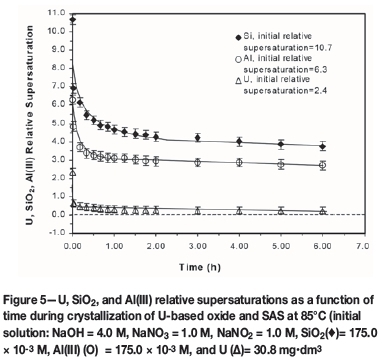
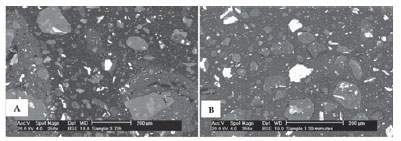
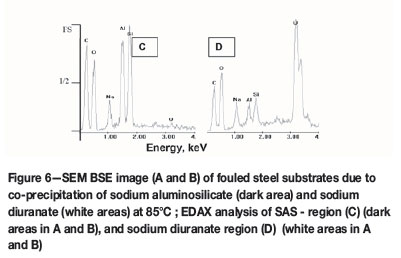
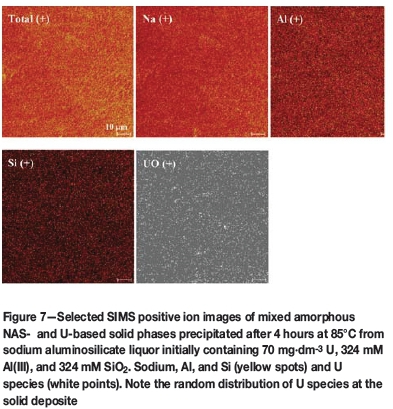
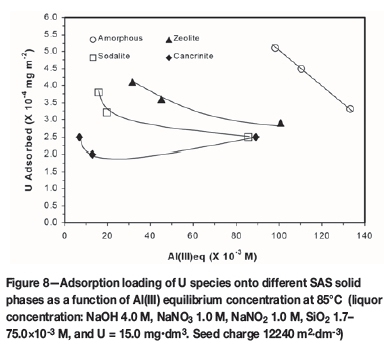
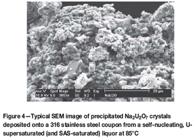
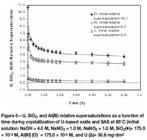
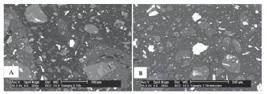
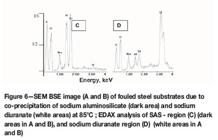
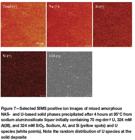
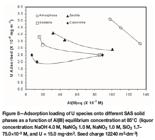
Effective control and management of high-level nuclear waste (HLNW) during its hydrothermal processing is crucial to the US Department of Energy's Savannah River tank farm operations. Approximately 130 million dm3 of this 'cold war' legacy waste liquor are stored at site. During processing, sodium aluminosilicate (SAS) polytypes (e.g., amorphous, zeolite, sodalite, and cancrinite) and sodium diuranate waste products enriched in fissionable uranium (U) crystallize, invariably, leading to evaporator fouling and major criticality concern. Fissionable product fouling and its mitigation pose intractable challenges, warranting greater understanding and new knowledge of the underpinning mechanisms. In this paper, some of the tactical investigations into uranium behaviour and interactions with SAS phases in HLNW carried out are reported. It is shown that SAS-mediated co-crystallization of sodium diuranate phase from HLNW liquor at high ionic strength and pH, rather than U ion complex adsorption, largely accounts for the crystallographic destination and presence of U in the plant solid foulant.
high-level nuclear waste; sodium diuranate; sodium aluminosilicate; evaporator fouling
 Thumbnail
 Thumbnail
 Thumbnail
 Thumbnail
 Thumbnail
 Thumbnail
 Thumbnail
 Thumbnail
 Thumbnail