Laser surface deposition of niobium and titanium-niobium on Ti6A14V substrates for biomedical applications
Abstract
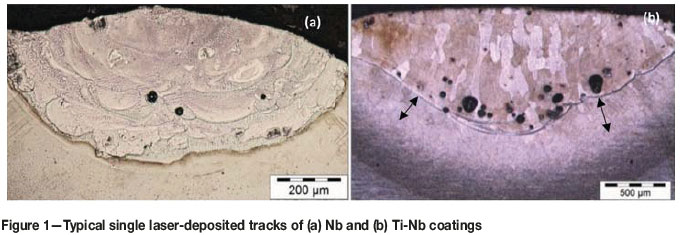
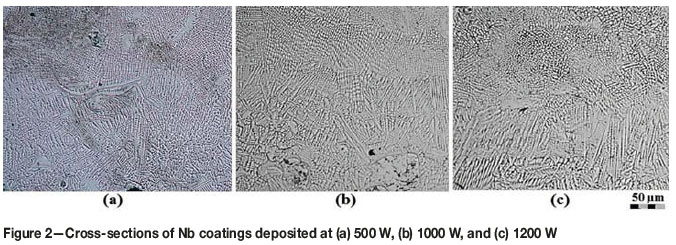
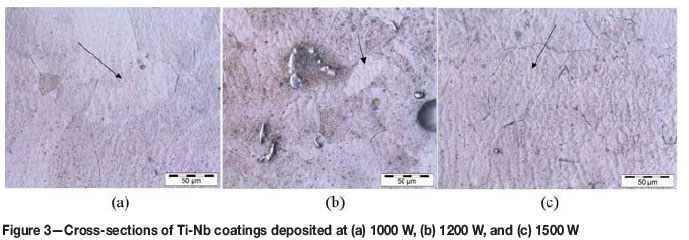
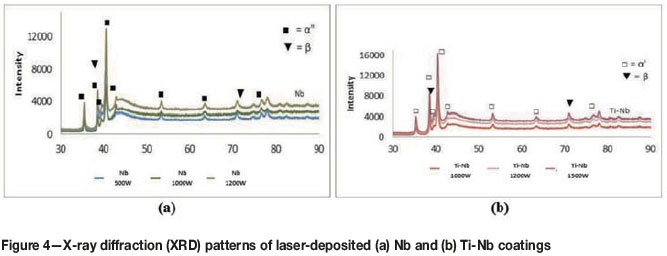
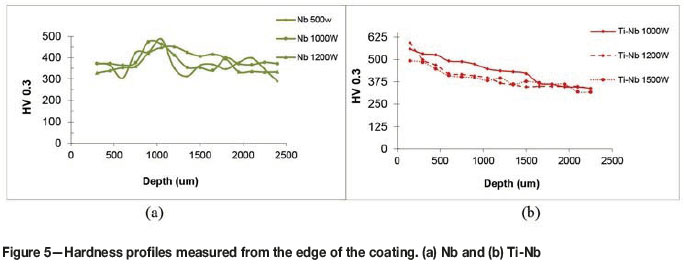
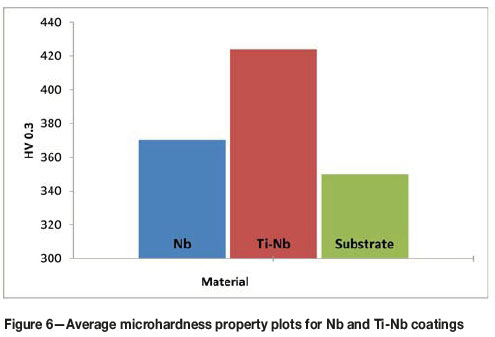
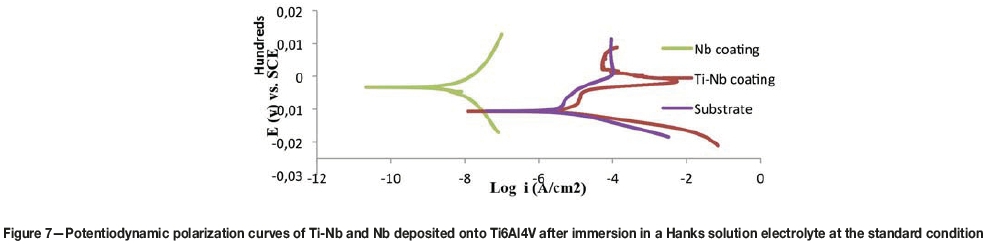
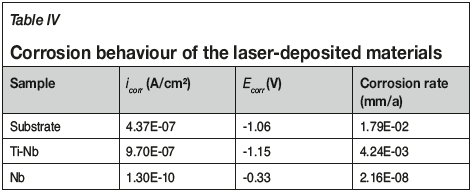
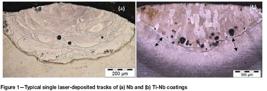
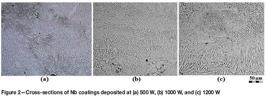
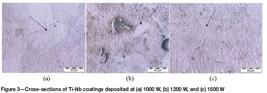
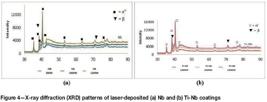
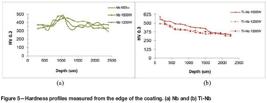
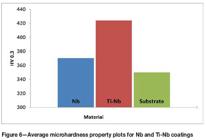
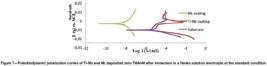
The advantages of using Nb and Ti-Nb coatings for improving the hardness and corrosion resistance of Ti6Al4V were investigated. It has been reported that Ti6Al4V used in orthopaedic implants tends to release toxic Al and V ions into the surrounding tissue. Thin layers of Nb and Ti-Nb were deposited on Ti6Al4V substrates using a laser metal deposition technique. The deposited material was analysed using optical microscopy, scanning electron microscopy coupled with energy dispersive spectroscopy, and X-ray diffraction. The corrosion behaviour of the deposited layers was investigated using a Metrohm Autolab PG Stat101 compact potentiostat at 25°C in simulated body fluid. A Vickers hardness system was used to study the mechanical properties. Both Nb and Ti-Nb coatings exhibited good metallurgical bonding with the substrate. The microstructure and the XRD analyses for the Nb system showed that the a-Nb phase was most dominant, while the Ti-Nb system comprised a mixture of the α and β phases. The average hardness of the Ti6Al4V substrate was 350 HV03, with a slight increase for the Nb coating (363 HV03) and a much higher hardness from the Ti-Nb coating at 423 HV0.3. The corrosion results show that the deposited Nb was more corrosion-resistant in the solution than either the Ti6Al4V substrate or the Ti-Nb coating.
Corrosion; laser surface deposition; niobium (Nb); titanium (Ti); titanium-niobium (Ti-Nb); Ti6Al4V
 Thumbnail
 Thumbnail
 Thumbnail
 Thumbnail
 Thumbnail
 Thumbnail
 Thumbnail