The role of stress and geology on the design of block cave mining sequences and layouts - a case study
Abstract
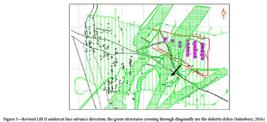
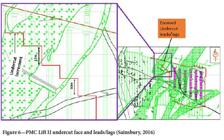
While high production rates are important for the profitability of a mine, the influence of geotechnical engineering cannot be ignored. In block caving, a high-stress level is required for cave propagation; this is one of the core elements for ore recovery. Therefore, stress distribution and geological structures play a major role in the planning and layout design of the mine. This paper explores the influence of stress and geological features on the design of the mine from the feasibility study phase. The geology and stress measurement of the mine were determined through logging and overcoring, respectively. This study found that while production rate is the primary operational consideration, the long-term layout design of the undercut face advance, face angle, drawpoint spacing, and undercutting sequence is mainly governed by the stress orientation and major geological structures. Moreover, widely spaced drawpoints result in isolated draw zones, consequently, resulting in ore loss and early dilution whereas closely spaced drawpoints affect the stability of the major apex pillar. This paper also provides insight into how operations can leverage stress distribution to optimise mine layout and safety in massive mining methods.
block caving; advanced undercut; drawpoint spacing; leads and lags; isolated draw zones
 Thumbnail
 Thumbnail
 Thumbnail
 Thumbnail
 Thumbnail
 Thumbnail