A conceptual framework for improving employee training in surface mines through virtual reality and serious game
Abstract
In addition to unfavourable weather and working conditions, incidents and injuries in the mining industry are not uncommon. Factors such as extreme weather conditions, heavy machinery, and unstable terrain make mining a high-risk occupation. To mitigate these risks, there is a growing need for ongoing improvements in employee safety protocols and training programmes. This paper presents a conceptual framework aimed at enhancing the safety training of employees working in surface mining operations. The proposed solution integrates virtual reality and "serious games" as innovative tools to improve safety awareness and preparedness among mine workers. Specifically, a serious game was developed in two versions: a desktop application and a fully immersive virtual reality experience, both using the Unity3D game engine. These applications are designed to simulate real-life mining environments and address various workplace safety scenarios, offering employees an interactive and engaging way to practice their responses to potential hazards. The use of serious games and virtual reality allows for a deeper level of engagement in training, helping workers to retain critical safety information while reducing the risks associated with traditional on-site training methods.
Virtual reality; serious games; surface mining; training
Introduction
Many areas of life have been significantly improved with the rapid development of technology and technological achievements. Technology has enabled easier communication, quicker, more precise, and higher quality of information retrieval, as well as the improvement and acceleration of industrial processes. Certainly, one of the most important aspects for any company should be the safety and health of its employees. In this context, technological development has allowed for the creation of tools that contribute to improving employee training and work safety. The majority of research on virtual reality (VR) training in mining considered underground mining operations, and therefore there is room for further improvements in surface mining. Additionally, it was found that the use of serious games is not yet common in this sector. Moreover, modern technology can be added as a supplement to traditional mine safety training.
A conceptual framework for improving employee training in surface mines through virtual reality by incorporating the concept of a serious game, provides a structured approach to miners' training in high-risk environments. Serious games refer to the use of game-based methods, typically for purposes beyond entertainment, such as education, training, and skill development. When combined with virtual reality (VR), serious games can become powerful tools that not only engage employees, but also help their learning experience by integrating interactive, realistic, and immersive elements. This framework leverages both VR and serious game concepts to improve safety training in surface mining operations.
Virtual reality is often viewed as a demanding and modern technology requiring exceptional programming understanding and skills. This is true, as numerous programming languages are at the core of computer systems. However, by using certain software such as Unity3D, plugins, and assets, it is possible to utilise virtual reality in various fields and develop different applications. This paper aims to highlight the potential for virtual reality to be implemented in a way that could help workers, professionals, and companies to incorporate this framework within their own operations. Virtual reality (VR) is a relatively new technology, and it has started to attract significant attention from researchers over the past twenty years. Among other aspects, this has been driven by the rapid development of technology, computers, computer graphics, video games, and other. As a result, the use of virtual reality has become more prevalent in science, industry, medicine, and many other fields. Additionally, the availability of VR devices has become more widespread and simpler, making this technology significantly more accessible to the general population. The research and advancements in VR technology occurred towards the end of the 20th century. In this regard, researchers have provided numerous definitions, which may explain why there is still no clear and universally accepted definition of virtual reality. Some of the definitions given by different researchers are:
> "Virtual reality represents an interactive experience that is computer-generated" (Pimentel, Teixeira, 1993).
> "Virtual reality is a computer-generated, interactive, three-dimensional environment into which a person is immersed" (Levy, Bjelland, 1995).
> "Virtual reality is a clone of physical reality" (Von Schweber, 1995).
>"Virtual reality is interactive graphics with three-dimensional models, combined with displays that create a sense of immersion and manipulation for the user" (Bishop, Fuchs, 1992).
In almost all definitions of virtual reality, the terms "interactive," "computer-generated," and "three-dimensional" dominate. Due to further advancements in VR technology, both hardware and software, there are supplemented definitions, which highlight VR as a growing technology, such as: "Virtual reality is a technology that is constantly evolving, allowing a three-dimensional spatial environment through forms of computer graphics" (Poynton, 2009).
One of the important characteristics and terms describing VR is the aforementioned immersion in the virtual environment. Although this term is one of the features of VR, it is not its only trait. Additionally, technological development, modern 360 degrees cameras, VR headsets, sensors, and other devices have allowed a state where the senses register the illusion as reality. The degree of immersion in the virtual environment depends on the device used to achieve such an experience. Kalawsky (1997a), therefore, provided one of the broader definitions of VR, explaining that VR can enable the repetition of tasks or procedures until the desired level of understanding is achieved. This is almost impossible in real time, and potentially very useful when it comes to work procedures and situations in the mining industry. Repeating certain processes in safe conditions can lead to improved employee training, as well as greater safety and better preparedness when they are at the workplace. The author also emphasises that VR allows for natural and intuitive behaviour within the framework of an artificial but safe environment (Kalawsky, 1997b).
Although VR is evolving rapidly, it has been used in the mining industry, educational institutions, and government agencies for training purposes. As early as 2004, researchers analysed several situations in the mining industry, e.g., mine evacuation in case of danger and stability in mining rooms, using VR (Stothard et al., 2004). The authors concluded that VR could improve employee training to enhance workplace safety and health. Isleyen and Duzgun (2019) considered the use of VR for identifying rock mass collapse issues in underground mining. The authors concluded that VR could improve the training and decision-making process of employees. Australian researchers evaluated employee training using VR in their mining industry. They reported significant improvements in employee safety (Pedram et al., 2014). The National Institute for Occupational Safety and Health (NIOSH) plays a significant role in improving safety and employee training in the American mining industry. Researchers from this institute developed the software VR Mine, designed to assist in these efforts (Bellanca et al., 2019). Such a framework is designed to improve safety features specific to underground mining operations. Polcar and Horejsi (2015) highlighted that PC workstations are effective platforms for self-guided virtual tours, though they offer non-immersive virtual reality (VR) experiences that limit full immersion in the virtual environment. Conversely, Van Wyk and De Villiers (2019) argued that these systems are a cost-effective solution for delivering high-resolution design, training, and educational applications. Therefore, this research paper considers both desktop and VR applications. These are just a few examples of why the subject of this paper is the implementation of VR in the field of safety and employee training in the mining industry. Additionally, the results of this research could potentially help professionals and companies to include this form of technology in their systems. Furthermore, there is an intention to highlight the potential application of developed tools in other areas.
It is also valuable to make a difference between gamification and serious games. Gamification is a new trend that explores the incorporation of game elements in non-gaming contexts while serious game is a game form played with the main goal of achieving an intended knowledge. The primary aim of a serious game is not amusement (Sanmugam et al., 2014). In one serious video game, users would be able to display and learn specific situations, measures, and procedures, have the opportunity to make decisions themselves, and test their knowledge. Additionally, the current workforce consists mainly of computer-literate individuals, e.g., millennials, who are familiar with the concept and terms of video games. Armstrong et al. (2016) emphasise that, in general, the enormous potential of using the concept of serious games is reflected in the fact that a significant number of everyday work tasks can be presented in such a way. Iacono et al. (2020) also state that video games increase the connection between employees and their motivation for workplace training. Liang et al. (2019) have developed a serious game for the training needs of mining employees, focusing on increasing hazard perception in underground mining. The authors conclude that, despite limitations, e.g., dizziness from using glasses, the effectiveness of safety training has been significantly improved using VR.
Gürer et al. (2023) developed serious game for safety and health training purposes in educational environments. Researchers concluded that such a game can be a good training tool for underground mine training. Andriamasinoro and Monfort-Climent (2021a) developed serious games (SG) for the complex mining sector in South Africa. The research was proposed to implement an educational tool based on SGs. These games, associated with deliberation steps, would serve as a participatory tool accompanied by the change in the paradigm in small-scale mining sector in African territories (Andriamasinoro, Monfort-Climent, 2021b). Researchers from the Univeristy of Arizona (UA) identified the need for versatile training materials. Thus, they developed an educational serious game for mine safety (Serious Game Market, 2017a). Also, the National Institute for Occupational Safety and Health (NIOSH) played an important role in this research (Serious Game Market, 2017b).
Dallaqua et al. (2023) stated that the number of scientific publications about serious games has exponentially increased. In their research, they focused on higher education in engineering and management. Overall, seriousness and entertainment are two sides of one coin in SGs research, both in development and practice. Researchers added that there is a need for future efforts to formalise the framework classification algorithm (Dallaqua et al., 2023). Altomari et al. (2023) provided a set of guidelines for the creation of serious games. They concluded that serious games have an interdisciplinary approach. Findings by Man et al. (2024) indicate that VR significantly outperforms traditional training methods in enhancing behaviours, skills, and experiences, with key moderating factors such as training context and worker experience influencing outcomes.
The role of creating and using serious games is also present in other areas. For example, authors have created serious games for training employees in the banking sector (Fauziyah, 2019). Osuna-Acedo (2021) stated that both serious game and gamification of processes in education has increased the level of motivation and interaction for both instructors and students. Brandl and Schrader (2024a) stated that new concepts seem crucial to adapt serious games to Education 4.0. Researchers added that in order to meet new students' needs, research has to incorporate new technologies (Brandl, Schrader, 2024b). Göbel (2016) reported that integrating economic and quality data offers potential customers crucial insights into the cost-effectiveness and overall value of serious games.
All the aforementioned shows that the use of VR and serious games is present in many areas. The main goal of this research paper is to create and explain serious games related to selected situations and procedures in surface mining. Thus far, the researchers have developed limited versions of serious games for surface mining. Therefore, this research paper will present the possibilities of using VR technology to improve workplace safety and inspection training in the surface mining industry.
In this research project, the computer applications for desktop PC and VR were developed, which, through the concept of serious video game, will enable employees to interact with the virtual world. Also, certain situations and procedures related to workplace safety in mining will be addressed to train employees.
Methodology
The estimation is that surface mining methods dominate the world's yearly mineral production (Raja, 2012). It is, therefore, crucial to look at safety training improvements in the surface mining sector.
In surface mining, serious games can simulate various dangerous scenarios such as equipment malfunctions and landslides. Workers can interact with the environment, performing tasks like equipment inspections or emergency evacuations, and receiving real-time feedback on their decisions. This game-based approach makes the training engaging and competitive, pushing workers' motivation to learn forward. It also ensures that miners are well-prepared for real-life hazards, as the game-based training can be repeated until they have mastered critical situations. For instance, a serious game might present a challenge where miners must safely navigate hazardous terrain in a haul truck, requiring them to respond to various mechanical issues or environmental obstacles.
The safety, health, and training of employees should be of paramount importance for a company's operations. In the previous section, various research examples on virtual reality, employee training, and serious games were noted. In this section, the methodology used in the development of computer applications will be outlined, specifically, the integration of virtual reality and serious games in employee training.
The potential for using virtual reality and serious games in employee training will be highlighted, which could help professionals and companies incorporate such technology into their operations. The training of employees (whether field-based or classroom-based) could be conducted, supplemented, and discussed in training facilities with the help of developed computer applications. Under such conditions, compared to primarily field-based training, employees would be completely safe, focused on the training itself, and potentially more motivated to master future work tasks in a virtual and interactive environment.
The developed computer application should:
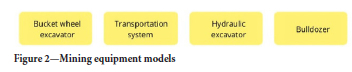
> Display scenarios of surface mines with various machines (hydraulic excavator, transportation system, bucket wheel excavators, dozers).
> Allow navigation through the virtual work environment and identify potentially hazardous situations that could threaten employees, the environment, and property.
> Present measures that should be taken to eliminate the identified issues.
> Be utilised on a Windows-based computer, or with a virtual reality device.
> Allow inserting of a new potentially hazardous situation, along with its image, text and voice information.
For all these reasons, the aim of this work is to develop a conceptual framework for creating serious games related to selected situations and measures that should be taken in surface mining (SM), concerning the inspection of various types of equipment and problem detection.
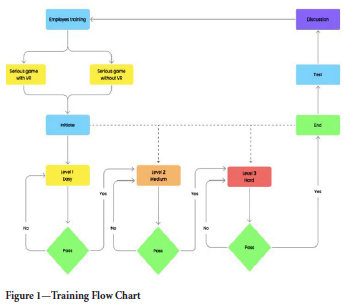
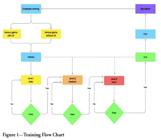
This will involve the potential use of computer applications and virtual reality technology, as well as serious games, to improve the aforementioned areas. The game flow diagram is presented in Figure 1. The diagram emphasises three levels of the game (easy, medium, and hard), with progression to the next level requiring identification of more than 80% of the problems. Problem images will be positioned near or on the machines as green cylinders. Interacting with them will reveal the problem, the measures to be taken, and audio information related to the situation. At the end of the successfully completed course, a test is proposed along with further discussion and questions about the situations encountered during the problem detection on the machines.
The inspection of mining equipment depends on the type of equipment. Therefore, multiple machine models will be present simultaneously in the scene (Figure 2).

The applications were developed with Unity3D. Unity3D is a tool for creating video games, virtual reality applications, and other content, and allows for the simulation and manipulation of 2D and 3D objects (Pedram et al., 2014). Unity3D will be utilised for developing two prototype versions of applications separately: VR version and a desktop version. Unity3D is a commercial software that is free for academic and personal use, supporting the development of video games, virtual reality, modeling, and more. It is one of the most popular and high-quality game engines (Pereira, et al., 2023).
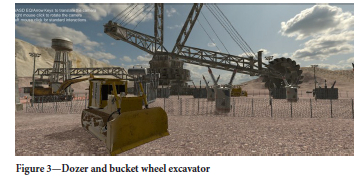
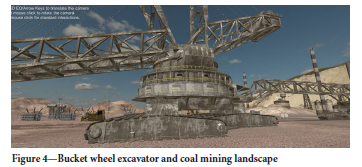
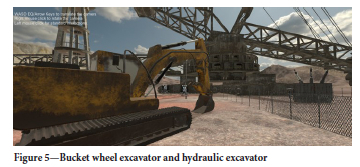
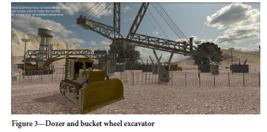
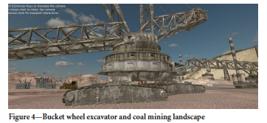
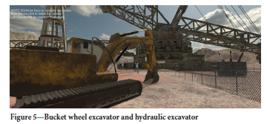
Models of mining machines and workers used in this paper are given in Figures 3 to 5 and are placed in the mining scene (Unity AssetStore, 2024). These models were imported from Unity3D Asset Store (Unity AssetStore, 2024).
Given that, in the case of a video game, player movement through the scene is faster than in real-time, and prolonged time spent by the player in identifying problems is not expected, it was organised that each game level will last 11, 12, and 13 minutes for easy, medium, and hard levels, respectively. Various types of mining equipment will be placed within the same virtual surface mine, representing a single unit. At the same time, each machine will be observed separately within the same application. In this way, images with machine problems can be placed on any of the present mining machines.
In this paper, materials and procedures for enhancing employee safety and training are first collected. Collection of images are gathered from one mine in Serbia and from literature (Stothard et al., 2004). By using Unity3D software, along with other additional software tools and 3D models, as well as devices, e.g., virtual reality glasses, and joysticks, computer applications are created. Such serious video games can be used as auxiliary tools to improve workplace safety and employee training.
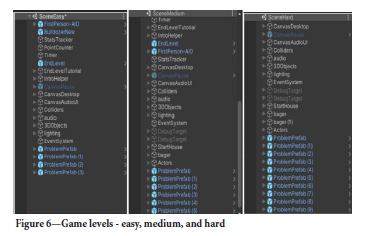
The developed game proposes three game levels - easy, medium, and hard. As given in Figure 6, each game level consists of different options such as ProblemPrefabs, 3DObjects, timer, audio source, StatsTracker etc. The ProblemPrefab displays real issues that occurred. The number of such images (problems) is 4, 6, and 10, for easy, medium and hard levels, respectively.
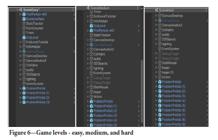
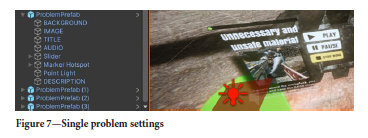
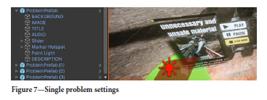
Figure 7 provides a closer look at a single ProblemPrefab. It offers options that trainers can insert, revise or remove within a single problem. The trainer can add problem images, title, audio source, and the description of a problem. It can also be revised at any time with Unity3D. In addition, adding a new ProblemPrefab is simplified by copying an existing ProblemPrefab and then changing the information. The buttons - play, pause, and stop are related to voice information.
The setup is the same for the virtual reality version. In order to use the application, this research applied VR headsets. In this research, Oculus Quest 2, a modern VR device developed by Meta, is used (Oculus Quest 2, 2023). The Oculus Quest 2 VR headset is applied as a device for immersion into a virtual world in various search projects (Iqbal, Campbell, 2023; Dyulicheva et al., 2021; Qonita, Dwiyanti, 2023; Pereira et al., 2023). This paper aims to address the use of the VR headsets mentioned for miners' training. Zujovic et al. (2021) developed a tool for improving mine training for heavy equipment operators (HEO). Researchers applied a 360 degree camera and an Oculus Rift CV1, which is one of the previous versions of Oculus headsets. Valencia Quiceno et al., (2024) developed an augmented reality (AR) system for heavy equipment operators (HEO) in surface mining. This research presents a significant step forward in training in mining industry.
Results and discussion
Companies should prioritise the development and maintenance of comprehensive employee training policies and the creation of formalised training plans. However, while procedures and training are essential, they alone cannot eliminate workplace hazards. Instead, effective training should equip employees with the ability to recognise potentially dangerous situations, provide them with guidance on appropriate actions, and ultimately, enable them to perform their duties safely within the work environment. Furthermore, proper training should be discussed in a training room and potentially reduce the likelihood of errors that could lead to workplace injuries. As previously presented in the flowchart in Figure 1, the framework has two different applications: desktop and VR version.
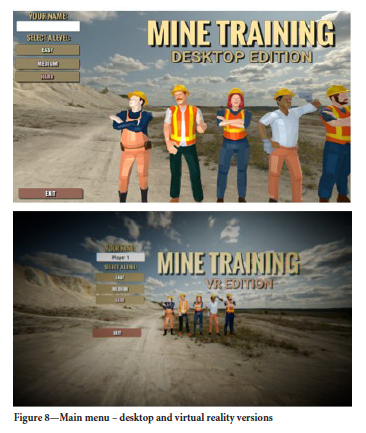
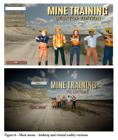
On the main menu screen of the application (Figure 8) a player can add a name and choose which difficulty level will be played.
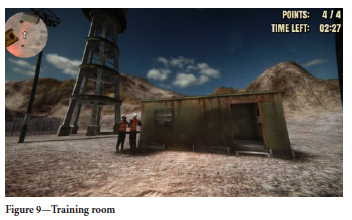
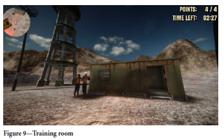
The game starts and ends in the training room, given in Figures 9 and 10, training room is an object, and the player will have to return to this room to finish the game and to start the knowledge assessment quiz.

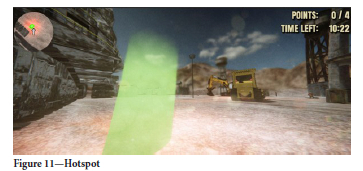
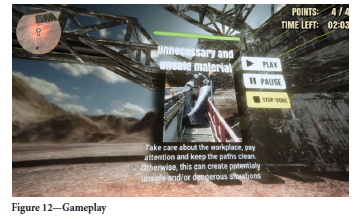
The gameplay screenshot is shown in Figures 11 and 12. A trainee will walk through the scene with the goal of finding specific numbers of green marks (hotspots). Each spot will bear various information about the problem. For example, besides the image, one can read text information and use a play button to hear same or other voice information about the problem occurred. As can be seen in Figure 11, a trainee can also observe the number of points gathered, time left (right upper angle) and a mini map for easier scene navigation (left upper angle).
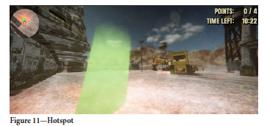
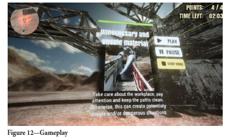
A trainee will activate an image with the problem descriptions when entering a hotspot (green cylinder) as presented in Figure 11). A pop-up window (Figure 12) will show up so a trainee can see, read, or hear information.
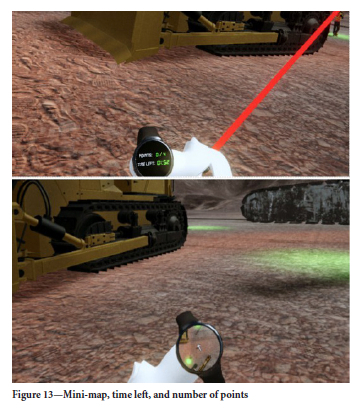
Before the time left comes to an end, he or she has to return to the virtual training room (Figure 13). A trainee will then approach the computer in order to start the knowledge assessment quiz, as can be seen in Figure 9.
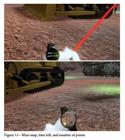
Furthermore, in the VR setup, the mini-map and both the number of points and time left are located on virtual watches on the player's wrists. (Figure 13).
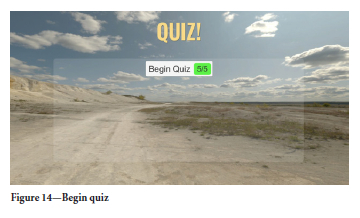
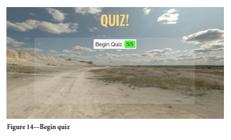
By clicking the "Begin Quiz" button (Figure 14), one will proceed to answer 5 questions related to the conducted training.
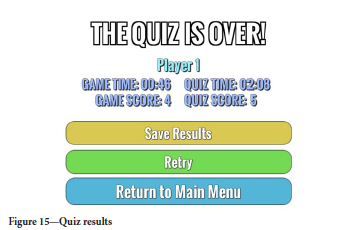
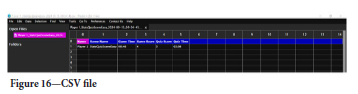
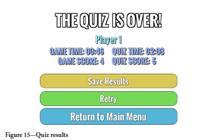
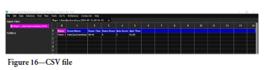
A player will answer different questions regarding the situations they observed during the game. New questions can also be added or changed in Unity3D; the number of questions can be changed as well; and sound information about a question(s), if needed, can be added. After the player answers all questions, they will see the results with some statistics (Figure 15). By clicking the "save results" button, the CSV file icon will show up on the desktop screen. The CSV file can be saved so that it tracks the record of players, training points, errors, and time (Figure 16).
The conceptual framework for improving employee training in surface mines through virtual reality, and serious games, represents an advanced approach to improving safety and operational efficiency. The combination of VR and serious games offers a dynamic and engaging method of training that could prepare workers for the complex and potentially dangerous situations they may encounter during their jobs. By simulating mining environments and incorporating game-based learning techniques, miners can develop the skills and knowledge needed to perform their jobs safely and efficiently.
The use of serious games within VR training encourages workers to engage actively in their learning process. The immersive nature of the game, combined with game mechanics like scores and progress tracking, motivates employees to improve their performance continuously. These aspects of training are more challenging to achieve through traditional training methods.
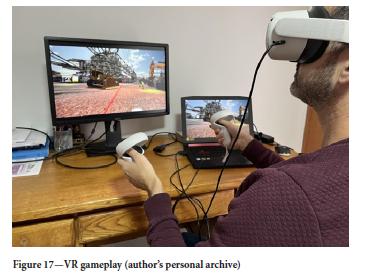
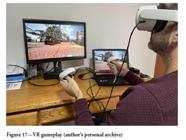
Virtual reality allows the immersive nature of serious games to come to life. The 3D, simulated environments that VR offers make the learning experience feel real and immediate. In the mining industry, VR can simulate the mine site, allowing trainees to move around the site, and respond to possible hazards as they should in the real world. The integration of serious game mechanics such as setting goals and providing instant feedback ensures that trainees stay engaged and retain critical information. The Oculus Quest 2 VR headsets (or one with similar characteristics) could be used to train workers by simulating the environment of the specific mine and offering them realistic, game-like challenges that they should overcome (Figure 17).
The game-based approach allows miners to experience and respond to dangerous situations without facing real-world risks. Serious games can simulate conditions, inspecting and/or operating heavy machinery, and provide a safe environment to practice and hone skills. This potentially increases the realism and practical value of the training.
Serious games can be easily adapted to different mining environments and roles. For example, specific games can be created for various job positions within the mine, such as haul truck operators, drillers, or supervisors. Moreover, VR training, when paired with serious games, allows companies to train multiple workers simultaneously and in different locations. This is potentially beneficial in large mining operations. Serious games, combined with the immersive experience of VR, potentially facilitate better memory retention. Gamification elements such as repetitive challenges, levels of difficulty, and immediate feedback help reinforce learning, ensuring that workers can retain important safety protocols.
The framework in this research can serve as a blueprint for using serious games within VR to help improve mine training programmes. It outlines the integration of game mechanics such as challenges, objectives, and feedback into VR simulations. These game-based elements are incorporated to make training more engaging, motivating employees to learn. In the mining context, serious games can replicate real-world scenarios in which workers practice safety procedures and problem-solving skills. This structured approach ensures that VR is not just a passive tool, but an active, engaging medium for training. This framework potentially improves individual learning outcomes and also contributes to a broader organisational commitment to safety and continuous improvement. As VR and serious games continue to evolve, their role in mining safety training is likely to expand, offering more immersive and impactful ways to train and protect workers in this high-risk industry.
Conclusion
There is often an opportunity to introduce new initiatives to improve employee training and safety. It is crucial for professionals, managers, engineers, and employees to continually assess and consider potential improvements in training programmes. In this context, proactive training is of utmost importance for preventing incidents, as opposed to merely reacting to problems that have already occurred or have given rise to significant warning signals. Issues that have already arisen, or those with a high probability of occurring, often require immediate resolution, which, in industrial settings, can be challenging, present additional risks, or even be unfeasible. A well-designed employee training programme aims to improve a) knowledge, b) skills, and c) understanding (KSU). Employees should acquire clear and unequivocal knowledge related to the tasks they are expected to perform.
Outcomes of this research paper can be summarised as:
> Developed prototype of a training framework and two versions of training applications for surface mining - desktop and VR version.
> Easy navigation through virtual mining scene to identify problems and gather game points.
> Measures that should be taken to eliminate the identified issues.
> Additional features - mini-map, quiz.
The serious game applications can potentially serve as an additional support to train heavy equipment operators (HEOs) or other mine workers. The tool used to build applications (serious games) was Unity3D game engine.
In the future, the research recommends developing user guides and tutorials on how to construct new training, add new machines, change, and revise training materials in order to improve the training process. Conducting surveys and obtaining feedback from workers employed in safety roles and other employees, and analysing the collected data is planned as well. A comparison will be made with traditional methods of miners' safety training.
Conflicts of Interest: The authors declare no conflict of interest.
References
-
Altomari, L., Altomari, N., Iazzolino, G. 2023. Gamification and Soft Skills Assessment in the Development of a Serious Game: Design and Feasibility Pilot Study. JMIR Serious Games, vol. 11. https://doi.org/10.2196/45436
» https://doi.org/10.2196/45436 -
Andriamasinoro, F., Monfort-Climent, D. 2021. Consideration of Complexity in the Management of Construction and Demolition Waste Flow in French Regions: An Agent-Based Computational Economics Approach. Modelling, vol. 2, pp. 385-405. https://doi.org/10.3390/modelling2030021
» https://doi.org/10.3390/modelling2030021 -
Armstrong, M., Landers, R., Collmus, A. 2016. Gamifying Recruitment, Selection, Training, and Performance Management: Game-Thinking in Human Resource Management. https://doi.org/10.4018/978-1-4666-8651-9.ch007
» https://doi.org/10.4018/978-1-4666-8651-9.ch007 -
Bellanca, J.L., Orr, T.J., Helfrich, W.J., Macdonald, B., Navoyski, J., Demich, B. 2019. Developing a Virtual Reality Environment for Mining Research. Mining, Metallurgy & Exploration, vol. 36, pp. 597-606. https://doi.org/10.1007/s42461-018-0046-2
» https://doi.org/10.1007/s42461-018-0046-2 - Bishop, G., Fuchs, H. 1992. Research Directions in Virtual Environments: Report of an NSF Invitational Workshop. March 23-24, 1992. University of North Carolina at Chapel Hill. COMG.
-
Brandl, L.C., Schrader, A. 2024. A Serious Games in Higher Education in the Transforming Process to Education 4.0- Systematized Review. Educ. Sci., vol. 14, 281. https://doi.org/10.3390/educsci14030281
» https://doi.org/10.3390/educsci14030281 -
Dallaqua, M.F., Nunes, B., Carvalho, M.M. 2023. Serious Games Research Streams for Social Change: Critical Review and Framing. British Journal of Educational Technology, vol. 55, pp. 460-483. https://doi.org/10.1111/bjet.13404
» https://doi.org/10.1111/bjet.13404 - Dyulicheva, Y., Gaponov, D., Mladenovic, R., Kosova, Y. 2021. The Virtual Reality Simulator Development for Dental Students Training: A Pilot Study. International Workshop of Augmented Reality in Education 2021.
-
Fauziyah, U., Kaburuan, E., Wang, G., Aqsha. 2019. Gamification for Employee Training Platform in Banking Industries, pp. 503-508. 2019 International Conference on Information Management and Technology (ICIMTech) published by IEEE https://www.researchgate.net/publication/335945264_Gamification_for_Employee_Training_Platform_in_Banking_Industries
» https://www.researchgate.net/publication/335945264_Gamification_for_Employee_Training_Platform_in_Banking_Industries -
Göbel, S. 2016. Serious Games Application Examples. In: Dörner, R., Göbel, S., Effelsberg, W., Wiemeyer, J. (eds) Serious Games. Springer, Cham. https://doi.org/10.1007/978-3-319-40612-1_12
» https://doi.org/10.1007/978-3-319-40612-1_12 -
Gürer, S., Surer, E., Erkayaoğlu, M. 2023. Mining-Virtual: A Comprehensive Virtual Reality-Based Serious Game for Occupational Health and Safety Training in Underground Mines. Safety Science, vol. 166, Article 106226. https://doi.org/10.1016/j.ssci.2023.106226
» https://doi.org/10.1016/j.ssci.2023.106226 -
Iacono, S., Vallarino, M., Vercelli, G.V. 2020. Gamification in Corporate Training to Enhance Engagement: An Approach. International Journal of Emerging Technologies in Learning (iJET), vol. 15, no. 17, pp. 69-84. https://doi.org/10.3991/ijet.v15i17.14207
» https://doi.org/10.3991/ijet.v15i17.14207 - Ignjatović, D., Subaranovic, T., Đenadic, S. 2021. Machines and Auxiliary Works in Surface Mines. University of Belgrade, Faculty of Mining and Geology. ISBN: 978-86-7352-363-7.
-
Isleyen, E., Duzgun, H.S. 2019. Use of Virtual Reality in Underground Roof Fall Hazard Assessment and Risk Mitigation. International Journal of Mining Science and Technology, vol. 29, no. 4, pp. 603-607. https://doi.org/10.1016/j.ijmst.2019.06.003
» https://doi.org/10.1016/j.ijmst.2019.06.003 -
Iqbal, M., Campbell, A. 2023. Real-Time Hand Interaction and Self-Directed Machine Learning Agents in Immersive Learning Environments. https://doi.org/10.1016/j.cexr.2023.100038
» https://doi.org/10.1016/j.cexr.2023.100038 -
Kalawsky, R.S. 1997. Exploiting Virtual Reality Techniques in Education [Online]. Available at: https://openlibrary.org/books/OL17257804M/Exploiting_virtual_reality_techniques_in_education_and_training
» https://openlibrary.org/books/OL17257804M/Exploiting_virtual_reality_techniques_in_education_and_training - Levy, J.R., Bjelland, H. 1995. Create Your Own Virtual Reality System. New York: Windcrest McGraw-Hill Inc.
-
Liang, Z., Zhou, K., Gao, K. 2019. Development of Virtual Reality Serious Game for Underground Rock-Related Hazards Safety Training. IEEE Access, vol. 7, pp. 118639-118649. https://doi.org/10.1109/ACCESS.2019.2934990
» https://doi.org/10.1109/ACCESS.2019.2934990 -
Man, S.S., Wen, H., So, B.C.L. 2024. Are Virtual Reality Applications Effective for Construction Safety Training and Education? A Systematic Review and Meta Analysis. Journal of Safety Research, vol. 88, pp. 230-243. https://doi.org/10.1016/j.jsr.2023.11.011
» https://doi.org/10.1016/j.jsr.2023.11.011 -
Oculus Quest 2. [Online]: https://www.meta.com/quest/products/quest-2 [Accessed 15 August 2024].
» https://www.meta.com/quest/products/quest-2 - Pimentel, K., Teixeira, K. 1994. Virtual Reality: Through the New Looking Glass. 2nd ed. New York: McGraw-Hill.
- Pedram, S., Perez, P., Palmisano, S. 2014. Evaluating the Influence of Virtual Reality-Based Training on Workers' Competencies in the Mining Industry. 13th International Conference on Modeling and Applied Simulation, MAS 2014, pp. 60-64.
-
Pereira, D., Oliveira, V., Vilaça, J.L., Carvalho, V., Duque, D. 2023. Measuring the Precision of the Oculus Quest 2's Handheld Controllers. Actuators, vol. 12, 257. https://doi.org/10.3390/act12060257
» https://doi.org/10.3390/act12060257 - Polcar, J., Horejsi, P. 2015. Knowledge Acquisition and Cyber Sickness: A Comparison of VR Devices in Virtual Tours. MM Sci J, vol. 2, pp. 613-616.
- Poynton, L. 2009. Evaluating the Effectiveness of Virtual Reality Learning in a Mining Context. University of New South Wales, Australia. Masters Thesis.
-
Qonita, V.A., Dwiyanti, L. 2023. Election Data Visualization in Virtual Reality Environment Using Oculus Quest 2. 2023 IEEE International Conference on Data and Software Engineering (ICoDSE), Toba, Indonesia, pp. 96-101. https://doi.org/10.1109/IcoDSE59534.2023.10292000
» https://doi.org/10.1109/IcoDSE59534.2023.10292000 -
Raja, V., Ramani, R. 2012. Surface Mining Technology: Progress and Prospects. Procedia Engineering, vol. 46, pp. 9-21. https://doi.org/10.1016/j.proeng.2012.09.440
» https://doi.org/10.1016/j.proeng.2012.09.440 - Sanmugam, M., Mohamed, H., Zaleha, A., Norasykin, Z., Baharuddin, A. 2014. Gamification and Serious Games: The Enigma and the Use in Education. ISQAE 2014 Conference.
-
Siu, S.S.M., Wen, H., So, B.C.L. 2024. Are Virtual Reality Applications Effective for Construction Safety Training and Education? A Systematic Review and Meta Analysis. Journal of Safety Research, vol. 88, pp. 230-243. https://doi.org/10.1016/j.jsr.2023.11.011
» https://doi.org/10.1016/j.jsr.2023.11.011 - Stothard, P., Galvin, J.M., Fowler, J.C.W. 2004. Development, Demonstration and Implementation of a Virtual Reality Simulation Capability for Coal Mining Operations.
- Van Wyk, E., De Villiers, R. 2019. An Evaluation Framework for Virtual Reality Safety Training Systems in the South African Mining Industry. Journal of the Southern African Institute of Mining and Metallurgy, vol. 119, no. 5, pp. 427-436.
-
Valencia Quiceno, J.D., Kecojevic, V., McBrayer, A, Bogunovic D. 2024. Augmented Reality System for Training of Heavy Equipment Operators in Surface Mining. Mining, Metallurgy & Exploration https://doi.org/10.1007/s42461-024-01047-6
» https://doi.org/10.1007/s42461-024-01047-6 - Von Schweber, E. 1995. Virtually Here. PC Magazine. March 14, 1995, pp. 168-198.
-
Zujovic, L., Kecojevic, V., Bogunovic, D. 2021. Interactive mobile equipment safety task-training in surface mining. Int J Min Sci Technol, vol. 31(4), pp.743-751. https://doi.org/10.1016/j.ijmst.2021.05.011
» https://doi.org/10.1016/j.ijmst.2021.05.011
Revised: 25 Jan. 2026
Accepted: 03 Jun. 2026
Published: Jun. 2026