Carbonylation of nickel and selectively reduced laterite ore
Abstract
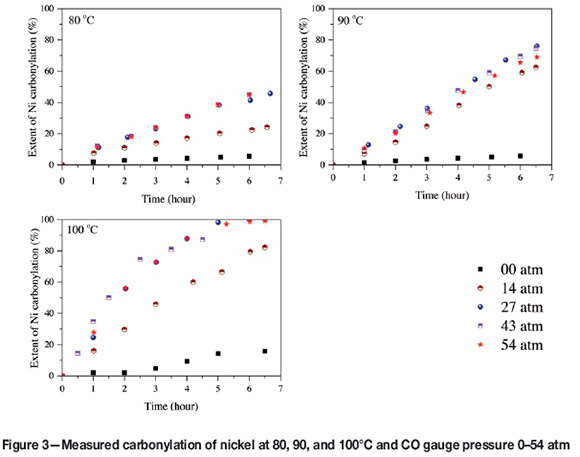
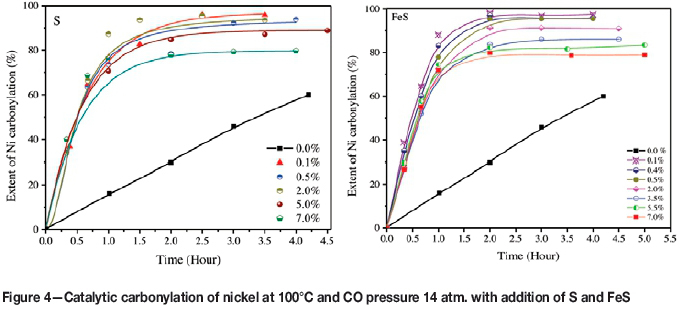
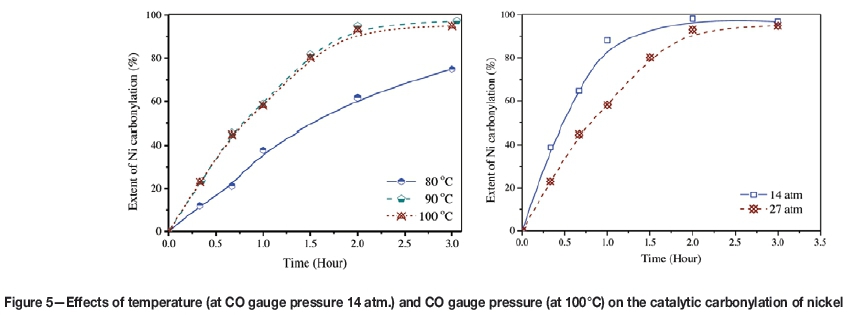
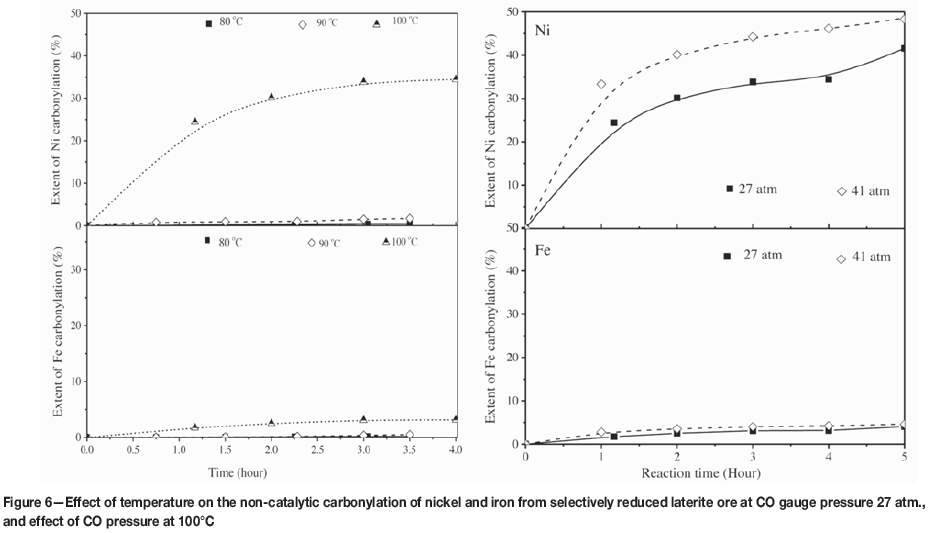
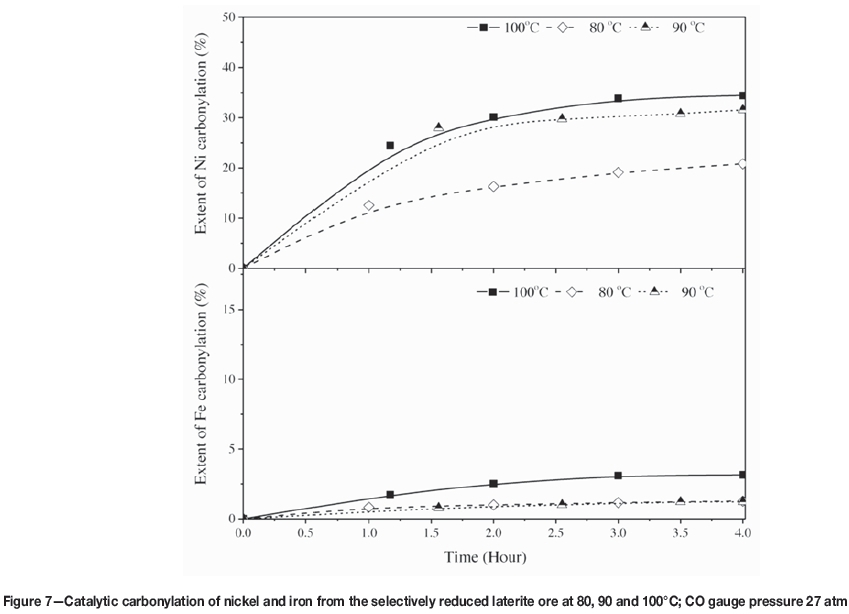
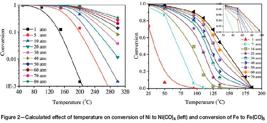
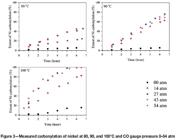
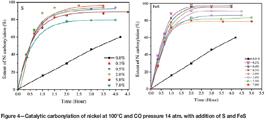
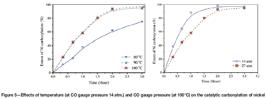
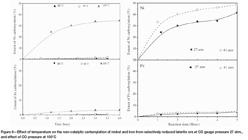
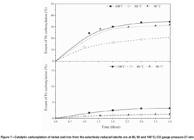
Carbonylation of nickel obtained by reduction of nickel oxide and selectively reduced Australian laterite ore was studied at temperatures of 80-100°C and CO gauge pressures of 0-56 atm. The effects of sulphur-containing catalysts on the nickel carbonylation were also examined. The results show that the extent of nickel carbonylation increased with increasing temperature from 80 to 100°C at constant CO pressure. The carbonylation of nickel at 100°C and CO gauge pressure 27 atm. was close to completion after 5.5 hours of reaction. At all temperatures, the effect of CO pressure was very strong when the gauge pressure was increased from zero to 14 atm. Sulphur-containing catalysts accelerated the carbonylation reaction. The time for complete carbonylation of nickel was reduced from 5.5 hours in the non-catalytic reaction to 2 hours in the catalytic carbonylation at 100°C and CO gauge pressure 14 atm. The extent of carbonylation of nickel from the selectively reduced laterite ore with particle size 53-200 μηι at 100°C and CO gauge pressure 41 atm. was below 50%. The use of catalysts in the carbonylation of selectively reduced ore was ineffective. The rate of reaction increased with decreasing particle size and increasing gas flow rate.
nickel; laterite ore; carbonylation; selective reduction
 Thumbnail
 Thumbnail
 Thumbnail
 Thumbnail
 Thumbnail
 Thumbnail
 Thumbnail