Investigation of the reactivity and grain size of lime calcined at extra-high temperatures by flash heating
Abstract
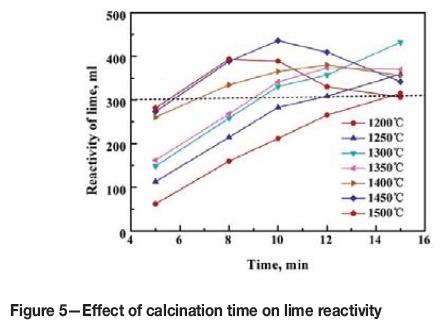
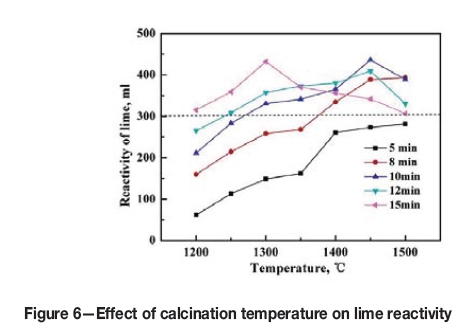
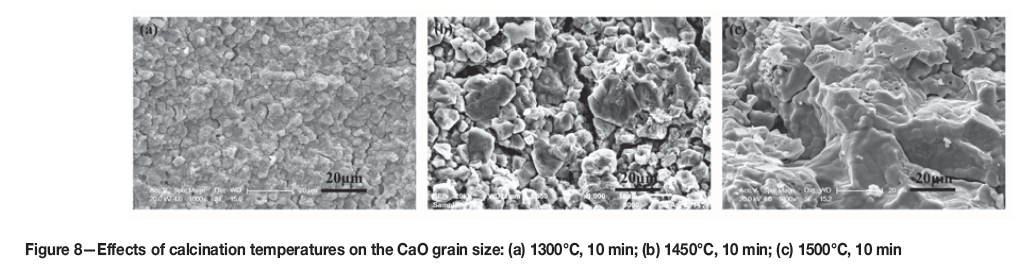
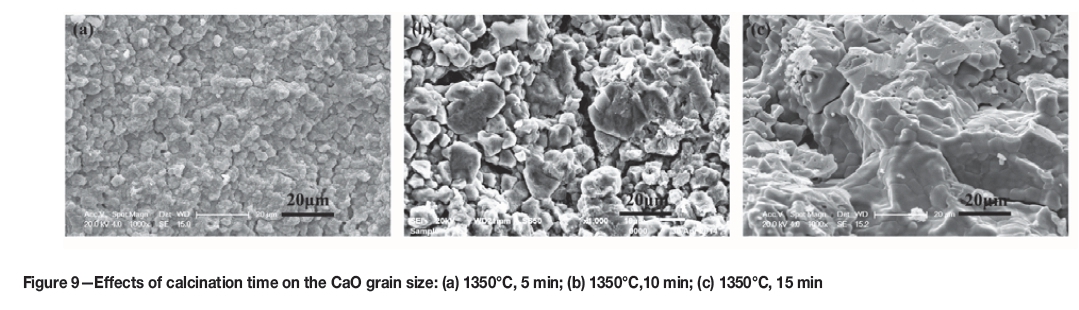
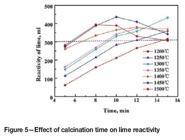
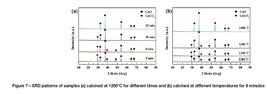
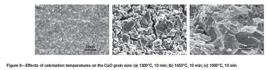
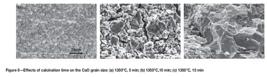
In low-carbon energy-efficient basic oxygen furnace (BOF) steelmaking processes, limestone partly or completely replaces the active lime. The effects of limestone calcination temperature (1200-1500°C) and time (5-15 minutes) on lime reactivity and CaO grain size were investigated. The reactivity was evaluated by titration with hydrochloric acid, and the CaO grain size was analysed using scanning electron microscopy. The results revealed that for calcination temperatures higher than 1300°C, the reactivity reached a maximum and then decreased . The higher the temperature, the earlier the peak of reactivity appears. The CaO grains grow with increasing temperature and time, which leads to the decrease of reactivity. Notably, the effects of temperature on CaO grain size and reactivity are more marked than that of time. To obtain active lime calcined at ultra-high temperature by flash heating, the calcination conditions should be 1300-1400°C for 10-15 minutes, or 1400-1500°C for 8-10 minutes.
limestone; calcination; reactivity of lime; flash heating; ultra-high temperature
 Thumbnail
 Thumbnail
 Thumbnail
 Thumbnail
 Thumbnail
 Thumbnail
 Thumbnail
 Thumbnail
 Thumbnail