Fracture banding in caving mines
Abstract
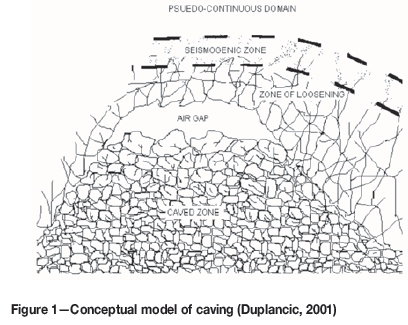
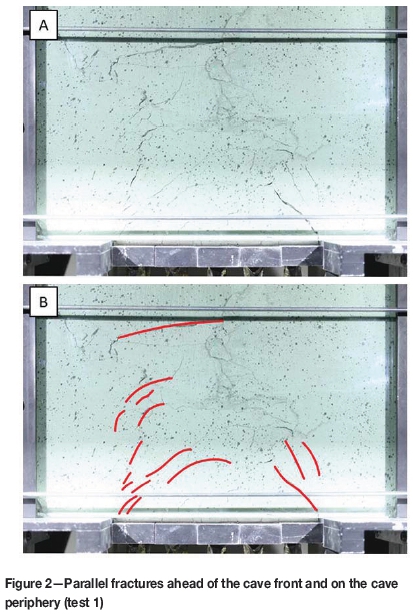
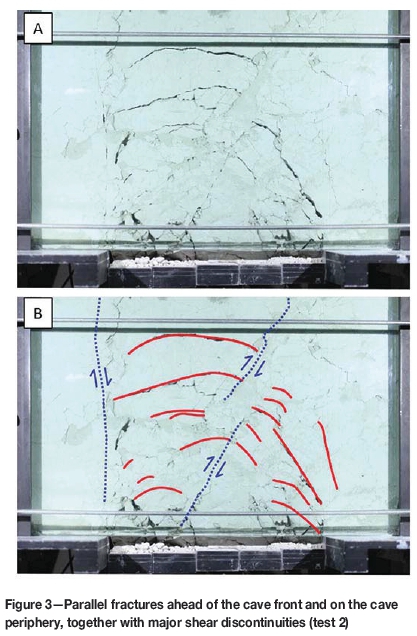
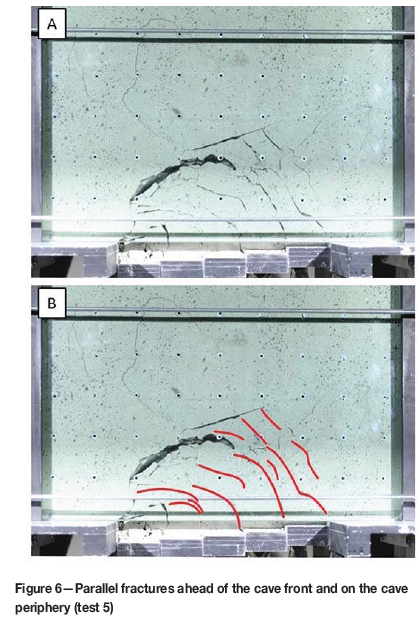
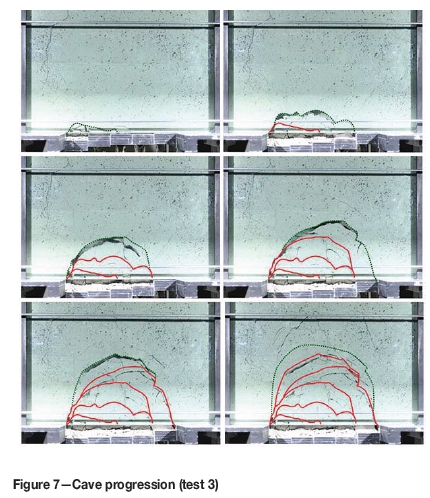
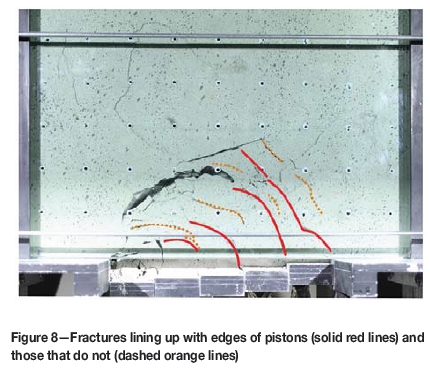
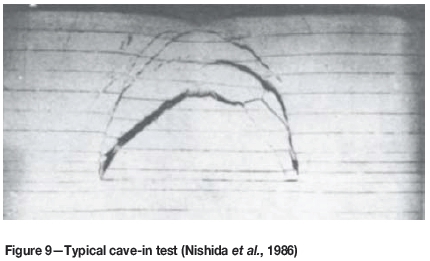
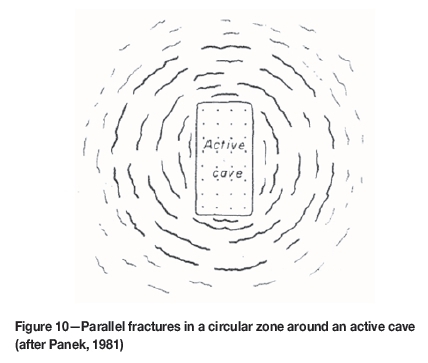
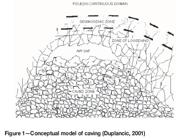
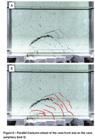
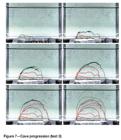
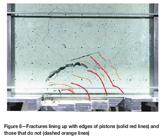
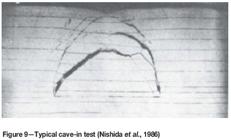
The Duplancic model of caving is widely accepted in industry and is the framework within which most monitoring and numerical modelling results in caving mines are interpreted. As a result, the damage profile ahead of the cave back is often interpreted as continuously decreasing damage with increasing distance ahead of the cave back. Physical modelling of the caving process performed in a centrifuge did not support this expected behaviour, but instead suggested a discontinuous damage profile ahead of the cave caused by fracture banding. Some support is found in the literature to suggest that the behaviour observed in the models may also be present in the field. This notion is further supported by banding behaviour observed from microseismic monitoring at two block cave mines. Combining the information from the physical models, field observations referred to in the literature, and the microseismic analyses, it is concluded that the Duplancic model needs to be extended to include the phenomenon of fracture banding. It is also reasonable to expect that fracture banding may play a more important role in the caving process than has previously been recognized.
block caving; caving mechanics; fracture banding; extensional fracturing; centrifuge; physical modelling
 Thumbnail
 Thumbnail
 Thumbnail
 Thumbnail
 Thumbnail
 Thumbnail
 Thumbnail
 Thumbnail
 Thumbnail