Testing sample representivity using particle size distribution
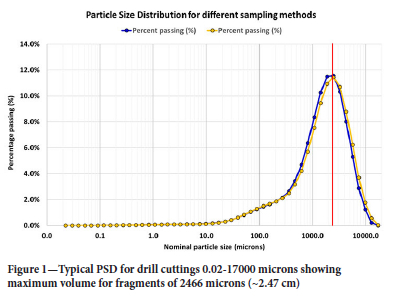
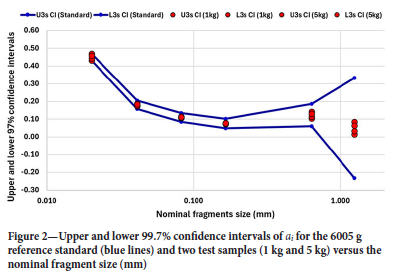
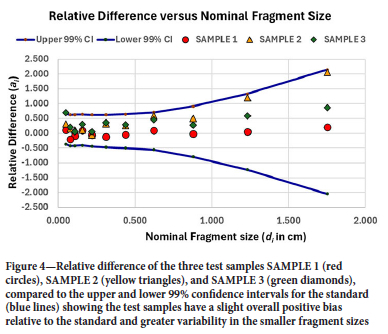
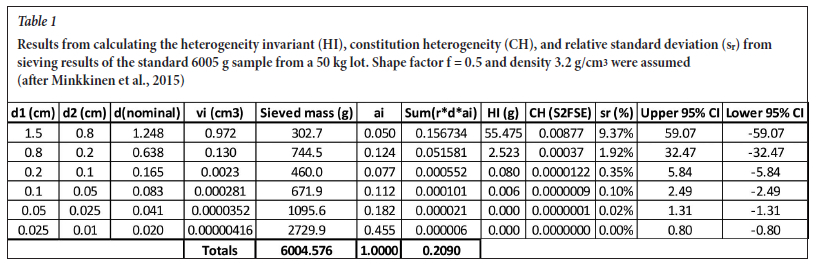
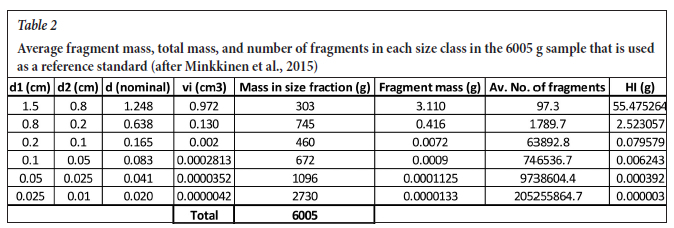
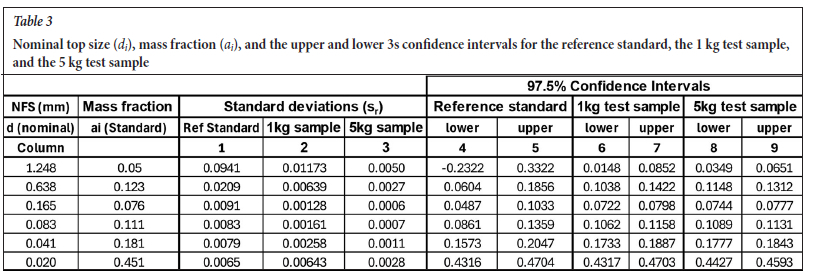
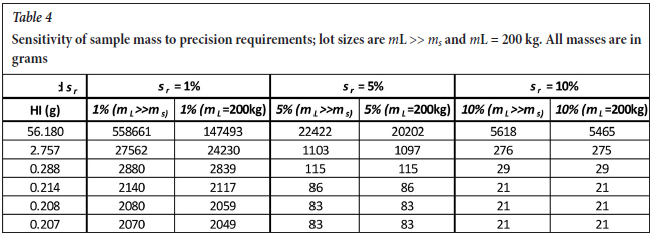
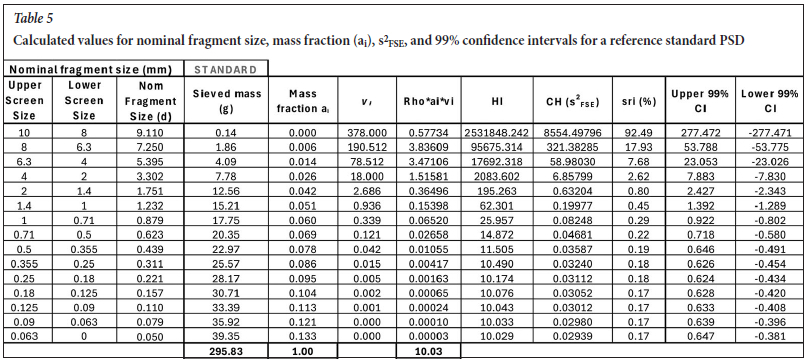
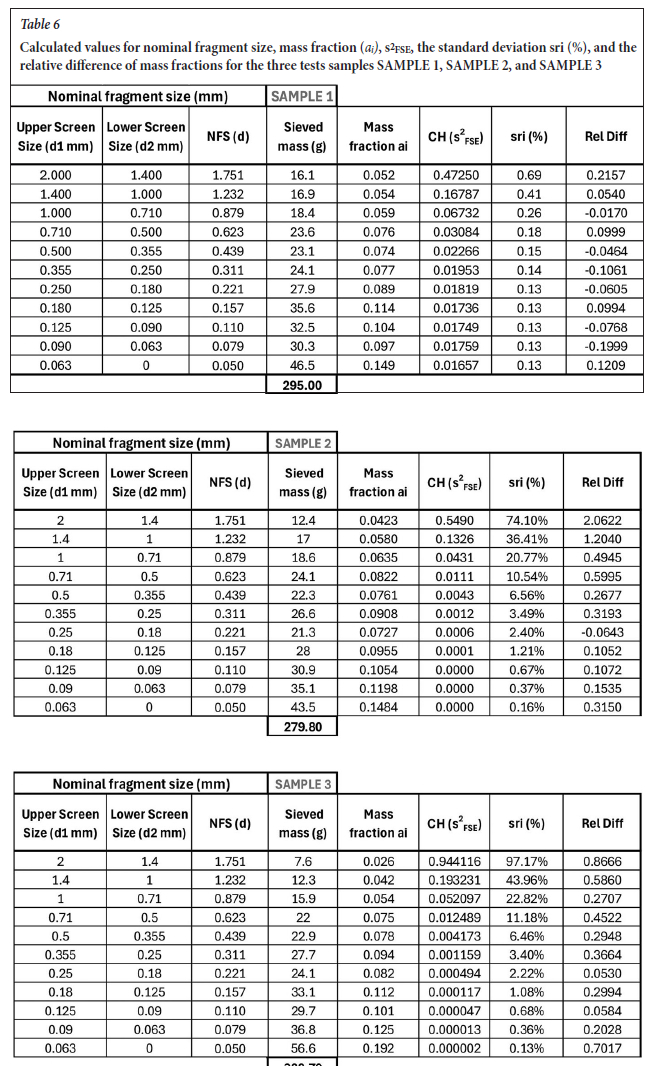
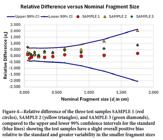
Particle size distribution analysis is important to many industries for assessing product quality, process efficiency, and compliance with contractual standards, while ensuring sample accuracy, and representativeness. Inaccurate particle size distribution results, arising from fines due to excessive handling can lead to penalties and buyer-seller disputes. A non-representative particle size distribution means samples will not accurately represent the chemical components either. Sampling blasthole cuttings poses challenges due to large material volumes, segregation, and uneven settling of particles in dense gold bearing ores. Commonly used sampling methods, such as spear or sectoral sampling, may lack representativeness. Particle size distribution analysis is crucial for evaluating sampling methods by comparing test sample representativeness against a reference standard derived from multiple particle size distribution analyses. Acceptable samples must fall within the 97.5% confidence intervals of the standard; deviations analyses lying outside these boundaries indicate a strong likelihood of segregation errors. A case study demonstrates this approach by using a 6.005 kg benchmark sample to assess two additional samples (1 kg and 5 kg), highlighting particle size distribution's role in detecting sampling errors and refining protocols. An example of three test samples collected from reverse circulation drill cuttings compared to a standard reference sample is presented to illustrate a quality assurance/quality control procedure for reverse circulation drilling.
particle size distribution; mass fraction; sample representivity; relative difference; reverse circulation drilling
 Thumbnail
 Thumbnail
 Thumbnail
 Thumbnail