A limit equilibrium approach to the use of stability bunds in the design of HDPE-lined tailings storage facilities
Abstract
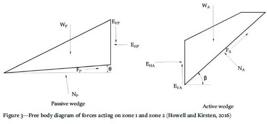
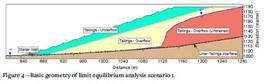
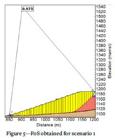
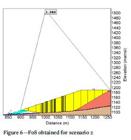
In recent years the requirements for a barrier system between the waste body of tailings storage facilities (TSFs) and the natural ground (NG) has necessitated the use of HDPE-lined TSFs in South Africa and other countries. The addition of an HDPE liner creates an interface between, inter alia, the tailings and surrounding soils on the footprint of the TSF. It is known that low-strength materials beneath slopes can cause slope instability. One method which can theoretically mitigate this instability of a lined TSF is the addition of stability bunds along the footprint of the TSF. Altering the profile of the footprint to include slope changes which oppose the direction of the failure creates passive slices in a limit equilibrium analysis. The passive slices actively oppose the movement of active slices, resisting the mobilization of tailings, thus greater active slice forces are required to develop a failure surface running along the liner interface. Two scenarios are presented and compared. The first scenario retains the ground profile unaltered and the second scenario includes stability bunds along the ground profile. An in-depth assessment is made of the interslice forces and the interface shear stresses for each scenario. The theoretical background is discussed in greater detail to determine the mechanisms of reinforcement provided by the bunds.
TSF design; HDPE lining; stability bunds; limit equilibrium approach
 Thumbnail
 Thumbnail
 Thumbnail
 Thumbnail
 Thumbnail
 Thumbnail
 Thumbnail
 Thumbnail
 Thumbnail
 Thumbnail
 Thumbnail
 Thumbnail
 Thumbnail