Evaluating the corrosion and wear behaviour of high velocity oxygen fuel sprayed titanium iron oxide modified with nickel-chromium coating on plain carbon steel
Abstract
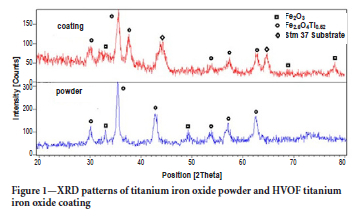
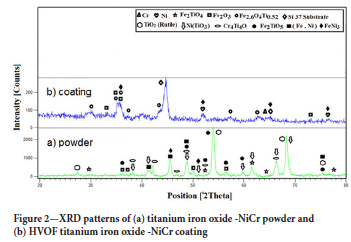
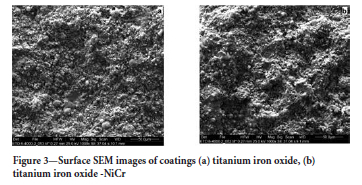
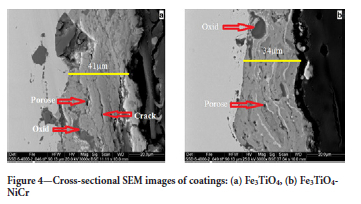
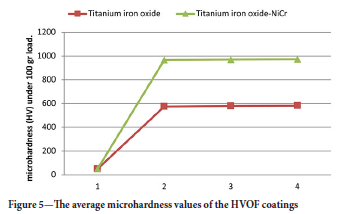
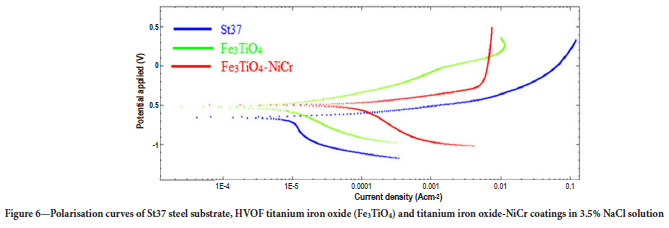
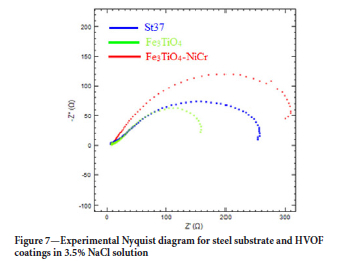
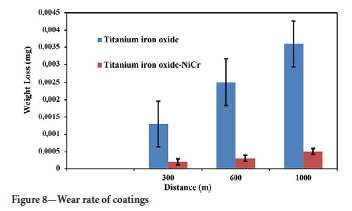
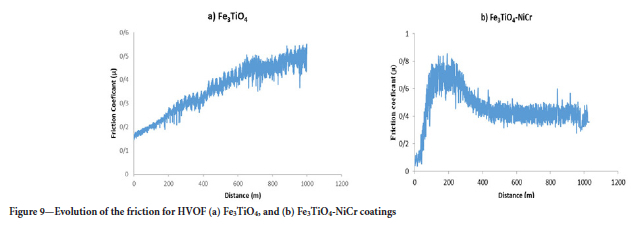
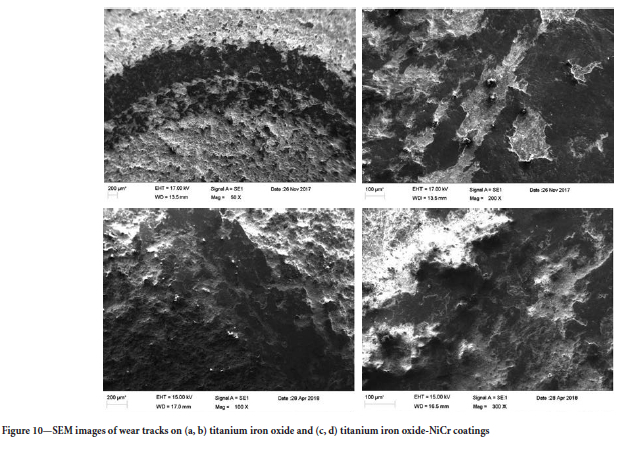
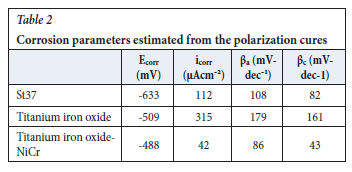
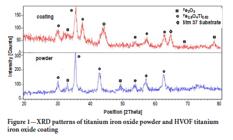
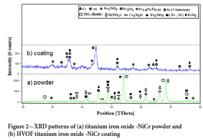
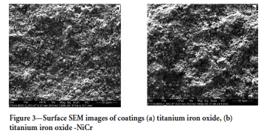
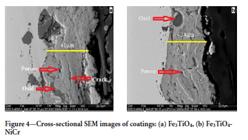
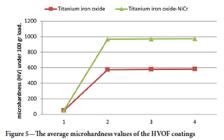
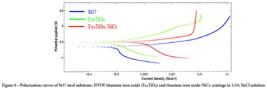
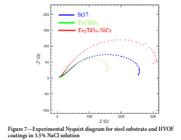
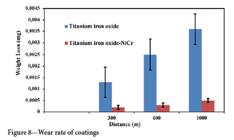
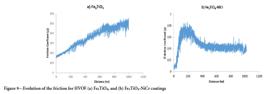
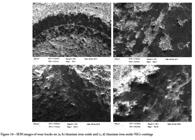
Titanium iron oxide and nickel-chromium coatings were applied on low-carbon steel substrates using the high-velocity oxygen fuel thermal spraying process. The microstructure, phase composition, and hardness of the coatings were analysed using scanning electron microscopy, x-ray diffraction, and microhardness tests. The phase analysis confirmed the formation of oxide compounds in the coatings. The average microhardness values for titanium iron oxide and titanium iron oxide-nickel-chromium coatings were measured at 580 HV and 970 HV, respectively, under a 100 g load. The corrosion resistance of the coatings was evaluated in a 3.5% sodium chloride solution using electrochemical impedance spectroscopy (EIS) and polarisation tests. The results indicated that the nickel-chromium composition exhibited superior corrosion resistance, which was attributed to its low porosity, preventing solution diffusion into the substrate. Wear behaviour was assessed using a pin-on-disk test with a tungsten carbide pin as the counterbody. The incorporation of nickel-chromium into the titanium iron oxide coating resulted in an 80% reduction in weight loss, indicating significant improvement in wear resistance. These findings suggest that nickel-chromium-modified titanium iron oxide coatings enhance both corrosion and wear resistance, making them promising candidates for industrial applications.
coating; high velocity oxygen fuel VOF; nickel-chromium; corrosion; wear; titanium iron oxide
 Thumbnail
 Thumbnail
 Thumbnail
 Thumbnail
 Thumbnail
 Thumbnail
 Thumbnail
 Thumbnail
 Thumbnail
 Thumbnail