Nonlinear data normalisation for reliable spatial inference with variational Gaussian processes
Abstract
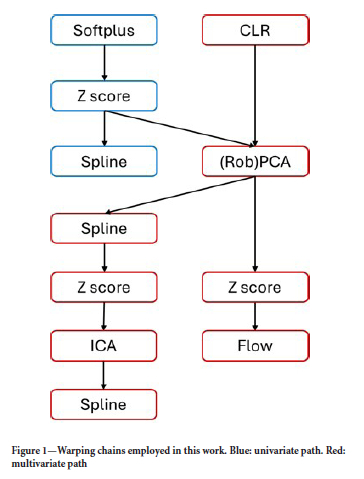
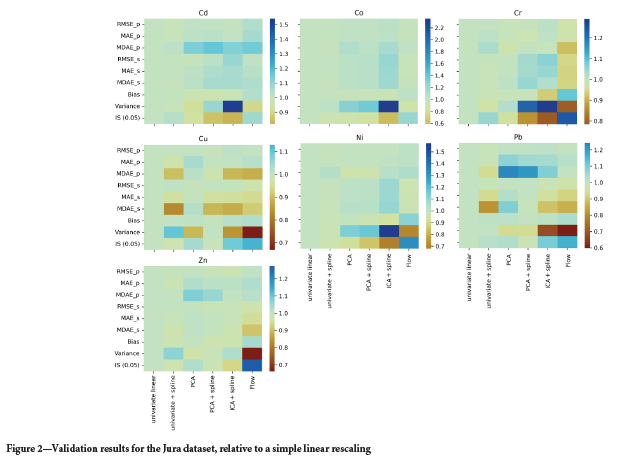
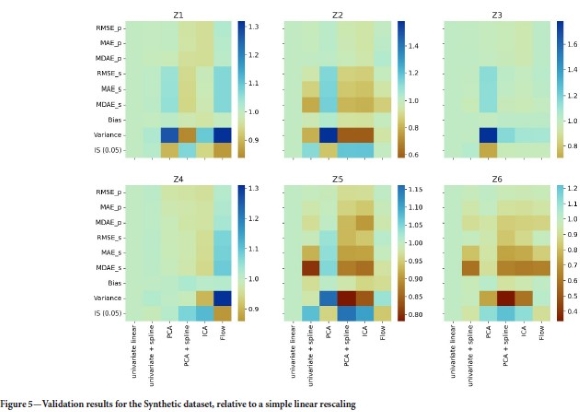
Machine learning methods for grade estimation have been rising in popularity in recent years. Among these, the variational Gaussian process model possesses all the beneficial characteristics of the kriging estimator: conditioning on data, declustering properties, and an uncertainty measure that increases with distance from the data points. However, its use requires a transformation of the data to a Gaussian distribution, especially if the data is compositional, as is the case with drillhole assays. This work explores some transformations that were specifically adapted for this model, making use of principal components analysis, independent components analysis, monotonic splines, and flow methods. Results show that the best transformation is case-dependent, and that they provide similar results to the ones used for geostatistical simulation. An open-source implementation of the methods is available to the community.
Variational Gaussian process; normal score transform; mineral deposit modelling
 Thumbnail
 Thumbnail
 Thumbnail
 Thumbnail
 Thumbnail
 Thumbnail
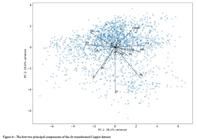 Thumbnail
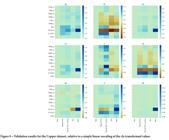 Thumbnail
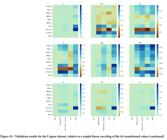 Thumbnail
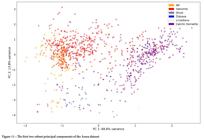 Thumbnail
 Thumbnail
 Thumbnail
 Thumbnail