Plasma arc behaviour in direct current arc furnace smelting of platinum group metal-bearing materials: A modelling study on the effect of reductant choice
Abstract
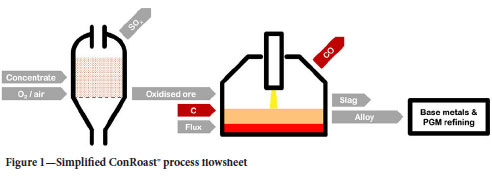
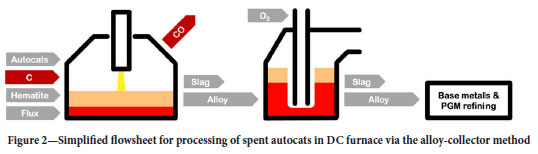
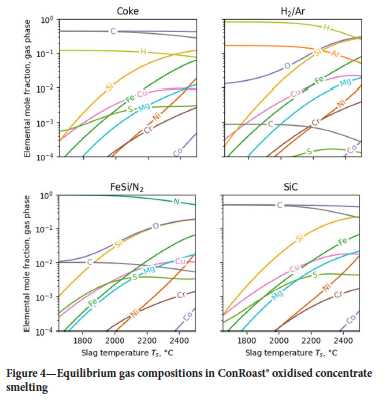
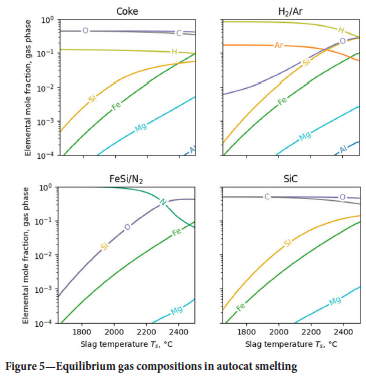
Aspects of the production of platinum group metals by reductive smelting in direct-current arc furnace processes are investigated using a computational modelling approach. The replacement of fossil carbon as a reductant by alternative reductants such as silicon carbide, ferrosilicon, and hydrogen is desirable for reducing direct greenhouse gas emissions from such processes, but the impact of these changes on the electrical operability of the process is poorly understood. This paper presents a study of plasma arc behaviour in the context of the ConRoast® reductive smelting process for Upper Group 2 ore as well as processes for recycling of automotive catalysts, using an integrated computational modelling workflow. It was found that the freeboard gas compositions, plasma properties, and arc behaviour were all affected by the choice of reductant, particularly in carbon-free smelting using ferrosilicon or hydrogen.
PGMs; Pyrometallurgy; DC furnace; Modelling
 Thumbnail
 Thumbnail
 Thumbnail
 Thumbnail
 Thumbnail
 Thumbnail
 Thumbnail
 Thumbnail
 Thumbnail
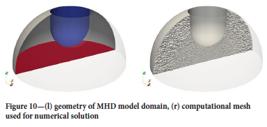 Thumbnail
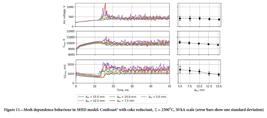 Thumbnail
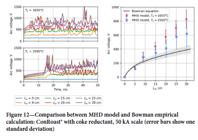 Thumbnail
 Thumbnail
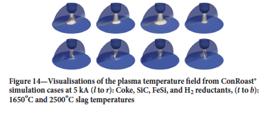 Thumbnail
 Thumbnail
 Thumbnail
 Thumbnail
 Thumbnail