Particle segregation associated with sub-sampling of flotation feed at a UG2 concentrator
Abstract
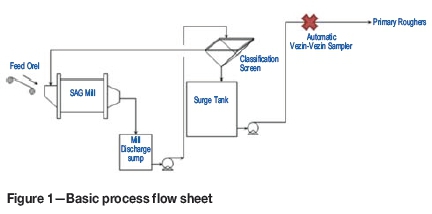
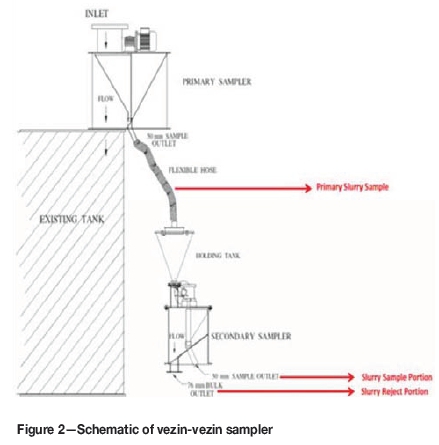
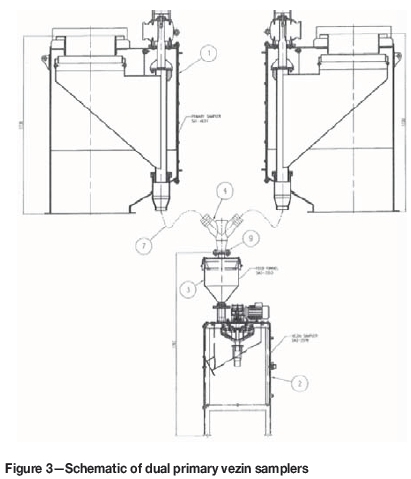
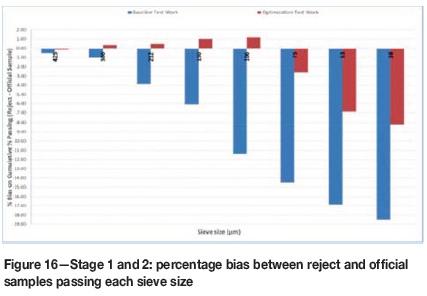
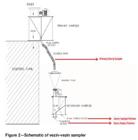
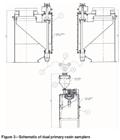
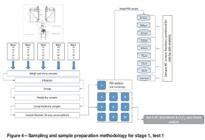
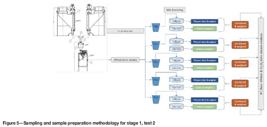
A concentrator treating an Upper Group 2 (UG2) reef ore has been historically under-accounting in terms of 4T (platinum, palladium, rhodium, and gold) content. The 4T content declared after sampling the flotation feed (or mill product) has always been more than that accounted for when concentrates and tailings exiting the flotation plant are analysed. This suggests that the sample head grade of the concentrator feed is possibly overstated. A plant audit indicated no reason to believe that the built-up head grades were the likely contributor to the under-accounting trend. The debate on the source of under-accounting pointed towards possible non-representative and/or biased sampling occurring in the concentrator feed vezin-vezin sampling system. This work investigates the possibility that the bias is due to particle segregation occurring in the intermediate hopper that stores the primary increment sample before sub-sampling. Vezin credibility and chronological sub-sampling tests were done on the current sampling arrangement. A consistent bias was observed between the reject and official samples, with the official samples having finer particles and analysing higher in 4T grade than the reject samples, confirming the hypothesis of particle segregation in the intermediate hopper. An alternative hopper discharge nozzle was then designed and replicate tests performed. The results with the new nozzle showed much improvement in the bias using particle size as the analyte, indicating that particle segregation has been significantly reduced.
sampling; vezin sampler; metal accounting; intermediate hopper; particle segregation; bias
 Thumbnail
 Thumbnail
 Thumbnail
 Thumbnail
 Thumbnail
 Thumbnail
 Thumbnail
 Thumbnail
 Thumbnail
 Thumbnail
 Thumbnail
 Thumbnail
 Thumbnail
 Thumbnail
 Thumbnail
 Thumbnail
 Thumbnail
 Thumbnail