Friction processing as an alternative joining technology for the nuclear industry
Abstract
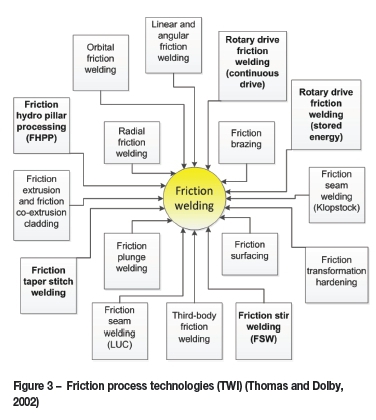
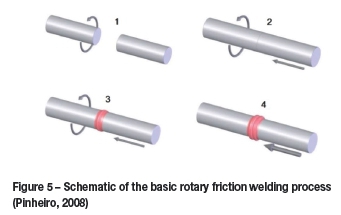
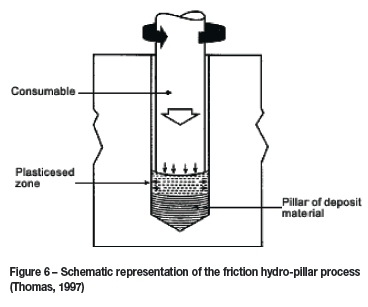
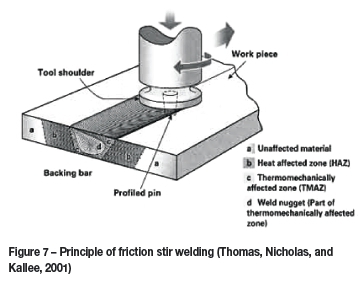
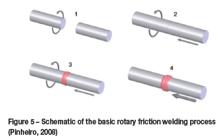
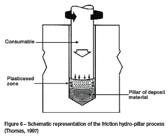
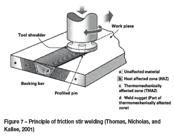
The process of joining materials by friction is based on generating the heat necessary to create a solid-state mechanical bond between two faying surfaces to be joined. In simple terms, the components to be joined are subjected to frictional heating between rubbing surfaces, causing an increase in interface temperature and leading to localized softening of interface material, creating what is described as a 'third body' plasticized layer. This plasticized zone reduces the energy input rate from frictional heating and hence prevents macroscopic melting. The plasticized layer can no longer transmit sufficient stress as it effectively behaves as a lubricant (Boldyrev and Voinov, 1980; Godet, 1984; Singer, 1998; Suery, Blandin, and Dendievel, 1994). The potential for this solid-state frictional joining process to create high-performance joints between, for example, dissimilar materials with limited detrimental metallurgical impact, and reduced defect population and residual stress level, has had a very significant impact on fabrication and repair in industrial sectors such as transport. This paper presents a brief overview of the advances made within the family of friction processing technologies that could potentially be exploited in the nuclear industry as alternative joining and repair techniques to fusion welding. Modern friction processing technologies can be placed into two main categories: those that make use of a consumable tool to achieve the intended repair or joint (friction stud and friction hydro-pillar processing) and those making use of a non-consumable tool (friction stir welding). The most mature friction joining technology is friction rotary welding, where a joint is formed between original parent materials only. A new addition in this category is linear friction welding, which opens the potential for joining complex near-net-shape geometries by friction heating. The continuous innovation in friction processing over the last 25 years has led to the development of a number of unique processes and applications, highlighting the adaptability of friction processes for specialized applications for high-value engineering components.
friction processing; joining; leak sealing; weld repair technology
 Thumbnail
 Thumbnail
 Thumbnail
 Thumbnail
 Thumbnail
 Thumbnail
 Thumbnail
 Thumbnail
 Thumbnail
 Thumbnail
 Thumbnail
 Thumbnail
 Thumbnail
 Thumbnail
 Thumbnail
 Thumbnail