Attainable region analysis for batch/continuous reductive column leaching of oxidised cobalt-bearing ore
Abstract
This study applies attainable region analysis to optimise cobalt recovery from oxidised ores via reductive leaching with sulphur dioxide and sulphuric acid. The attainable region framework enables systematic visualisation of trade-offs between cobalt yield and sulphur dioxide loss, guiding reactor network design beyond conventional mass balance modelling. Experimental column leaching trials, supported by validation runs, were conducted under controlled flow and reagent conditions. Kinetic parameters for cobalt dissolution and sulphur dioxide consumption were used to simulate reactor trajectories and construct attainable region envelopes. To ensure hydrodynamic realism, residence time distribution tests confirmed partial plug flow behaviour with dispersion effects, justifying the use of hybrid reactor models in the attainable region simulations. The results revealed that increasing recirculation ratios improves cobalt yield while reducing sulphur dioxide losses, with attainable efficiencies exceeding 90% cobalt recovery and < 20% sulphur dioxide loss. Importantly, the study proposes practical reactor network configurations for future implementation, including staged percolation columns with intermediate mixing zones, oscillatory flow reactors, and modular fluidised bed systems. These designs offer scalable pathways to translate attainable region-based optimisations into industrial practice. Compared to traditional modelling, attainable region analysis provides a geometric decision support tool that captures multi-objective trade-offs and reactor interactions, offering novel insights for continuous leaching system design. This work advances the application of attainable region methodology in minerals engineering by bridging theoretical optimisation with practical reactor design, supporting sustainable cobalt recovery from both primary ores and recycled feedstocks.
attainable region analysis; cobalt leaching; Sulphur dioxide reductive leaching; bisulfite kinetics; reactor network optimisation; residence time distribution; plug flow and stirred tank reactors; hydrometallurgical process design
Introduction
Cobalt is a strategic metal essential to the manufacture of lithiumion batteries, superalloys, and catalysts. In oxidised copper-cobalt ores, cobalt typically occurs in both Co2+ and Co3+ forms. The Co3+ species-such as heterogenite (CoOOH) and asbolane-exhibit poor solubility under conventional leaching conditions and require reduction to Co2+ before efficient extraction can occur (Munnik, Petersen, 2010; Chen et al., 2015; Tshipeng et al., 2017; Kime, Makgoale, 2016).
Sulphur dioxide (SO2) and its aqueous derivative, bisulphite (HSO3-), are widely used reductants in hydrometallurgy due to their favourable redox potential, cost-effectiveness, and compatibility with sulphuric acid systems (Das, Das, 2000; Baba et al., 2013). Under acidic conditions, SO2 equilibrates to bisulphite, which acts as the active reducing agent:

However, SO2 losses-via offgassing and incomplete reaction- pose significant challenges to reagent efficiency and process economics. These losses are especially pronounced in open-column systems and heap leaching configurations, where gas-liquid contact is limited and residence time is poorly controlled.
This study investigated the use of attainable region (AR) analysis to optimise cobalt recovery and minimise SO2 loss in reductive leaching systems. AR analysis is a geometric optimisation framework that maps all theoretically achievable reactor outcomes within defined kinetic and operational constraints. Unlike conventional mass balance modelling, which typically evaluates reactor performance under fixed conditions, AR analysis enables visualisation of trade-offs between competing objectives-such as yield versus reagent loss-and identifies optimal reactor network configurations (Horn, 1964; Glasser et al., 1987; Khumalo, 2008).
Although AR methodology has been applied in chemical engineering, its use in minerals processing remains limited. This paper addresses that gap by applying AR analysis to a column leaching system for cobalt recovery, using experimental data and kinetic modelling to construct reactor trajectories and define the attainable region. Importantly, the study goes beyond theoretical illustration by proposing practical reactor network designs-such as staged percolation columns with intermediate mixing zones, oscillatory flow reactors, and modular fluidised-bed systems-that could be implemented in continuous leaching operations.
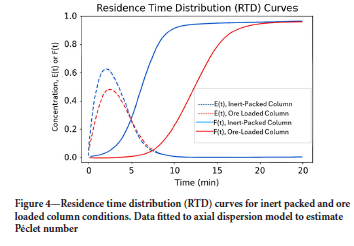
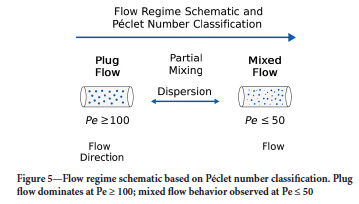
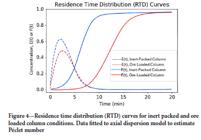
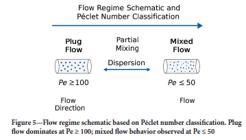
To ensure hydrodynamic realism, residence time distribution (RTD) tests were conducted using tracer pulse methods to characterise flow behaviour in the column. These data informed the selection of reactor models (plug flow, stirred tank, and hybrids) used in the AR simulations. Figure 4 presents the RTD curves for inert-packed and ore-loaded column conditions, while Figure 5 classifies flow regimes based on Péclet number and supports the use of hybrid reactor models.
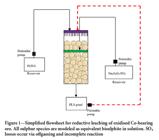
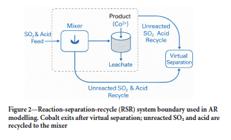
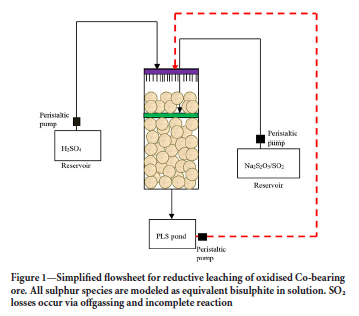
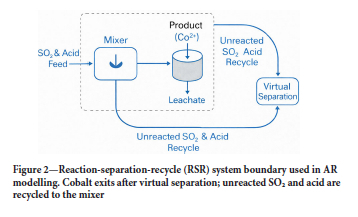
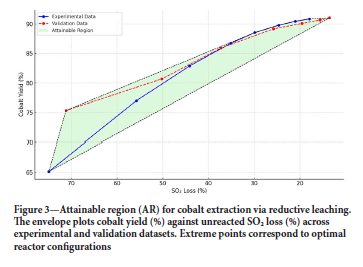
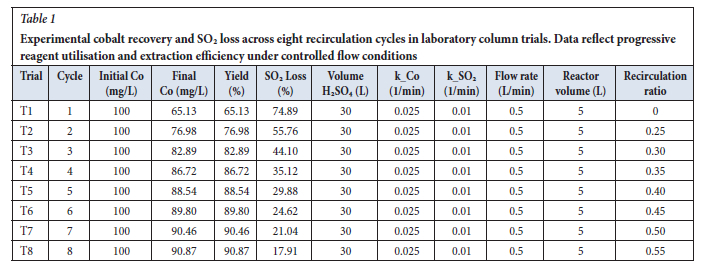
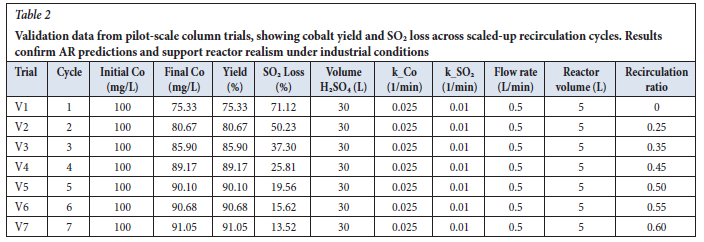
The process flowsheet for reductive leaching is shown in Figure 1, and the reaction-separation-recycle (RSR) system boundary used in AR modelling is presented in Figure 2. Experimental and validation data are summarised in Table 1 and Table 2, respectively, and were used to construct the AR envelope shown in Figure 3.
By integrating experimental validation, kinetic modelling, and reactor network design, this study advances the application of AR analysis in minerals engineering and offers a structured decision support tool for sustainable cobalt hydrometallurgy.
Problem description
In oxidised copper-cobalt ores, heterogenite (Co3+OOH) is the dominant cobalt-bearing mineral. Its poor solubility under acidic conditions necessitates reductive leaching to convert Co3+ to Co2+, which is readily soluble. The primary reaction governing cobalt dissolution is:
However, due to limited iron solubility under the tested conditions, Reactions 2 and 3 are considered negligible in this study.
The process flowsheet is shown in Figure 1, which outlines the reductive leaching system comprising reagent addition, column leaching, and pregnant leach solution (PLS) collection. SO2 losses occur primarily via two mechanisms: (i) incomplete reaction within the column and (ii) offgassing from the PLS pond surface. These losses reduce cobalt recovery and reagent efficiency.
To quantify SO2 utilisation, the loss percentage is defined as:

For modelling purposes, all sulphur species-whether introduced as SO2 gas or sodium metabisulphite (Na2S2O5)-are normalised to their bisulphite equivalent in solution. The origin of the reductant (gas vs. solid) is treated implicitly via the kinetic constant kSO2) and the SO2 loss term.
Figure 2 presents the simplified reaction-separation-recycle (RSR) system used for attainable region (AR) analysis. The system boundary includes the leach column and upstream mixer. Cobalt product (Co2+) exits the system after virtual separation, while unreacted SO2, sulphuric acid, and impurities are recycled to the mixer. This configuration reflects industrial practice, where leach liquor is recirculated to improve reagent utilisation.
To ensure reactor realism, residence time distribution (RTD) tests were conducted using tracer pulse methods. The resulting E(t) and F(t) curves are shown in Figure 4, and flow regimes are classified in Figure 5. The ore loaded column exhibited moderate dispersion (Péclet number ≈ 85), supporting the use of hybrid reactor models (PFR-CSTR combinations) in the AR simulations.
Experimental methods and analytical procedures
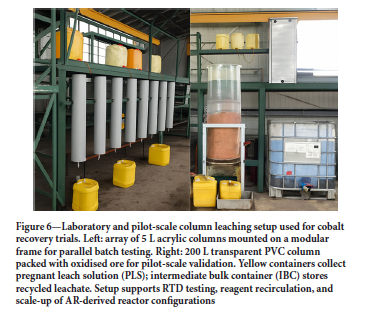
Column leaching experiments were conducted to generate kinetic data and validate reactor trajectories for attainable region (AR) analysis. Two experimental setups were used: a laboratory-scale array of acrylic columns and a pilot-scale transparent PVC column, both designed to simulate reductive leaching of oxidised cobalt-bearing ore under controlled flow and reagent conditions (Figure 6).
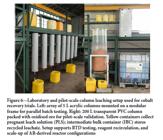
The laboratory system consisted of eight vertically mounted acrylic columns (5 L each), arranged on a modular green steel frame. Each column had an internal diameter of 50 mm and a height of 1.2 m, fitted with sampling ports at three vertical positions. The columns were loaded with 4.5 kg of representative oxidised copper-cobalt ore (-2 mm), sourced from the Scherrer Formation and characterised by a mixture of cobalt carbonates and oxides. Yellow plastic jerrycans were placed beneath each column to collect pregnant leach solution (PLS). The setup allowed parallel batch testing across multiple recirculation cycles.
The pilot-scale system featured a single 200 L transparent PVC column packed with 180 kg of ore. The column was supported by a white metal frame and connected to an intermediate bulk container (IBC) for leachate storage and recirculation. Reagents were introduced via peristaltic pumps (Masterflex L/S model 07523-80), and yellow containers were used for effluent collection and reagent dosing. This setup enabled validation of AR-derived reactor configurations under scaled-up flow conditions.
The leach solution consisted of sulphuric acid (H2SO4, 60 g/L) and sodium metabisulphite (Na2S2O5, 20 g/L), introduced via a peristaltic pump (Masterflex L/S model 07523-80) at a controlled flowrate of 15 L·h-1·m-2, equivalent to approximately 0.45 L/min for the laboratory column. The solution was introduced at the top and allowed to percolate through the packed ore bed. Pregnant leach solution (PLS) was collected at the base and recirculated according to the experimental cycle.
Samples were extracted every 2 hours over a 24-hour leaching cycle, filtered through 0.45 μιιι cellulose membranes, and analysed for cobalt (Co), copper (Cu), and iron (Fe) using inductively coupled plasma-atomic emission spectroscopy (ICP-AES, PerkinElmer Optima 5300 DV). Free acidity was determined by titration with 1 M NaOH using methyl orange as an indicator. Residual SO2 and sulphite species were quantified by iodometric titration and verified using ion chromatography (Dionex ICS-5000).
Ore residues were washed, dried, and analysed for residual metal content to ensure mass balance closure. All experiments were conducted in duplicate, and reported values represent mean ± one standard deviation. Total acid consumption (TAC, kg H2SO4·t-1 ore) was calculated based on the difference between initial and final acid concentrations and ore mass processed.
To characterise flow behaviour and validate reactor assumptions, residence time distribution (RTD) tests were performed using a conservative tracer pulse method. A 0.5 mol·L-1 NaCl solution was injected at the column inlet, and effluent conductivity was continuously monitored at the outlet. The resulting E(t) and F(t) curves are shown in Figure 4, and flow regimes are classified in Figure 5. The ore loaded column exhibited moderate dispersion (Péclet number ~ 85), supporting the use of hybrid reactor models in subsequent AR simulations.
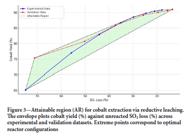
Experimental and validation data are summarised in Table 1 and Table 2, respectively. These datasets were used to construct the AR envelope shown in Figure 3, which plots cobalt yield against SO2 loss across multiple recirculation cycles.
Residence time distribution (RTD) characterisation
In column leaching systems, flow behaviour significantly influences reaction kinetics, mass transfer, and overall extraction efficiency. While plug flow reactor (PFR) models are commonly used to simulate percolation leaching, this assumption must be experimentally validated due to potential deviations caused by packing heterogeneity, channeling, and stagnant zones (Shaikh, Al-Dahhan, 2007; Ranade et al., 2011).
To characterise the hydrodynamics of the column system, residence time distribution (RTD) tests were conducted using a conservative tracer pulse method. A 0.5 mol-L'i NaCl solution was injected at the column inlet, and effluent conductivity was continuously monitored at the outlet using a Hach HQ40d probe coupled with data logging software. The normalised concentration time profile, E(t), was derived from the conductivity signal, and the cumulative distribution function, F(t), was obtained by integration.
The resulting RTD curves are shown in Figure 4, which compares inert packed and ore loaded column conditions. The inert packed column exhibited a sharp E(t) peak and rapid F(t) transition, consistent with near plug flow behaviour. In contrast, the ore loaded column showed broader dispersion and delayed breakthrough, indicating moderate axial mixing.
The mean residence time (ṫ) and variance (σ2) were calculated using standard moment equations. The data were fitted to the axial dispersion model to estimate the Péclet number (Pe = uL/D), which quantifies the degree of deviation from ideal plug flow. Columns exhibiting Péclet numbers above 100 were classified as near plug flow, while those below 50 indicated mixed flow behaviour.
In this study, the ore loaded column yielded Pe ≈ 85, suggesting moderate dispersion and validating the use of hybrid reactor models (PFR-CSTR combinations) in the AR simulations. Figure 5 presents a schematic classification of flow regimes based on Péclet number, illustrating the transition from plug flow to mixed flow behaviour.
This RTD characterisation ensures that reactor assumptions used in the AR framework reflect realistic flow behaviour. It also supports the selection of reactor trajectories-plug flow, stirred tank, and sidestream configurations-used to construct the attainable region envelope (Figure 3).
Kinetics analysis for attainable region (AR) Modelling
To support the construction of the attainable region (AR), a kinetic framework was developed to simulate cobalt dissolution and SO2 consumption under realistic column leaching conditions. The reactor network aims to minimise residence time and optimise conversion using plug flow reactors (PFR), continuous stirred-tank reactors (CSTR), and hybrid configurations.
System definition and assumptions
The modelled system boundary includes the leach column, upstream mixer, and recycle loop. Leachate containing SO2 and H2SO4 is fed to the reactor, and cobalt product (Co2-) exits after virtual separation. Unreacted SO2, acid, and impurities are recycled to the mixer. The following variables are defined:
> Q: leachate flow rate (L/min)
> q: SO2 feed rate (mol/min)
> r: recycle ratio (dimensionless)
> c1: aqueous cobalt concentration (mg/L)
> c2: SO2 concentration (mg/L)
> x: fractional conversion (dimensionless)
> s1: solid-phase cobalt concentration (mg/g)
> S2: cumulative SO2 volume injected (L)
The total inlet flow becomes (1+r)Q. The system is modelled under pseudo-steady-state conditions with delayed recycle.
Reaction rate expressions
The primary leaching reaction is:

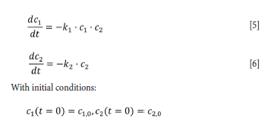
The rate expressions are:
> Cobalt dissolution: R1 = k1 · C1 · C2
> SO2 consumption: R2 = k2 · C2
Where:
> k1 = 0.025 min-1 (cobalt reaction rate constant)
> k2 = 0.01 min-1 (SO2 reaction rate constant)
These values reflect moderate kinetic control, consistent with literature reports for Co(III) reduction in column systems (Ferron, 2008; Tshipeng et al., 2017; Ntakamutshi et al., 2017).
Mass balance equations
The time-dependent concentration profiles are governed by:
Reactor models for AR simulation
To capture the range of reactor behaviours observed in RTD tests (Figure 4), four reactor models were used:
Model 1: Complete mix reactor with constant generation

Where G1 and G2 are generation terms (e.g., batch addition or bleed-in).
Model 2: Complete mix reactor with constant rate coefficients
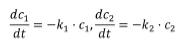
Used when SO2 is in excess or redox buffering is maintained.
Model 3: Reactor with solid-liquid interaction

Where a, b, care empirical constants and kd is the aqueous depletion rate.
Model 4: Batch dissolution model
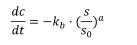
Where kb is the batch dissolution coefficient and a is the reaction order in solid-phase decay.
These models were used to simulate reactor trajectories and construct the AR envelope (Figure 3), which plots cobalt yield against SO2 loss. Each trajectory contributes a point in the cobalt yield vs. SO2 loss space. Their convex hull defines the attainable region, with extreme points corresponding to optimal reactor configurations.
The recursive algorithm described by Seodigeng et al. (2009) was used to generate the AR numerically. Flow regime classification from Figure 5 guided the selection of reactor types, ensuring hydrodynamic realism in the simulation framework.
AR simulation setup
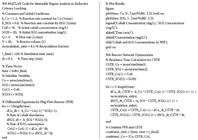
The attainable region (AR) for cobalt extraction via reductive leaching was constructed using both experimental and validation datasets derived from laboratory and pilot-scale column trials. The simulations were performed using MATLAB, incorporating kinetic and hydrodynamic parameters consistent with the experimental system.
To ensure consistency across all scenarios, the reaction rate constants were fixed at:
> Co = 0.025 min-1 for cobalt dissolution
> kSO2 = 0.01 min-1 for SO2 consumption
These values reflect moderate kinetic control, consistent with literature reports for Co(III) reduction in column systems (Ferron, 2008; Tshipeng et al., 2017; Ntakamutshi et al., 2017). Cobalt recovery was observed to increase progressively with cycle number, indicative of gradual reagent utilisation and diffusion-limited kinetics. SO2 losses were initially high (up to 75%) and decreased with recirculation, supporting the use of a moderate kSO2 value.
The initial cobalt concentration was set at 100 mg/L. Flow rates were 0.5 L/min for the laboratory column and 1.2 L/min for the pilot column, reflecting differences in cross-sectional area and operational scale. Reactor volumes were 5 L and 200 L, respectively. A recirculation ratio of 0.3 was applied throughout, representing moderate internal recycling to improve SO2 utilisation. The volume of H2SO4 consumed per cycle ranged from 68 L to 38 L in the experimental trials and 120 L to 80 L in the validation trials. SO2 loss percentages decreased over successive cycles, confirming improved reagent efficiency. Each cycle lasted 24 hours.
Experimental data are summarised in Table 1, while validation data are presented in Table 2. These datasets were used to generate reactor trajectories-PFR, CSTR, and sidestream configurations- within the cobalt yield vs. SO2 loss space. The convex hull of these trajectories defines the attainable region envelope, as shown in Figure 3.
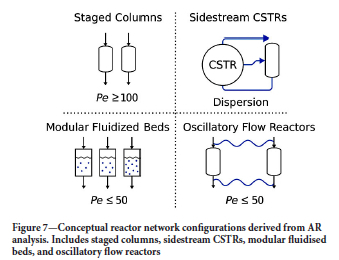
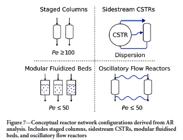
The simulation approach followed the recursive algorithm described by Seodigeng et al. (2009), enabling stepwise construction of the AR using reactor combinations and residence time variations. Flow regime classification from Figure 5 guided the selection of reactor types, while practical reactor configurations, shown in Figure 7, were derived from the extreme points of the AR envelope.
Results and discussion
The attainable region (AR) constructed for cobalt extraction via reductive leaching is presented in Figure 3, which plots cobalt yield (%) against unreacted SO2 loss (%). The green-shaded envelope represents the operationally achievable space based on experimental trials (Table 1) and validation runs (Table 2). As the number of recirculation cycles increases, cobalt recovery improves significantly, while SO2 losses progressively decrease.
Across eight cycles, cobalt yield increased from 65.1% to 90.9%, while SO2 loss decreased from 74.9% to 17.9% (Table 1). Validation runs confirmed this trend, with final yields exceeding 91% and SO2 losses dropping below 14% (Table 2). These results demonstrate that recirculation enhances reagent utilisation and extraction efficiency, consistent with AR predictions.
The concave shape of the AR envelope reflects diminishing returns as the system approaches equilibrium. Early cycles yield substantial gains in cobalt recovery, but further improvements require disproportionately higher residence times or reagent input. This trade-off is visualised geometrically in the AR framework, enabling identification of optimal operating points.
Importantly, the AR analysis reveals reactor configurations that outperform single-pass systems. Hybrid networks-such as staged percolation columns with intermediate mixing zones, sidestream-fed CSTRs, and oscillatory flow reactors-occupy extreme points on the AR envelope. These configurations are illustrated in Figure 7 and offer practical pathways for implementation in continuous leaching operations.
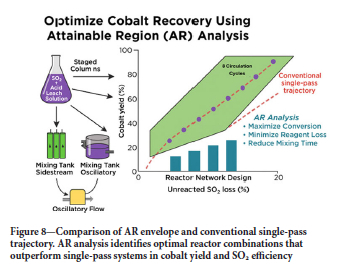
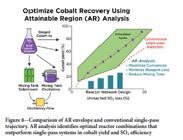
Figure 8 compares the AR envelope with a conventional single-pass trajectory. The red dashed curve represents a typical mass balance model, which fails to capture the full space of achievable outcomes. In contrast, the AR envelope identifies optimal reactor combinations that minimise SO2 loss while maximising cobalt recovery. This highlights the added value of AR methodology in reactor network design.
Compared to conventional modelling, AR analysis provides a multi-objective optimisation tool that captures reactor interactions, trade-offs, and system boundaries. While mass balance models can simulate individual reactor performance, they do not inherently visualise the full space of achievable outcomes or guide network design. AR analysis bridges this gap by integrating kinetics, hydrodynamics, and process constraints into a unified decision-support framework.
The validated AR envelope (Figure 3) supports the following conclusions:
> Recirculation improves cobalt yield and reduces SO2 loss, with optimal performance achieved at recycle ratios > 0.5.
> Reactor networks combining PFR and CSTR elements outperform single-reactor systems.
> Practical reactor designs-such as modular fluidised beds and staged columns-can be derived from AR geometry (Figure 7).
> AR analysis offers unique insights into reagent efficiency and process intensification not captured by conventional modelling (Figure 8).
These findings demonstrate the value of AR methodology in minerals engineering and support its application to industrial-scale cobalt recovery systems.
Conclusion and recommendations
This study demonstrates the value of attainable region (AR) analysis in optimising cobalt recovery from oxidised ores via reductive leaching with sulphur dioxide (SO2) and sulphuric acid (H2SO4). By integrating experimental data, kinetic modelling, and residence time distribution (RTD) characterisation, the AR framework enabled visualisation of trade-offs between cobalt yield and SO2 loss, guiding reactor network design beyond conventional mass balance approaches.
Key findings include:
> Cobalt recovery increased from 65.1% to 90.9% across eight recirculation cycles, while SO2 loss decreased from 74.9% to 17.9% (Table 1).
> Validation trials confirmed these trends, with final yields exceeding 91% and SO2 losses below 14% (Table 2).
> RTD tests revealed moderate dispersion (Péclet number ~ 85), justifying the use of hybrid reactor models (PFR-CSTR combinations).
> The AR envelope (Figure 3) identified optimal reactor configurations that balance reagent efficiency and extraction performance.
Importantly, this study proposes practical reactor network schemes for future implementation, including:
> Staged percolation columns with intermediate mixing zones to enhance contact time and reduce bypassing.
> Oscillatory flow reactors to improve mass transfer and mitigate channeling effects.
> Modular fluidised-bed systems for continuous operation and improved solid-liquid interaction
> Sidestream-fed CSTRs integrated with plug flow segments to manage reagent distribution and redox control.
These configurations are illustrated in Figure 7 and offer scalable pathways to translate AR-based optimisations into industrial practice, particularly for continuous leaching operations and decentralised cobalt recovery systems.
Compared to conventional mass balance modelling, AR analysis provides a geometric decision-support tool that captures reactor interactions, system boundaries, and multi-objective trade-offs. It enables identification of reactor networks that minimise reagent loss while maximising metal recovery-an essential capability for sustainable hydrometallurgical process design. Figure 8 highlights this advantage by comparing the AR envelope with a single-pass trajectory, demonstrating the superior performance of AR-derived reactor combinations.
Future research should focus on:
> Pilot-scale validation of proposed reactor networks under dynamic flow conditions.
> Integration of AR analysis with real-time process control and redox monitoring.
> Extension of the methodology to multi-metal systems and recycled feedstocks (e.g., spent lithium-ion batteries).
> Development of closed-loop bisulphite regeneration strategies to reduce reagent consumption and environmental impact
By bridging theoretical optimisation with practical reactor design, this study advances the application of AR methodology in minerals engineering and supports the development of efficient, scalable, and environmentally responsible cobalt leaching systems.
References
- Baba, A.A., Adekola, F.A., Ghosh, M.K. 2013. Leaching of cobalt from Nigerian heterogenite ore using sulphuric acid and hydrogen peroxide. Hydrometallurgy, vol. 137, pp. 1-6.
- Chen, T., Li, Y., Liu, J. 2015. Reductive leaching of cobalt from heterogenite using sulfur dioxide in sulfuric acid medium. Minerals Engineering, vol. 79, pp. 1-8.
- Das, B., Das, R.P. 2000. Reductive leaching of manganese dioxide ore using sulphur dioxide. Hydrometallurgy, vol. 56, no. 1, pp.85-92.
- Ferron, J. 2008. Reductive leaching of cobalt oxide ores with sulphur dioxide. Journal of Applied Electrochemistry, vol. 38, no. 3, pp. 317-324.
- Glasser, D., Hildebrandt, D., Crowe, C.M. 1987. A geometric approach to steady state reactor analysis. Chemical Engineering Science, vol. 42, no. 9, pp. 2153-2164.
- Horn, F.J.M. 1964. Attainable regions in chemical reaction technique. AIChE Journal, vol. 10, no. 2, pp. 161-166.
- Khumalo, M. 2008. Application of attainable region analysis to mineral processing systems. PhD thesis, University of the Witwatersrand.
- Kime, M.-B., Makgoale, M. 2016. Reductive leaching of cobalt from heterogenite using sodium metabisulfite. SAIMM Journal, vol. 116, no. 7, pp. 645-652.
- Munnik, J.F., Petersen, J. 2010. Leaching of cobalt from heterogenite: kinetics and mechanism. Hydrometallurgy, vol. 104, no. 1, pp. 1-7.
- Ntakamutshi, B., Mutombo, I., Tshilombo, A. 2017. Optimization of cobalt recovery from heterogenite using sulphur dioxide. Minerals Engineering, vol. 112, pp. 1-9.
- Ranade, V.V., Chaudhari, R.V., Gabor, T. 2011. Trickle Bed Reactors: Reactor Engineering and Applications. Elsevier.
- Seodigeng, T., Hildebrandt, D., Glasser, D. 2009. A recursive algorithm for constructing the attainable region. Chemical Engineering Science, vol. 64, no. 7, pp. 1532-1535.
- Shaikh, A., Al-Dahhan, M.H. 2007. Characterization of flow regimes in bubble columns using optical probe. Chemical Engineering Science, vol. 62, no. 12, pp. 3269-3278.
- Tshipeng, T., Moyo, D., Petersen, J. 2017. Reductive leaching of cobalt from heterogenite using sulphur dioxide: kinetic modelling and reactor design. Hydrometallurgy, vol. 169, pp.1-9.
Revised: 12 Oct. 2025
Accepted: 28 Jan. 2026
Published: March 2026