Synthesis and deposition of silicon carbide nanopowders in a microwave-induced plasma operating at low to atmospheric pressures
Abstract
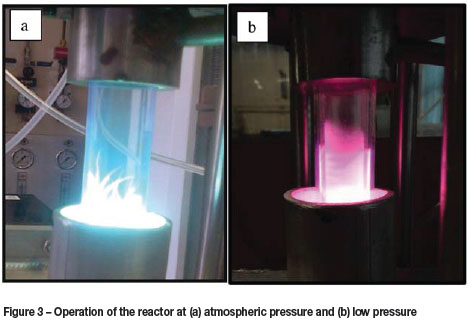
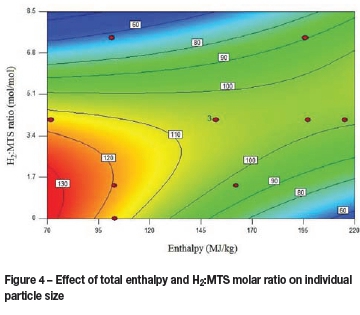
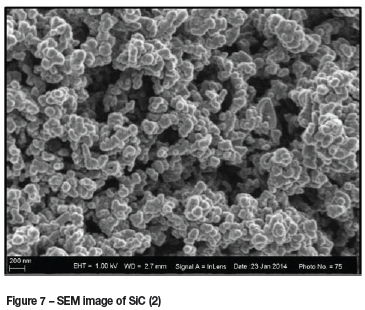
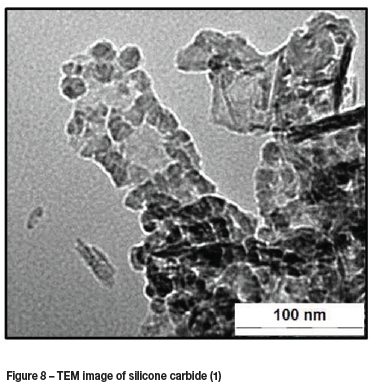
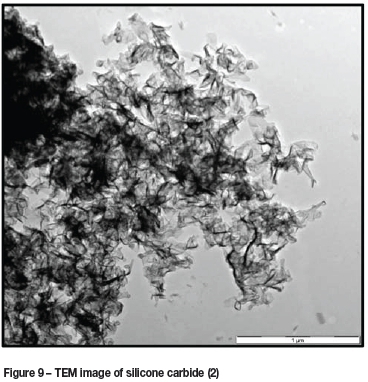
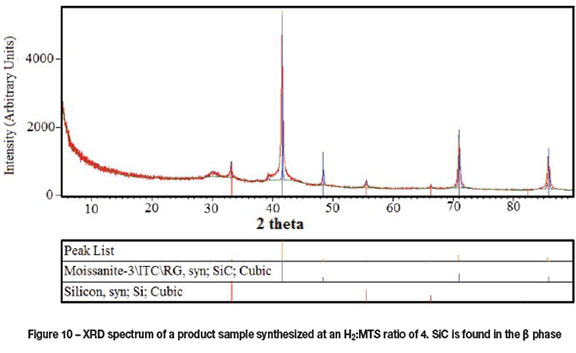
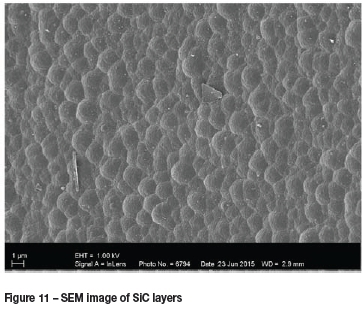
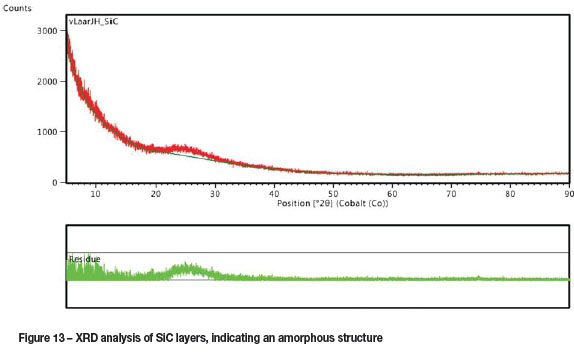
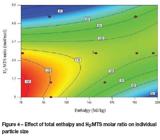
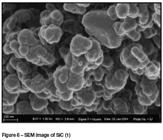
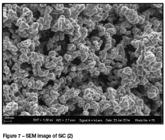
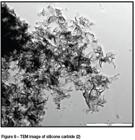
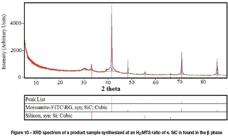
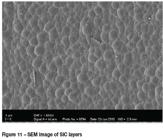
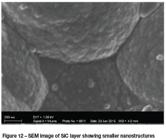
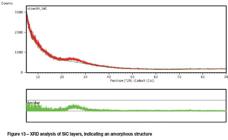
Silicon carbide nanopowders were produced using a microwave-induced plasma process operating at 15 kPa absolute and at atmospheric pressure. Methyltrichlorosilane (MTS) served as precursor, due to its advantageous stoichiometric silicon-to-carbon ratio of unity, allowing it to act as both carbon and silicon source. Argon served as carrier gas, and an additional hydrogen feed helped ensure a fully reducing reaction environment. The parameters under investigation were the H2:MTS molar ratio and the total enthalpy. The particle size distribution ranged from 20 nm upwards, as determined by SEM and TEM micrographs. It was found that an increase in enthalpy and a higher H2:MTS ratio resulted in smaller SiC particle sizes. The adhesion of particles was a common occurrence during the process, resulting in larger agglomerate sizes. SiC layers were deposited at 15 kPa with thicknesses ranging from 5.8 to 15 μm.
silicon carbide; microwave plasma; methyltrichlorosilane; nanoparticles
 Thumbnail
 Thumbnail
 Thumbnail
 Thumbnail
 Thumbnail
 Thumbnail
 Thumbnail
 Thumbnail
 Thumbnail
 Thumbnail
 Thumbnail
 Thumbnail
 Thumbnail