The accuracy of calcium-carbonate-based saturation indices in predicting the corrosivity of hot brackish water towards mild steel
Abstract
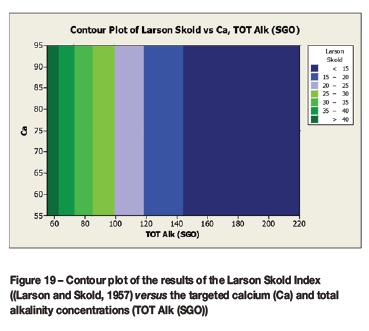
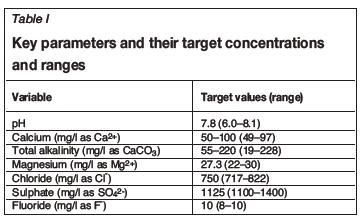
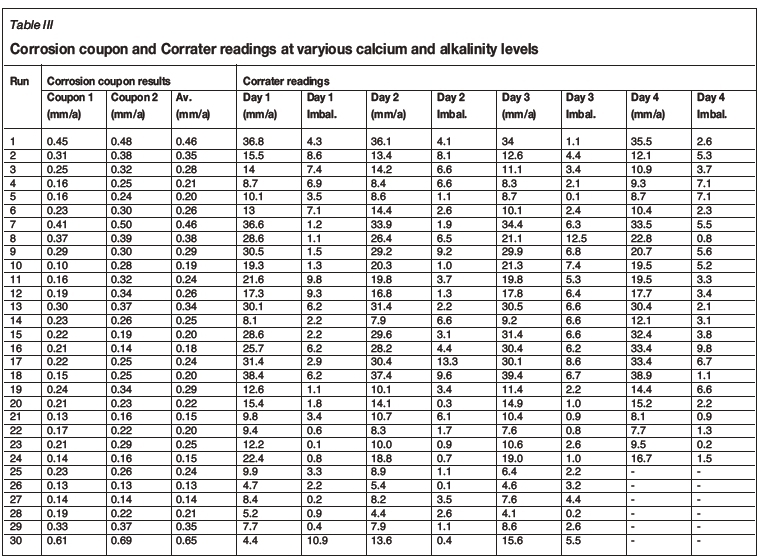
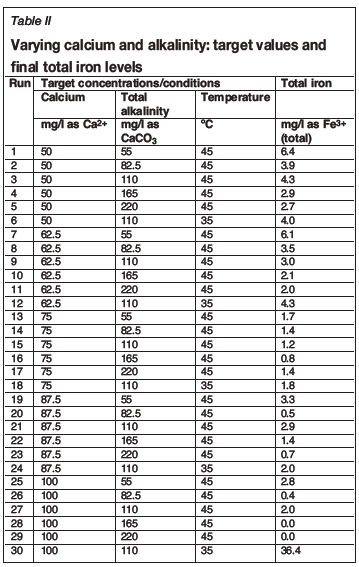
Industry has always relied on water's inherent ability to inhibit mild steel corrosion by virtue of its levels of calcium hardness and total alkalinity. This research seeks to verify the application of this principle to brackish water used in industrial systems at moderately elevated temperatures. A brief review is first given of the conventional calcium-carbonate-based scale or corrosion predictive indices. Laboratory corrosion tests were performed at various levels of calcium hardness and total alkalinity, resulting in the generation of an empirically derived nonlinear regression model. The newly developed model and the existing indices were then compared statistically in predicting the corrosivity of brackish water in contact with mild steel at 45°C. The accuracy, broader application, and relevance of the indices are also discussed.
saline water; brackish water; cooling; corrosion prediction; computer modelling; Langelier Saturation Index; Ryznar Stability Index; mild steel; calcium carbonate saturation
 Thumbnail
 Thumbnail
 Thumbnail
 Thumbnail
 Thumbnail
 Thumbnail
 Thumbnail
 Thumbnail
 Thumbnail
 Thumbnail
 Thumbnail
 Thumbnail
 Thumbnail