Cost modelling for flotation machines
Abstract
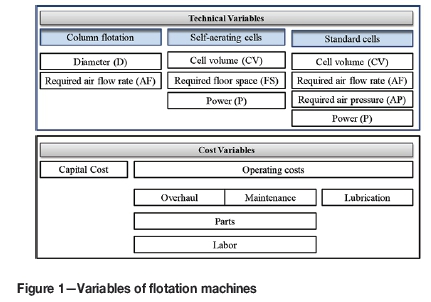
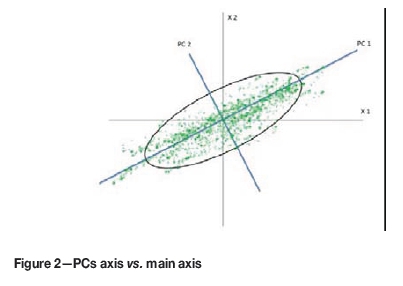
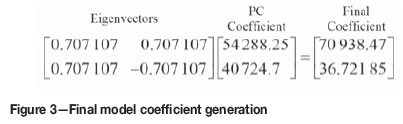
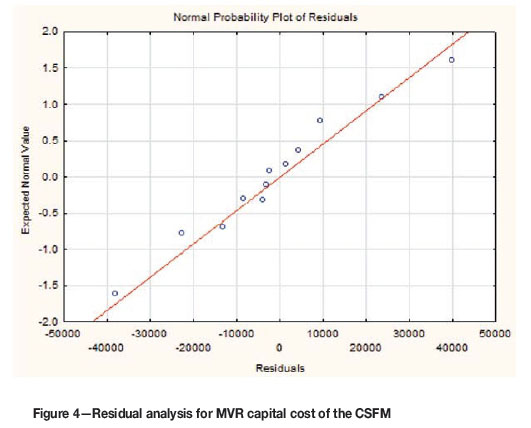
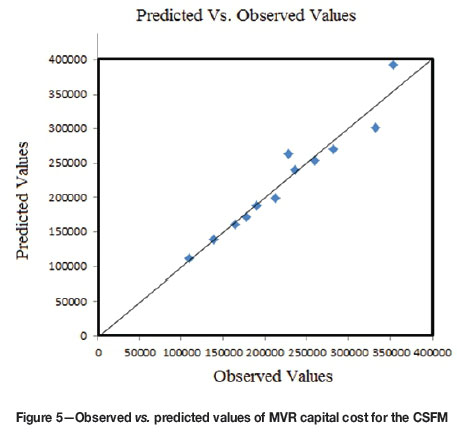
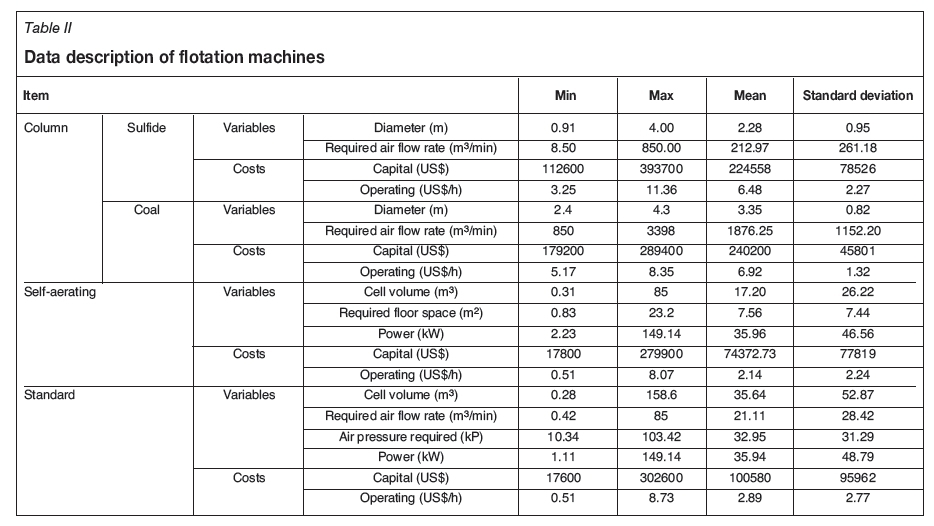
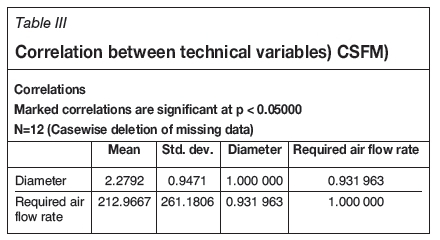
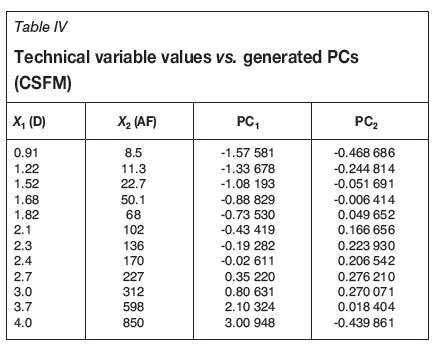
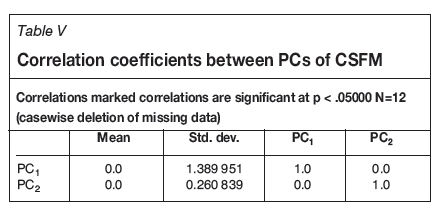
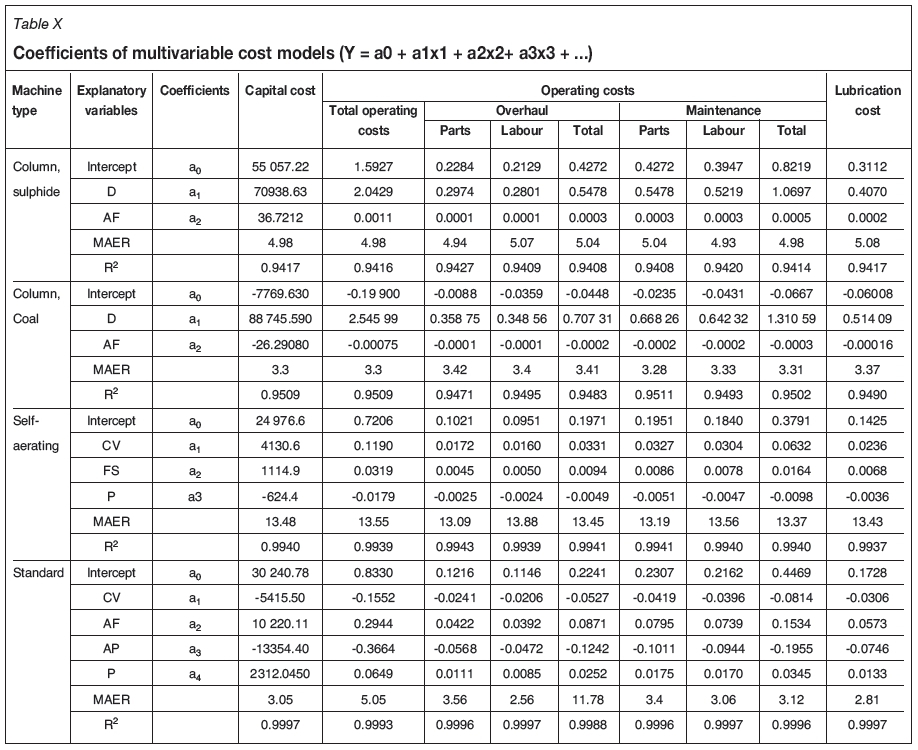
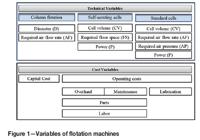
Flotation is one of the most widely used operations in mineral processing plants and assumes a significant share of the total milling costs. The purpose of this paper is to introduce a new set of capital and operating cost models for major flotation machines based on the application of single (SRA) and multiple regression analysis (MRA). Thirty-seven major flotation machines were analysed for this purpose. Depending on the machinery type, different technical variables such as diameter, required air flow rate, required floor space, cell volume, required air pressure, and power were considered as predictor variables, individually (in SRA) or simultaneously (in MRA). Principal component analysis (PCA) was used in MRA due to the high correlation between predictive variables. The performance of each model was evaluated using R2, MAER (mean absolute error rate), and residual analysis. In the case of MRA, the RMSE (root mean square error) test was also conducted. Maximum obtained MAER of 13.5% and minimum R2 of 0.86 indicated that these models could be applied as credible tools in estimation of capital and operating costs of flotation machines for design and feasibility studies.
cost estimation; flotation machine; regression model; principal component analysis
 Thumbnail
 Thumbnail
 Thumbnail
 Thumbnail
 Thumbnail