Recovery of uranium from nuclear conversion plant waste
Abstract
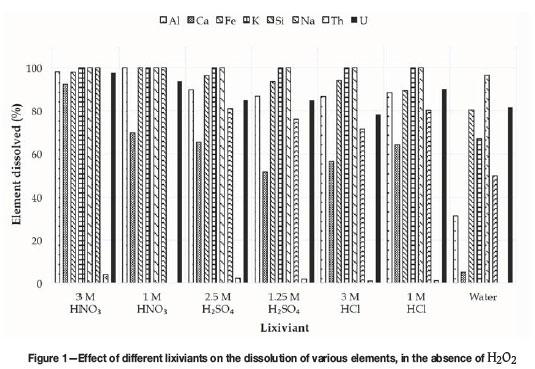
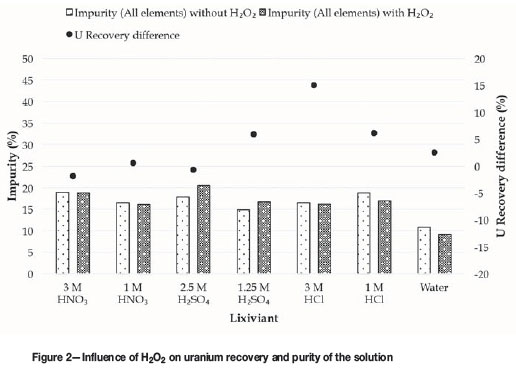
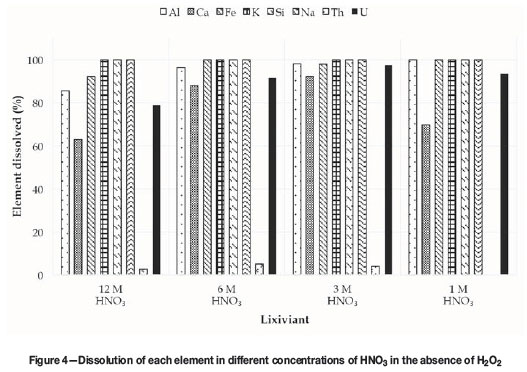
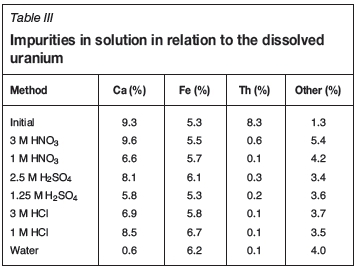
The ammonium diuranate (ADU) conversion process that was operated at the Nuclear Energy Corporation of South Africa (Necsa) in the past generated a significant amount of waste containing high concentrations of uranium, which can be re-used if the uranium can be recovered in a useful form. To attain this objective, the composition of the waste material and the amounts of impurities present were determined, followed by an investigation into various methods of uranium dissolution. For dissolution, water as well as different acid types and concentrations were investigated, and the efficiency of each method determined in terms of the uranium recovery as well as the extent of impurities extraction. It was found that the waste material was soluble in HNO3, H2SO4, and HCl as well as water, with a maximum uranium extraction of 98% achieved in 3 M HNO3 in 1 hour at a temperature of 80°C without the addition of an oxidizing agent. The thorium impurity content in relation to uranium was reduced from 8.4% to less than 1% with all acids investigated, as well as water. The most significant reduction in the total impurity content, from 24.3% to 10.8 %, was observed when using water, although this did not result in the highest uranium extraction.
uranium; nuclear waste; conversion process; dissolution; purification; hydrogen peroxide
 Thumbnail
 Thumbnail
 Thumbnail
 Thumbnail
 Thumbnail