The application of XRT in the De Beers Group of companies
Abstract
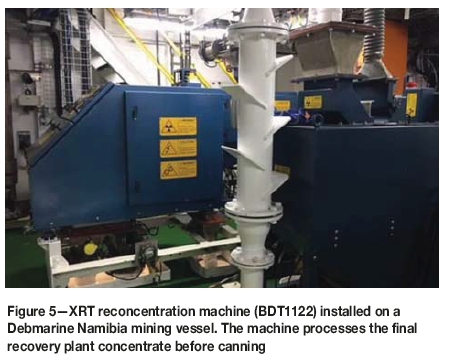
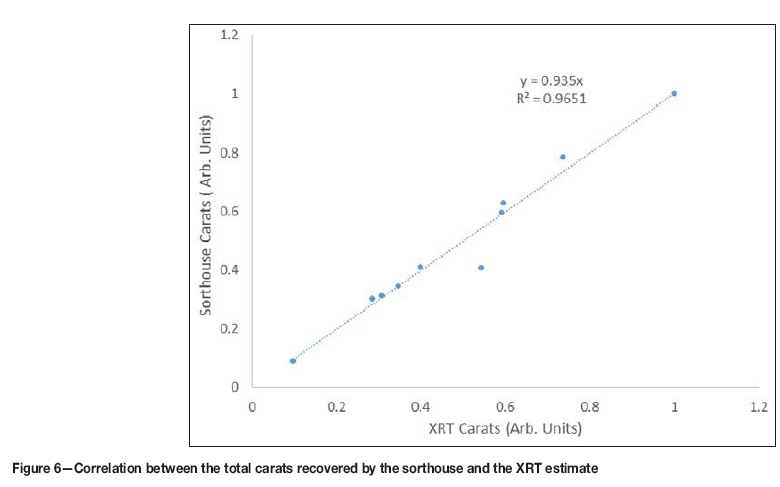
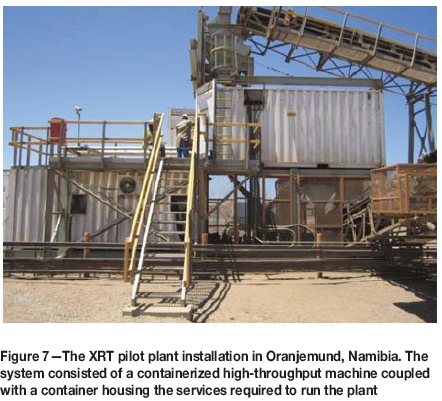
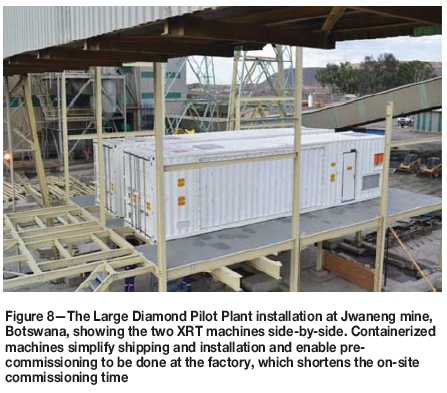
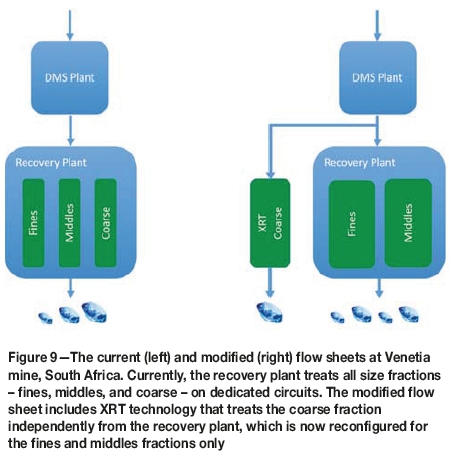
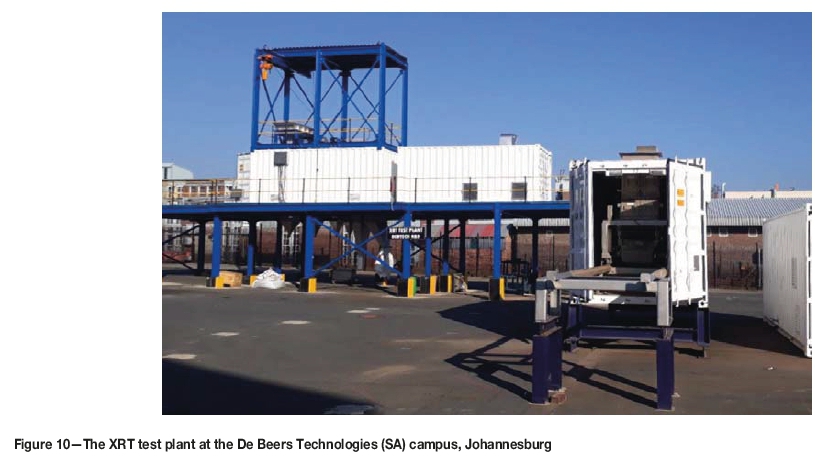
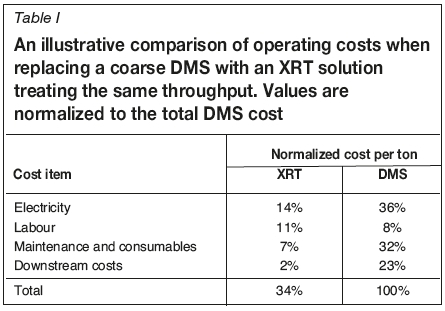
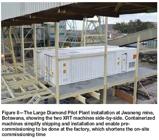
X-ray transmission (XRT) sorting has become the preferred recovery technology option in several parts of the diamond-winning flow sheet. In the De Beers Group, applications of XRT are found across kimberlite, alluvial, and marine operations. This is the result of intensive R conducted over the years to arrive at a suite of machine embodiments capable of sorting and auditing diamonds across all size ranges. The first applications in the marine environment used the technology in an auditing mode, and served as a useful early predictor of diamond content weeks ahead of sorthouse returns. The same machines are now available with ejection capability to produce high final product grades. The next application was tests on coarse alluvial gravels as an alternative to dense medium separation. The results were very encouraging, and tests are planned for both green- and brownfield kimberlite environments, as well as to explore an alternative to conventional techniques in final diamond recovery. At the Jwaneng mine Large Diamond Pilot Plant (LDPP), the objective is to recover diamonds in the size fraction -45 +25 mm. The technical challenge remains in the finer sizes, for high-capacity-machines as direct alternatives to conventional diamond recovery technologies. This is an area of ongoing R and it is only a matter of time before the breakthrough emerges.
XRT; diamonds; De Beers; DMS; sorting
 Thumbnail
 Thumbnail
 Thumbnail
 Thumbnail
 Thumbnail
 Thumbnail
 Thumbnail
 Thumbnail
 Thumbnail
 Thumbnail