Contact sorption drying of chromite concentrates
Abstract
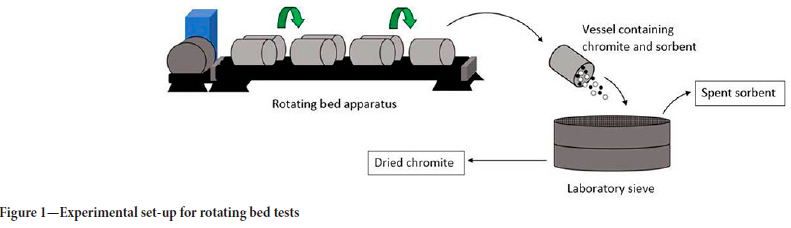
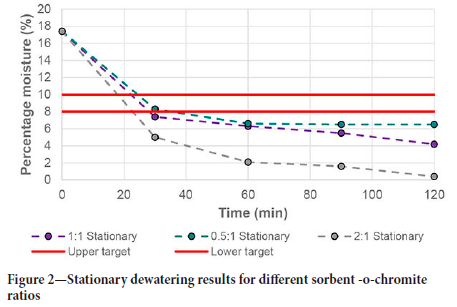
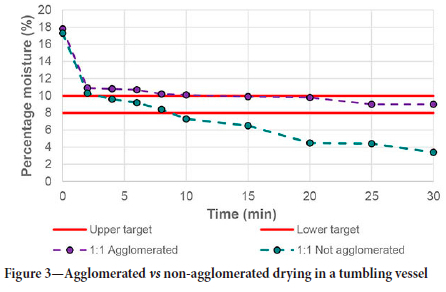
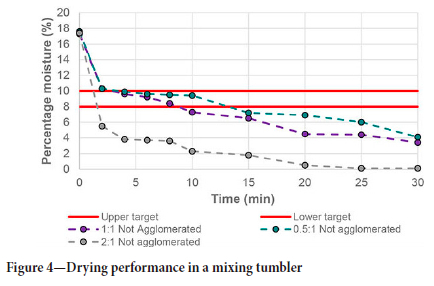
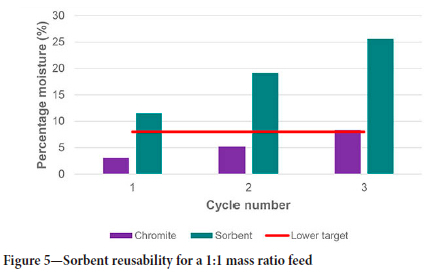
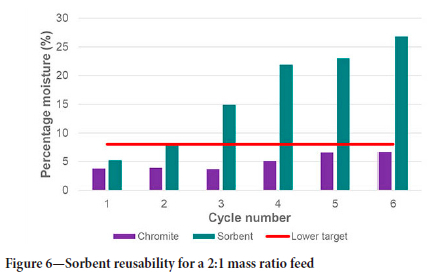
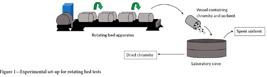
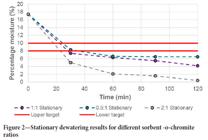
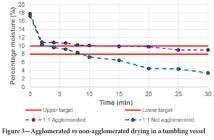
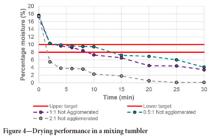
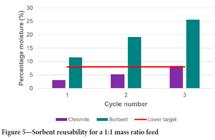
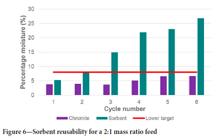
Due to the ultrafine particle size required for effective processing of chromite ores, dewatering of the concentrates presents a challenge. It is not uncommon for the ore to have elevated moisture contents even after dewatering, which must be reduced to required levels of between 8% and 10% by mass for further processing. Contact sorption drying has shown promise in test work on fine coal. This method was used to study the dewatering of chromite on a laboratory scale using 3 mm spherical activated alumina ceramic beads as a sorbent. Three different sorbent-to-chromite mass ratios, namely 0.5:1, 1:1, and 2:1, were tested with different process conditions, including dewatering in a stationary and a rotatingl bed. The experimental work showed that it was possible to achieve the target moistures in less than 10 minutes, irrespective of the sorbent-to-chromite ratio used. Ratios of 1:1 or higher, however, proved to be the best. The sorbent reusability at mass ratios of 1:1 and 2:1 were therefore tested. With a 1:1 mass ratio, the sorbents could be reused for three cycles, while with 2:1 ratio, the number of cycles increased to six. The sorbent-to-chromite mass ratio used had a significant influence on the required contact time and the reusability of the sorbents.
chromite; contact sorption drying; dewatering
 Thumbnail
 Thumbnail
 Thumbnail
 Thumbnail
 Thumbnail
 Thumbnail