Determination of the degree of thermal exposure to the lower head of the Three-Mile Island Unit 2 nuclear reactor using metallography
Abstract
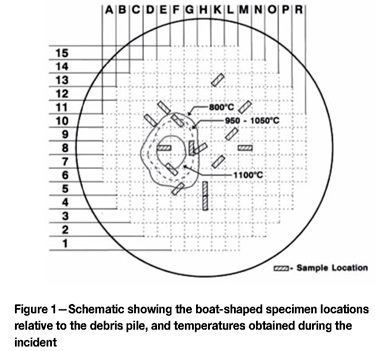
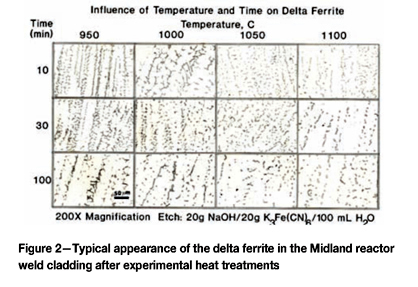
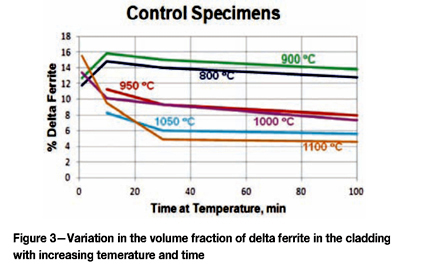
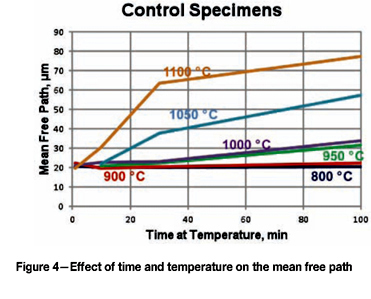
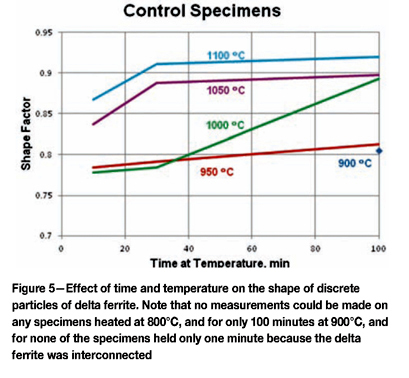
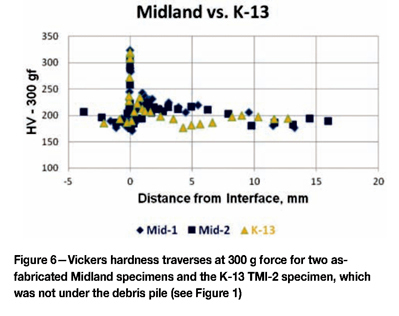
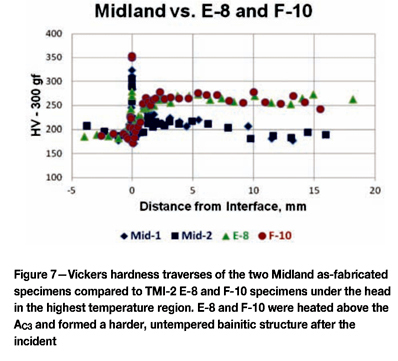
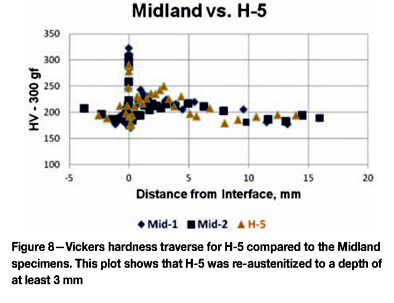
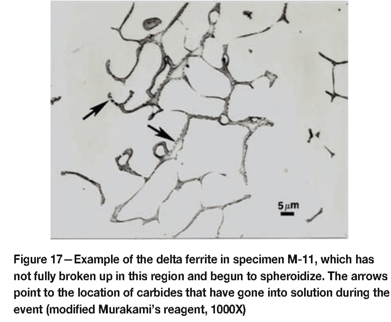
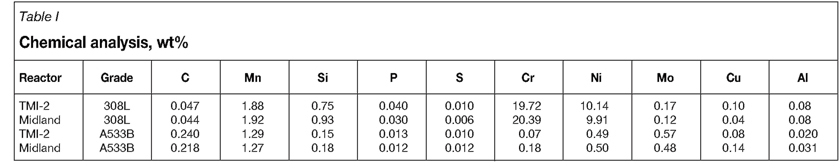
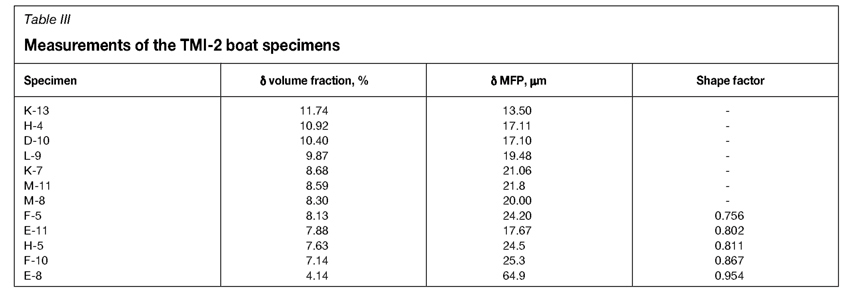
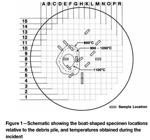
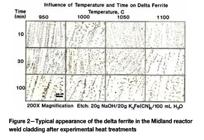
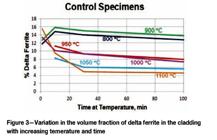
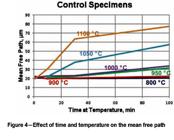
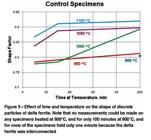
The accident at Unit No. 2 of the Three Mile Island nuclear reactor (TMI-2) on 28 March 1979 was the worst nuclear accident in US history and crippled the nuclear industry. An international Vessel Investigation Project was formed to assess the integrity of the vessel. However, it was not possible to remove specimens from the lower head until January-March 1990. Fourteen of the fifteen specimens removed by electrical discharge machining were from under the debris pile that accumulated on the lower head due to melting of approximately 19 000 kg (45%) of the core. Specimens were previously cut from the lower head of a cancelled reactor of very similar size and design destined for Midland, Michigan. These specimens were subjected to controlled heating cycles with peak temperatures from 800°C to 1100°C for periods of 1 to 100 minutes. The initial study qualitatively compared the structures in the 15 specimens from TMI-2 to the control specimens from the Midland lower head. The writer used the same specimens and employed microindentation hardness traverses, electron microprobe analysis, and selective etching followed by quantitative metallography (by image analysis) to obtain a far more detailed description of the thermal exposure experienced.
Three-Mile Island nuclear reactor; quantitative metallography.
 Thumbnail
 Thumbnail
 Thumbnail
 Thumbnail
 Thumbnail
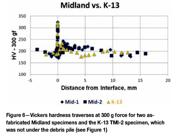 Thumbnail
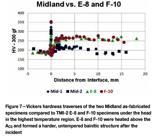 Thumbnail
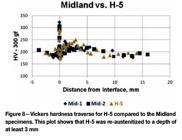 Thumbnail
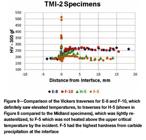 Thumbnail
 Thumbnail
 Thumbnail
 Thumbnail
 Thumbnail
 Thumbnail
 Thumbnail
 Thumbnail
 Thumbnail