Modelling the induction error in the Bøckman method for measuring furnace hearth voltages
Abstract
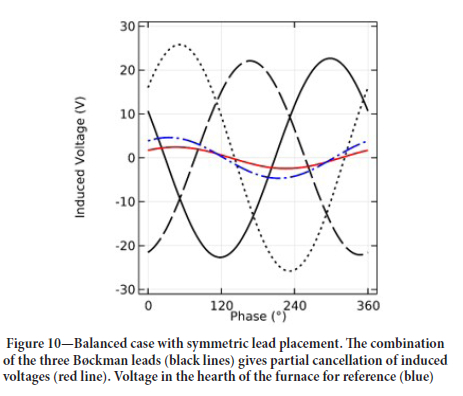
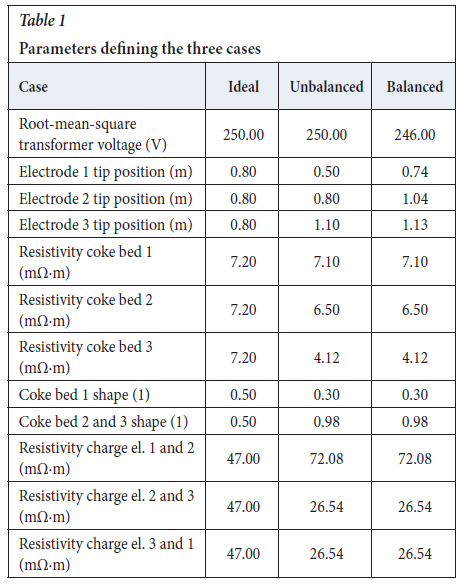
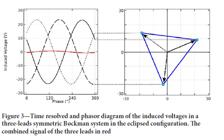
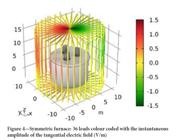
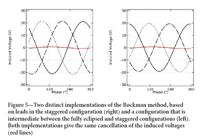
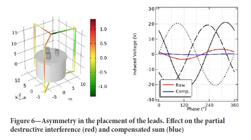
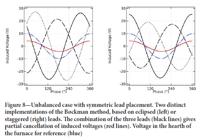
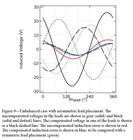
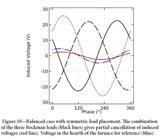
The Bockman method is regularly used to obtain accurate measurements of the hearth voltage of smelting furnaces. The method uses three measuring leads in order to cancel induction errors using destructive interference when transferring the hearth voltage from the bottom of the furnace to the top of the electrodes. This paper presents an investigation of the Bockman system's reliability, limitations, and background using finite-element-method simulations. A 3D model of an industrial-scale smelting furnace for Mn-alloy production is developed and used to examine the induction caused by balanced and unbalanced electrical conditions and material distributions.
Submerged-arc furnace; electrode; induction; Bockman method; finite-element method; mathematical modelling
 Thumbnail
 Thumbnail
 Thumbnail
 Thumbnail
 Thumbnail
 Thumbnail
 Thumbnail
 Thumbnail
 Thumbnail