Evaluation of chromium (VI) removal by carbons derived from Sesamum indicum oil cake
Abstract
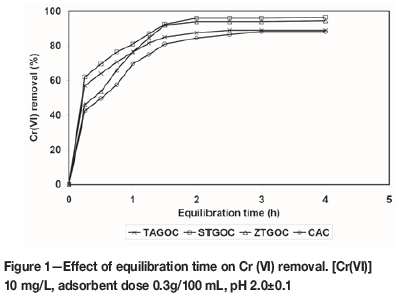
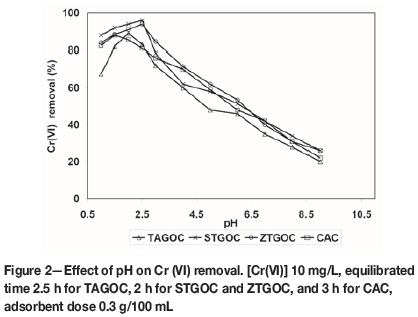
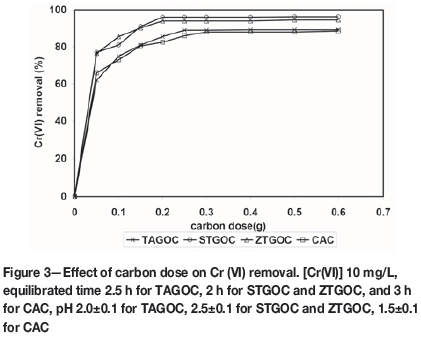
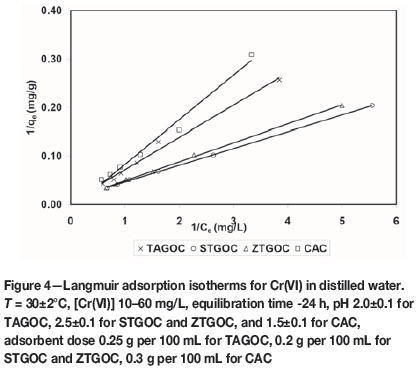
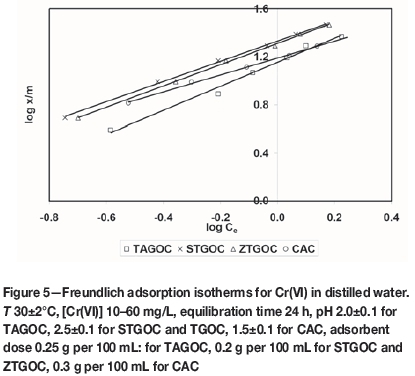
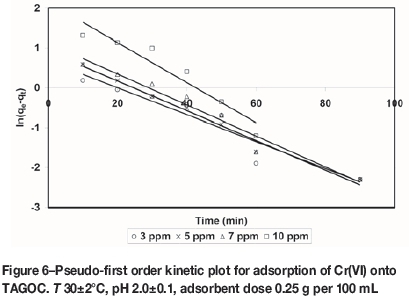
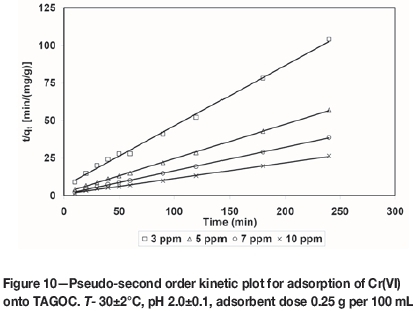
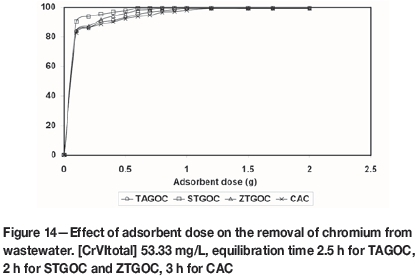
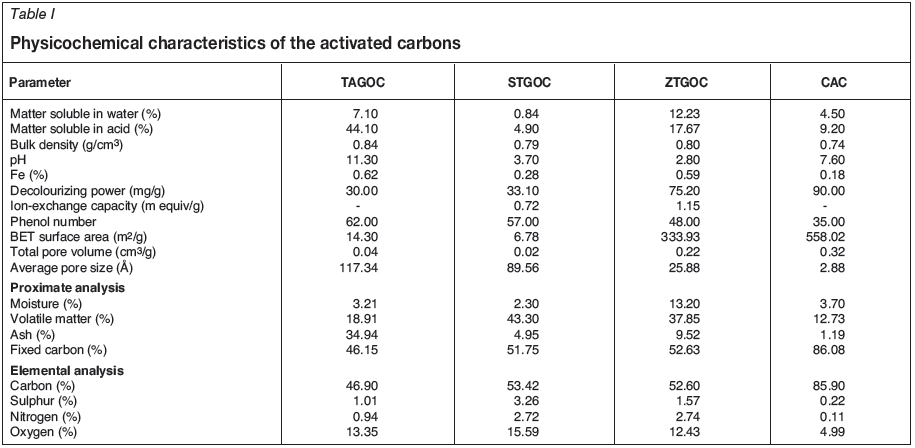
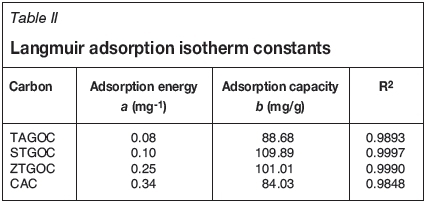
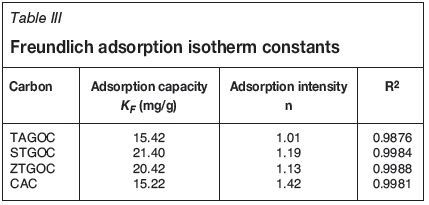
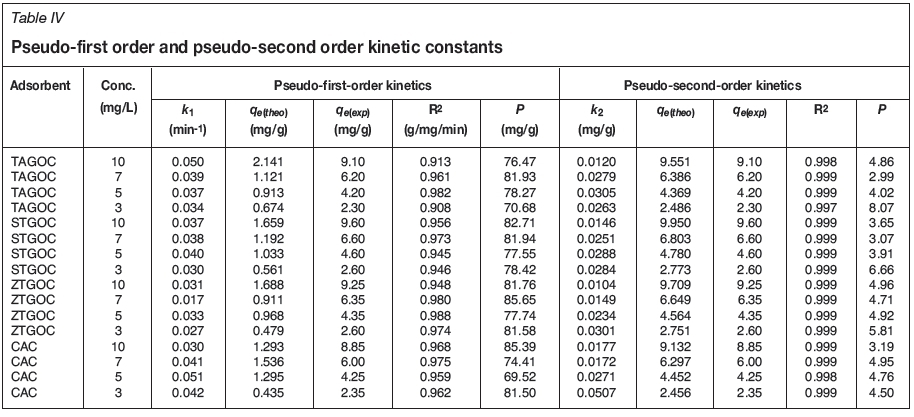
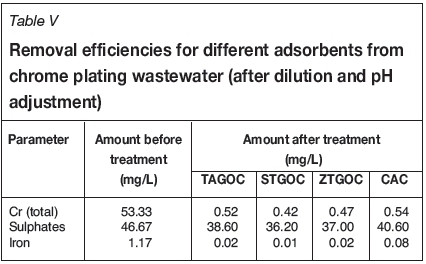
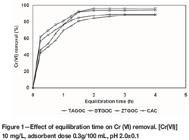
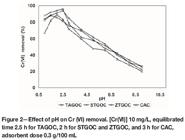
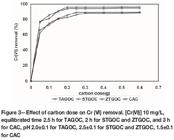
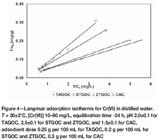
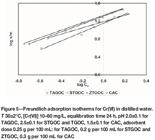
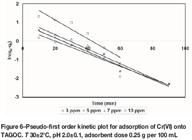
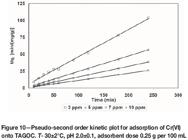
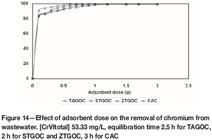
Activated carbons were prepared from gingelly oil cake (GOC) by thermal, sulpuric acid, and zinc chloride activation methods and their Cr(VI) removal capacities compared with that of commercial activated carbon (CAC). The effect of experimental parameters such as pH, initial Cr(VI) concentration, contact time, and adsorbent dose for Cr(VI) removal were studied. Langmuir and Freundlich models were tested to describe the equilibrium isotherms. The maximum adsorption capacities of the adsorbents calculated from Langmuir isotherm were found to be 88.68 mg/g, 109.89 mg/g, 101.01 mg/g, and 84.03 mg/g for thermal activated (TAGOC), sulphuric acid treated (STGOC), zinc chloride treated GOC (ZTGOC), and CAC respectively. R2 values show that both Langmuir and Freundlich models fit well to explain the adsorption by TAGOC, STGOC, ZTGOC, and CAC. The kinetic data fits best to a pseudo second-order model. The studies demonstrated effective removal of Cr(VI) from chrome plating wastewater.
Cr(VI) removal; activated carbon; gingelly oil cake; adsorption isotherms; kinetics; chrome plating wastewater
 Thumbnail
 Thumbnail
 Thumbnail
 Thumbnail
 Thumbnail
 Thumbnail
 Thumbnail
 Thumbnail