A spatial mine-to-plan compliance approach to improve alignment of short-and long-term mine planning at open pit mines
Abstract
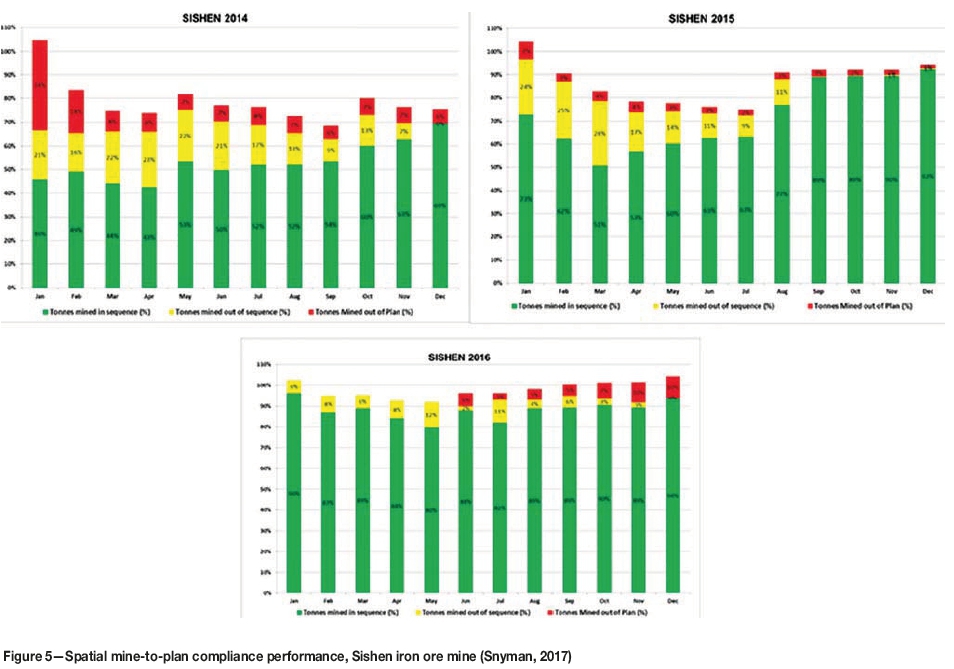
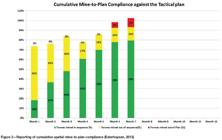
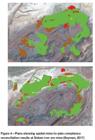
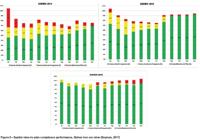
The objective of any mining company is to sustainably maximize the net present value (NPV) throughout the life-of-mine (LOM). The expected NPV over the LOM is calculated based on a mine plan, yet the actual value realized by the mining company depends greatly on the level of intertemporal execution against the mine plan. Consequently, a major key performance indicator (KPI) that is often overlooked in open pit mining, due to a greater focus on temporal KPIs, is the degree of spatial compliance to the mine plan. Such focus sometimes leads to short-term actions being detrimental to long-term plans. In this paper we describe the development and implementation of a spatial mine-to-plan compliance reconciliation approach for an open pit mine. Application to a case study open pit iron ore mine in South Africa indicated a significant improvement in the spatial mine-to-plan compliance, from 69% to 94% over a three-year period from 2014 to 2016. These results indicate that implementation of the proposed spatial mine-to-plan compliance reconciliation approach can contribute positively to improving the level of spatial execution and assists in improving the alignment between short-term, medium-term, and LOM plans.
intertemporal compliance; spatial compliance; short-term plan; long-term plan; LOM plan
 Thumbnail
 Thumbnail
 Thumbnail
 Thumbnail
 Thumbnail