Application of geometallurgical modelling to mine planning in a copper-gold mining operation for improving ore quality and mineral processing efficiency
Abstract
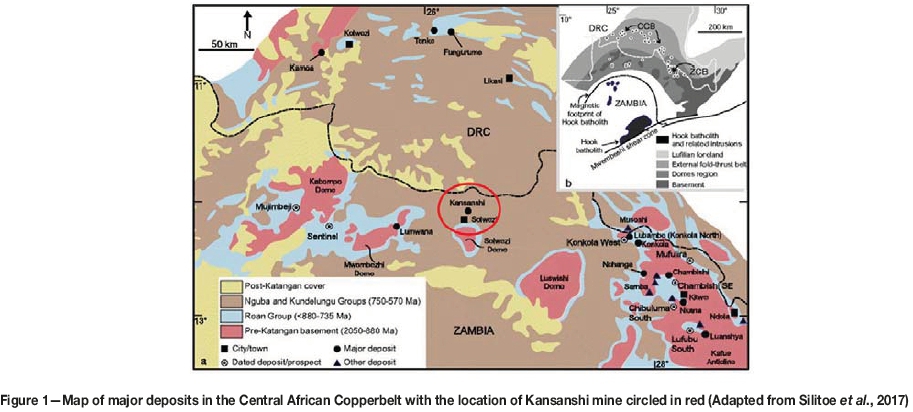
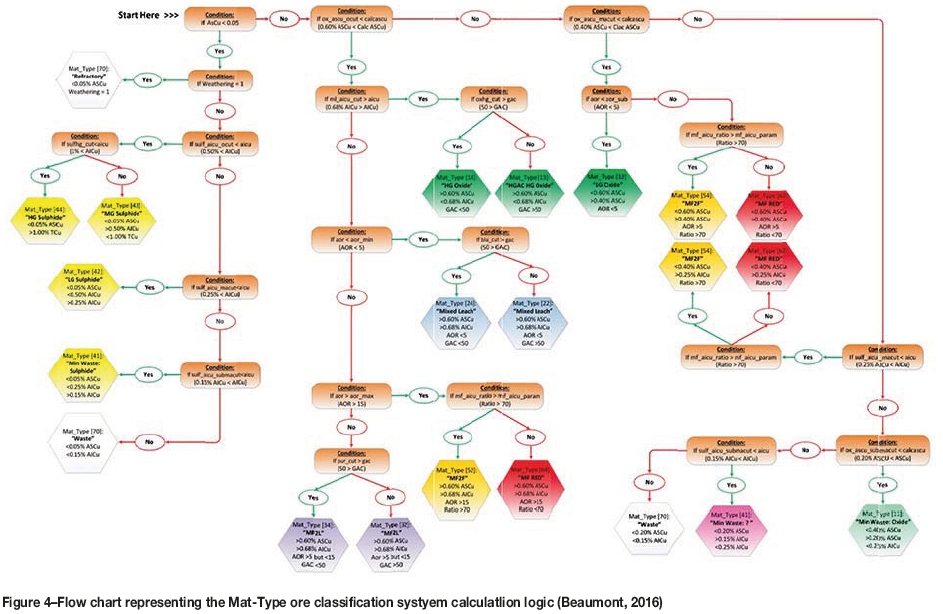
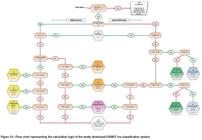
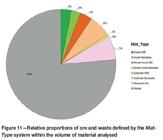
Kansanshi mine, located in northwestern Zambia, uses conventional open-pit mining to produce primarily copper, with gold as a by-product. The ore is extracted from a deposit with highly complex mineralogical suites that are difficult to process, sometimes leading to poor recoveries. The mine was using an ore classification system called 'Mat-Type', which classified various ore types into 22 different quality categories, ranging from poor to good quality. Ore with poor recovery was classified as 'poor quality' ore and directed to long-term stockpiles. Due to a lack of proper integration between the technical and functional areas forming the mine value chain, Mat-Type unintentionally misclassified ore. A geometallurgical analysis was therefore undertaken to review Mat-Type and a new geometallurgical ore classification system, called 'OXMAT ', was developed to replace Mat-Type. When implemented, OXMAT eliminated nine of the 22 ore categories and the remaining 13 ore categories could now be more accurately and consistently defined, leading to a significant change in the quantity of ore being mined. OXMAT demonstrated that within a defined test volume of the geological model, waste tonnes could be reduced by 19% while ore tonnes could be increased by 17%. This paper therefore demonstrates the value created through integrated geometallurgical modelling.
acid-soluble copper; total copper; gangue acid consumption; geometallurgical modelling; oxidation ratio; weathering domains
 Thumbnail
 Thumbnail
 Thumbnail
 Thumbnail
 Thumbnail
 Thumbnail
 Thumbnail
 Thumbnail
 Thumbnail
 Thumbnail
 Thumbnail