Dichloromethane-assisted phase separation for simultaneous recovery of oil and rare earth elements from oil-rich grinding sludge
Abstract
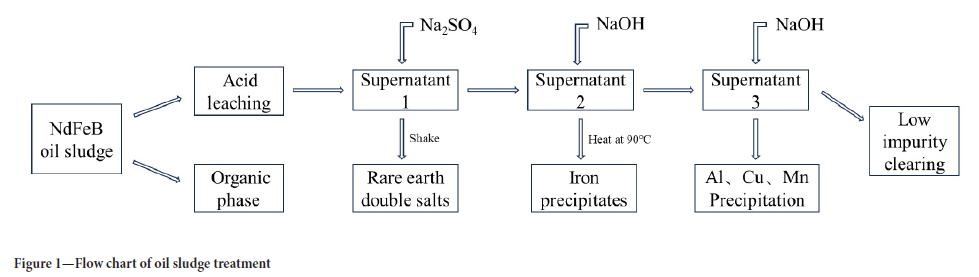
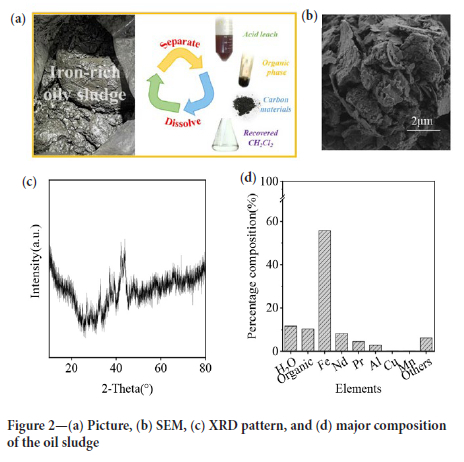
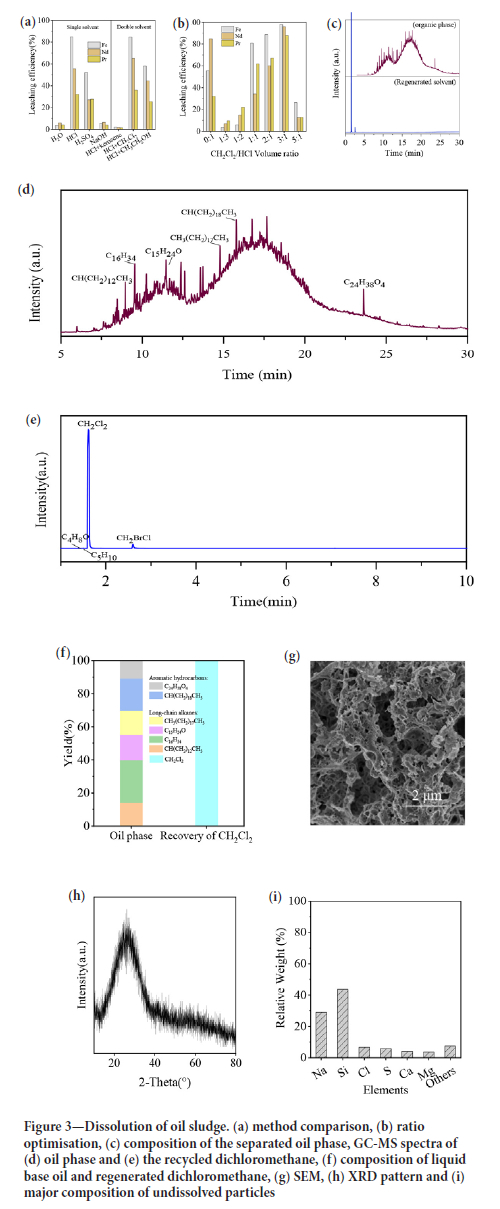
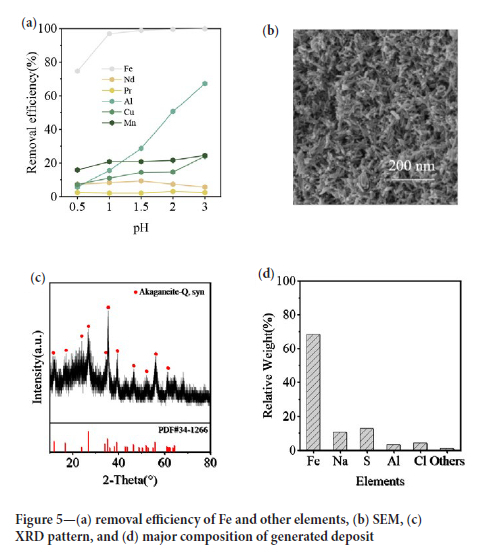
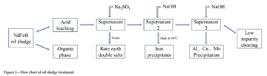
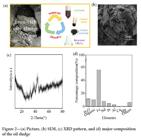
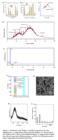
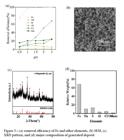
Grinding sludge is a gel-like hazardous waste generated in large quantities during metal cutting processes. Conventional calcination and hydrometallurgical treatment of oil-rich grinding sludges emit flue gases and generate insoluble residues. This study proposes CH2Cl2-assisted phase separation under mild conditions to enhance oil removal and metal recovery by overcoming encapsulation effects. Neodymium iron boron grinding sludge, containing 10.4% oil, 8.3% neodymium, 4.5% praseodymium), and 55.8% Fe was selected as a representative material. The dissolution efficiency of the sludge in hydrochloric acid alone or after dichloromethane pretreatment was less than 85%, whereas complete dissolution was achieved using a dichloromethane/hydrochloric acid mixed solvent. After that, phase separation produced an organic phase enriched with 10.44% oil, as well as carbon and grease, and an aqueous phase containing 10 g/L Nd, 3.75 g/L Pr, and 71 g/L Fe. The organic phase could be easily evaporated, allowing for the recovery of approximately 90% of the dichloromethane, with oil, carbon powder, and grease remaining as residues. The aqueous phase was subsequently processed to sequentially precipitate a double salt containing 98.58% Nd/Pr and an iron yellow product with 99.97% Fe. This approach provides an effective and economical strategy for the simultaneous recovery of oil and metallic products from grinding sludge, avoiding the need for harsh conditions or costly equipment. Consequently, it offers significant potential for practical on-site applications in industrial settings.
Grinding sludge; oil-rich NdFeB waste; recycling; dichloromethane; rare earths
 Thumbnail
 Thumbnail
 Thumbnail
 Thumbnail