Graphical analysis of underground coal gasification: Application of a carbon-hydrogen-oxygen (CHO) diagram
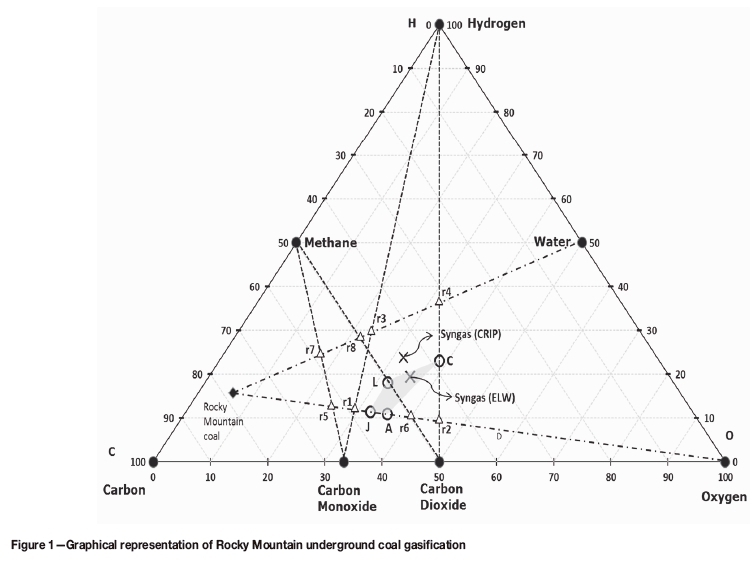
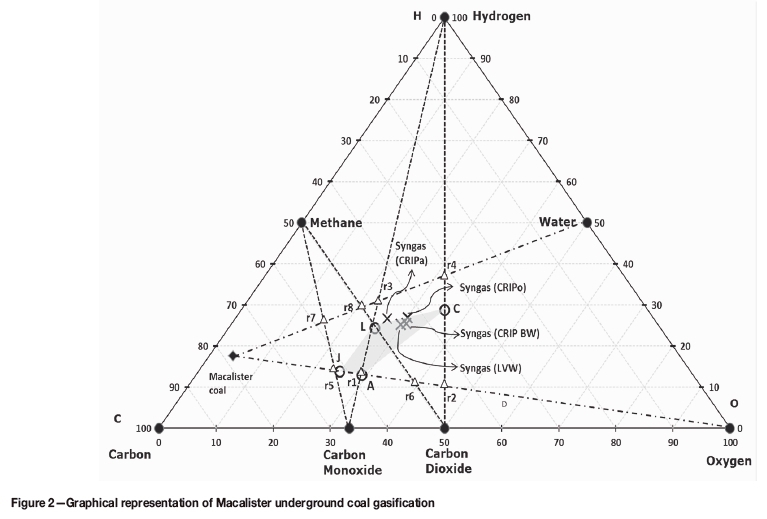
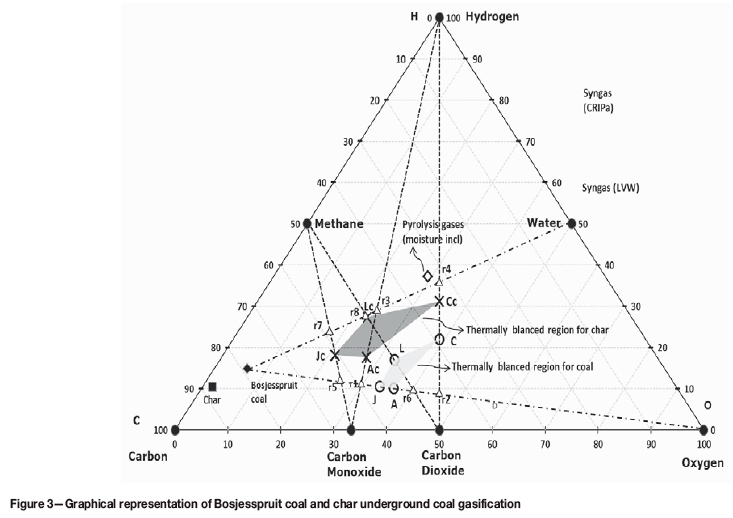
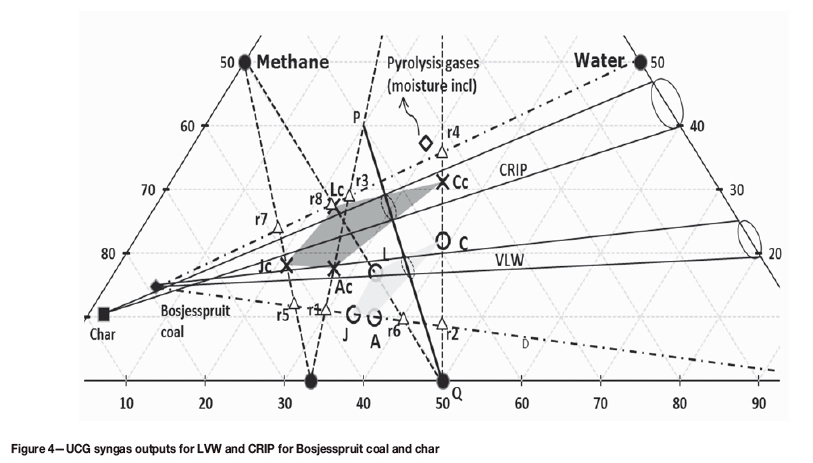
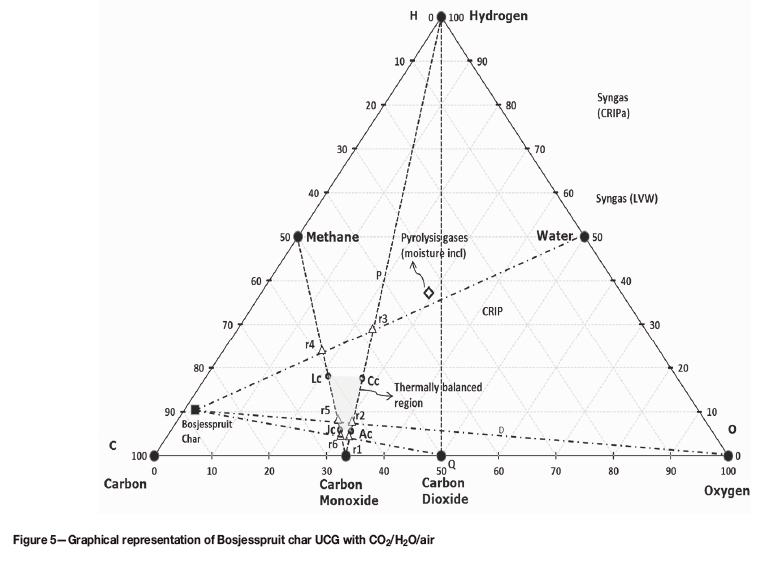
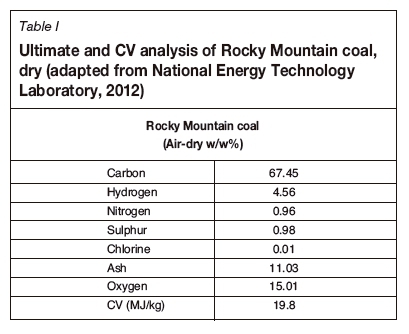
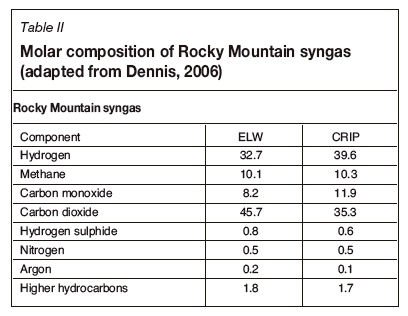
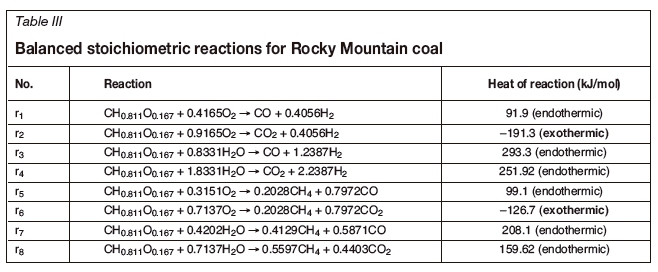
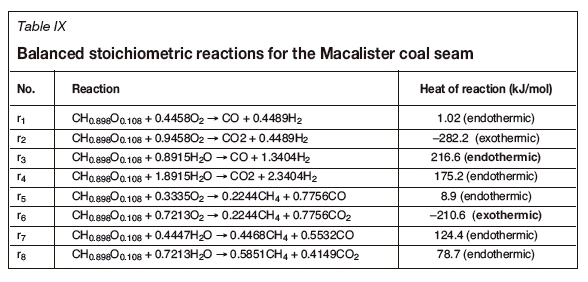
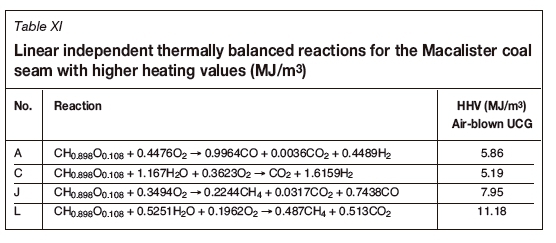
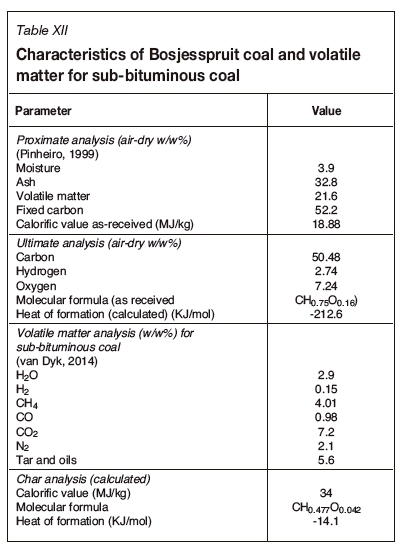
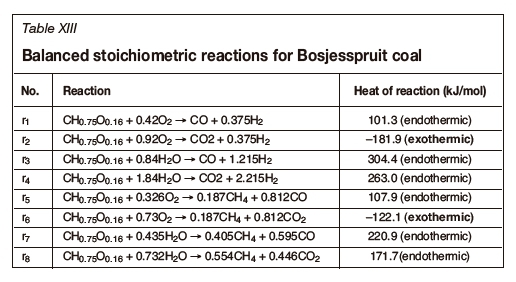
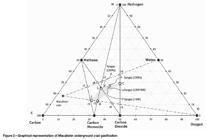
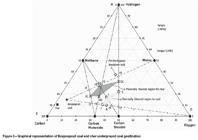
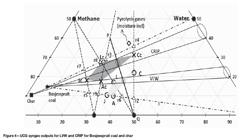
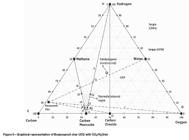
Underground coal gasification (UCG) is recognized as an efficient mining technique capable of chemically converting the coal from deep coal seams into synthesis gas. Depending on the main constituents of the synthesis gas, chemicals, electricity, or heat can be produced at the surface. This paper provides a high-level graphical method to assist practitioners in developing preliminary gasification processes and experimental programmes prior to detailed designs or field trials. The graphical method identifies theoretical limits of operation for sensible gasification within a thermally balanced region, based primarily on the basic coal chemistry. The analyses of the theoretical outputs are compared to actual field trials from sites in the USA and Australia, with very favourable results. A South African coal is studied to determine the possible synthesis gas outputs achievable using various UCG techniques: controlled retractable injection point (CRIP) and linked vertical wells (LVW). For CRIP techniques, an important result suggests that pyrolysis, and subsequent char production, are important intermediate phenomena allowing for increased thermal efficiencies of UCG. The conclusion is that South African coals need to be studied for pyrolysis-char behaviour as part of any future UCG programme. The results also suggest that UCG with CRIP would be a preferred technology choice for Bosjesspruit coal where pyrolysis dynamics are important. Lastly, the use of CO2 as oxidant in the gasification process is shown to produce syngas with significant higher heating value.
Underground coal gasification; pyrolysis; char; thermal balance
 Thumbnail
 Thumbnail
 Thumbnail
 Thumbnail
 Thumbnail