Appointment of women to mining boards - Evidence of tokenism
Abstract
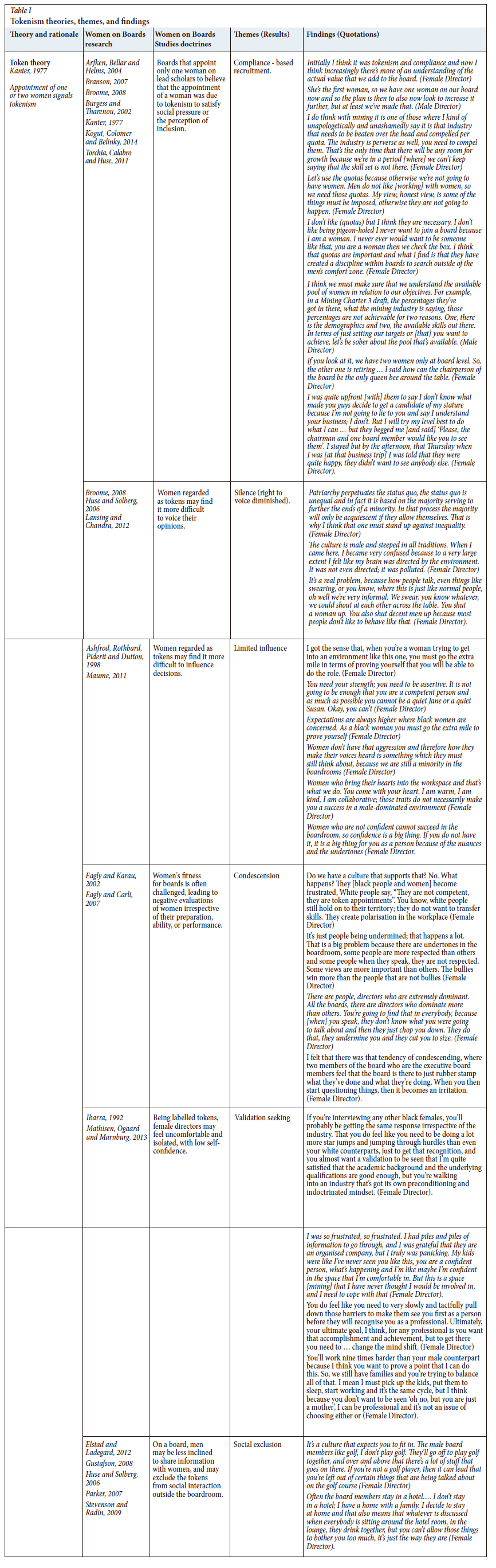
Mining companies are required by law to improve representation of women on their boards. However, progress in this regard has been slow. Boards of directors play an important role in formulating corporate strategy, risk assessment, and effective governance for sustained financial performance. Although some women have successfully maintained board seats, others have been unable to do so. It is difficult to ascertain whether women are being appointed as tokens to satisfy social pressures, as little is known about the experiences of women board members in mining, which may inform or refute tokenism. In-depth interviews were conducted with 20 women and 16 men across six listed mining companies. Thematic data analysis revealed evidence of tokenism where recruitment to mining boards is compliance-based and is informally driven by influential directors. Adverse boardroom experiences that further confirmed tokenism were reported by women, such as disregarding their contributions, condescending behaviour, and limited influence in decision-making, while other women sought to validate their competence and oppose social exclusion. This study recommends that a strong Board Chair and nominations committee is critical to ensure sustainable recruitment of competent and suitably qualified women; and further foster a culture of inclusivity and valuing gender-diverse boards.
women in mining; board of directors; recruitment; chairperson; critical mass; tokenism