Thermochemical evaluation of elemental phosphorus recovery from sewage sludge
Abstract
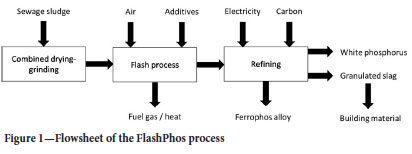
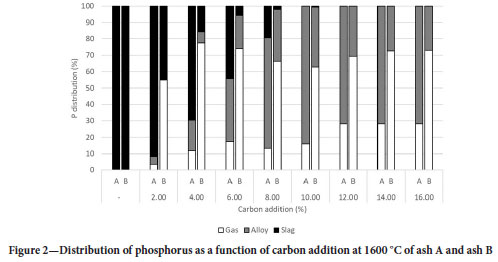
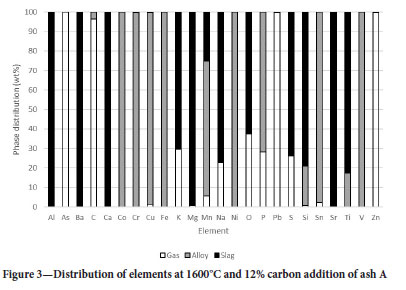
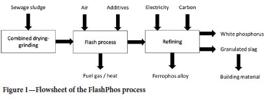
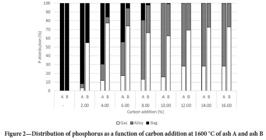
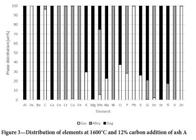
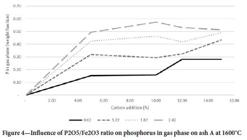
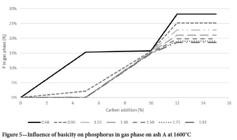
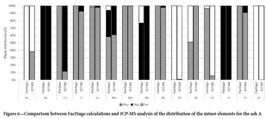
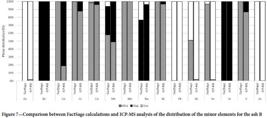
The FlashPhos process aims to recover white phosphorus (P4) from sewage sludge by drying, flash combustion/gasification, and carbothermic refining steps. This study evaluates the material behaviour of sewage sludge ash melting and reduction in a refining furnace for the novel FlashPhos process. Thermodynamic modelling in FactSage 8.2 is combined with experiments from a tube furnace to determine the possible phosphorus recovery and minor element behaviour. For the two studied sludges, a yield of 40% and 75% white phosphorus is achieved after 1 hour at 1600°C, corresponding with a 60% and 25% loss to the metal phase. This is slightly above the calculated equilibrium yield of 28%-73%, which depends mainly on the Fe/P ratio of the sludge. Temperature is found to have a significant influence on the final phosphorus yield when leading to incomplete melting of the ash. A clean slag is produced in the process free of heavy metals making it suitable to be used as a cement-like binder material. The main heavy metals that co-evaporate with the phosphorus are Zn, Pb, As, Sb, and Sn. Additional processing steps will be required to remove these to produce a pure P4 product. The metal alloy consists of mostly Fe and P with smaller amounts of other components such as Mo, Cr, Cu, Mn, Sn, Sb, and V. The final slag consists of CaO, SiO2, MgO, and Al2O3 with virtually complete removal of P and heavy metals.
sewage sludge; phosphorus recovery; sustainability; refining process
 Thumbnail
 Thumbnail
 Thumbnail
 Thumbnail
 Thumbnail
 Thumbnail
 Thumbnail