Optimization of circuits for pressure leaching of sulphide ores and concentrates
Abstract
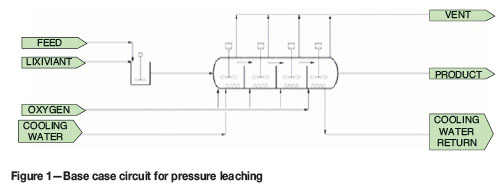
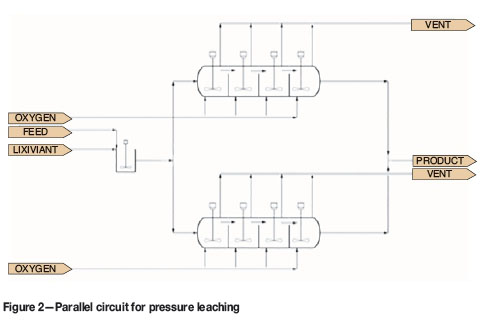
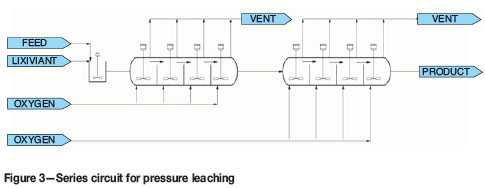
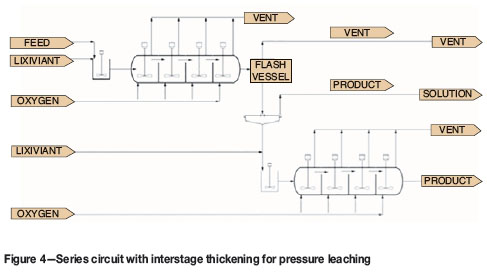
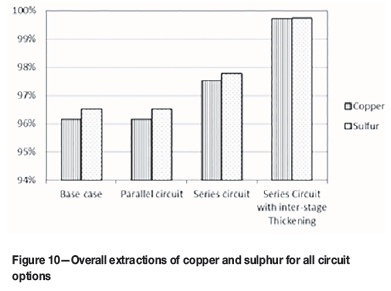
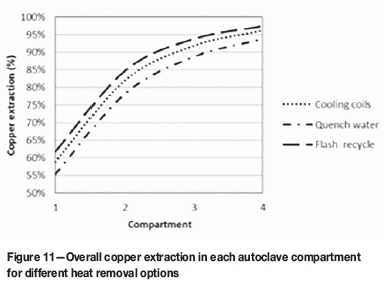
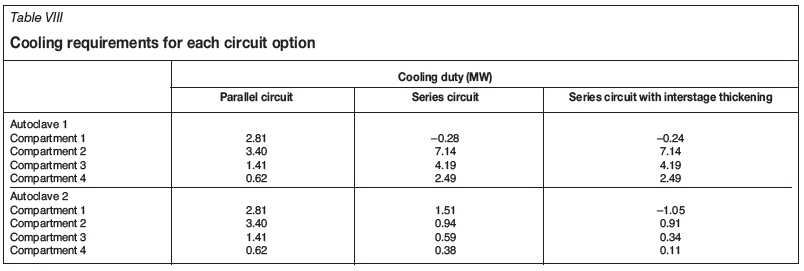
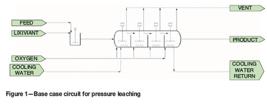
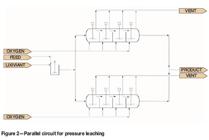
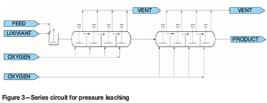
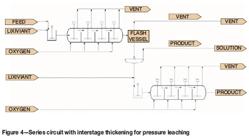
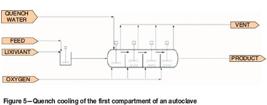
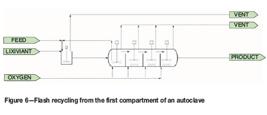
Pressure leaching is an option for copper recovery from chalcopyrite. Leaching takes place at high temperatures and pressures in the presence of an oxidizing agent. This work shows how the performance of pressure leaching circuits may be improved by optimizing the configuration of autoclaves and the heat removal method. The objective was achieved by creating an autoclave model that combines mass balances, energy balances, and population balances. A base case circuit consisting of a single autoclave was chosen, and this base case was compared with options for increasing capacity by adding more autoclaves to the circuit. These capacity increase options include circuits in which the additional autoclave is added in parallel, in series, and in series with thickening between the two autoclaves. The copper extraction, productivity, and cooling requirements for these options are compared. The series circuit with interstage thickening has the highest extraction and productivity; however, the cooling duty in the first autoclave is high. In addition to comparing circuit options, three options for heat removal were investigated: cooling coils, quench water, and flash recycling. The flash recycle option results in the highest copper extraction, and the quench water option the lowest copper extraction.
pressure leaching; autoclave; flash recycling; heat removal
 Thumbnail
 Thumbnail
 Thumbnail
 Thumbnail
 Thumbnail
 Thumbnail
 Thumbnail
 Thumbnail
 Thumbnail
 Thumbnail
 Thumbnail