Density functional theory prediction of the aqueous speciation of ZrF4 and HfF4
Abstract
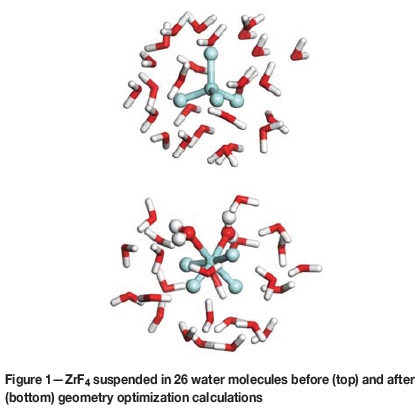
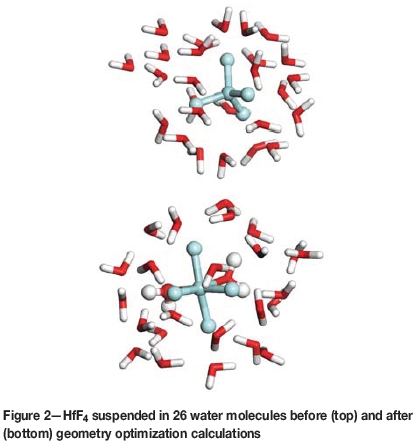
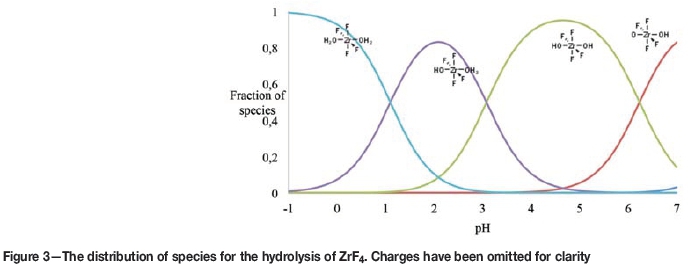
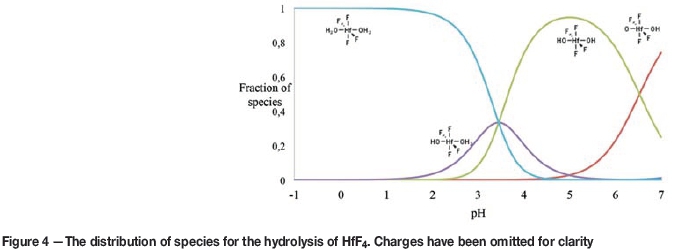
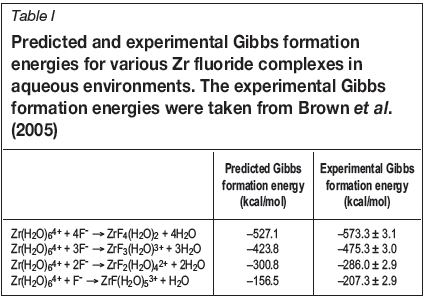
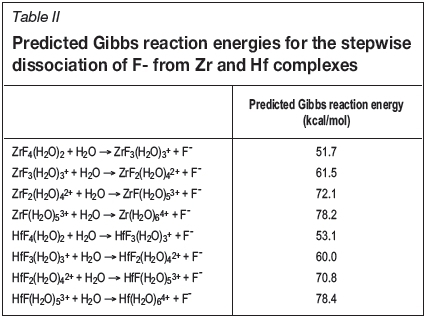
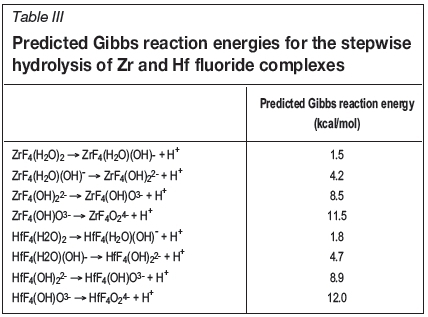
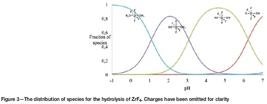
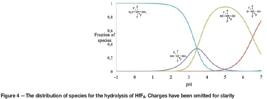
Computational chemistry was used to make predictions regarding the stepwise hydrolysis and fluoride dissociation reactions of ZrF4 and HfF4 in aqueous solutions. Specifically, density functional theory was used to predict Gibbs formation energies for ZrF4 and HfF4 in aqueous solutions, which were compared to experimental results reported in the literature. Following this, Gibbs reaction energies for the stepwise hydrolysis and fluoride dissociation reactions of ZrF4 and HfF4 were predicted, also with density functional theory, and used to predict stability constants that describe the distribution of the various zirconium and hafnium species in an aqueous solution. Finally, given these stability constants, distribution of species diagrams were constructed, which display which ZrF4 and HfF4 species are present at a given pH.
Speciation; ZrF4; HfF4; density functional theory; stability constant
 Thumbnail
 Thumbnail
 Thumbnail
 Thumbnail